
Article Outline
I.   Introduction: The Mid-Day Cognitive Wall and the Corporate Burnout Crisis
II.  The Science of Relaxation: Demystifying NSDR and Yoga Nidra
III. Corporate Performance Metrics: How a 20-Minute Reset Beats Burnout
IV.  Step-by-Step Guide: How to Practice NSDR at Your Desk
V.   Strategic Integration: Creating a Workplace Wellness Routine
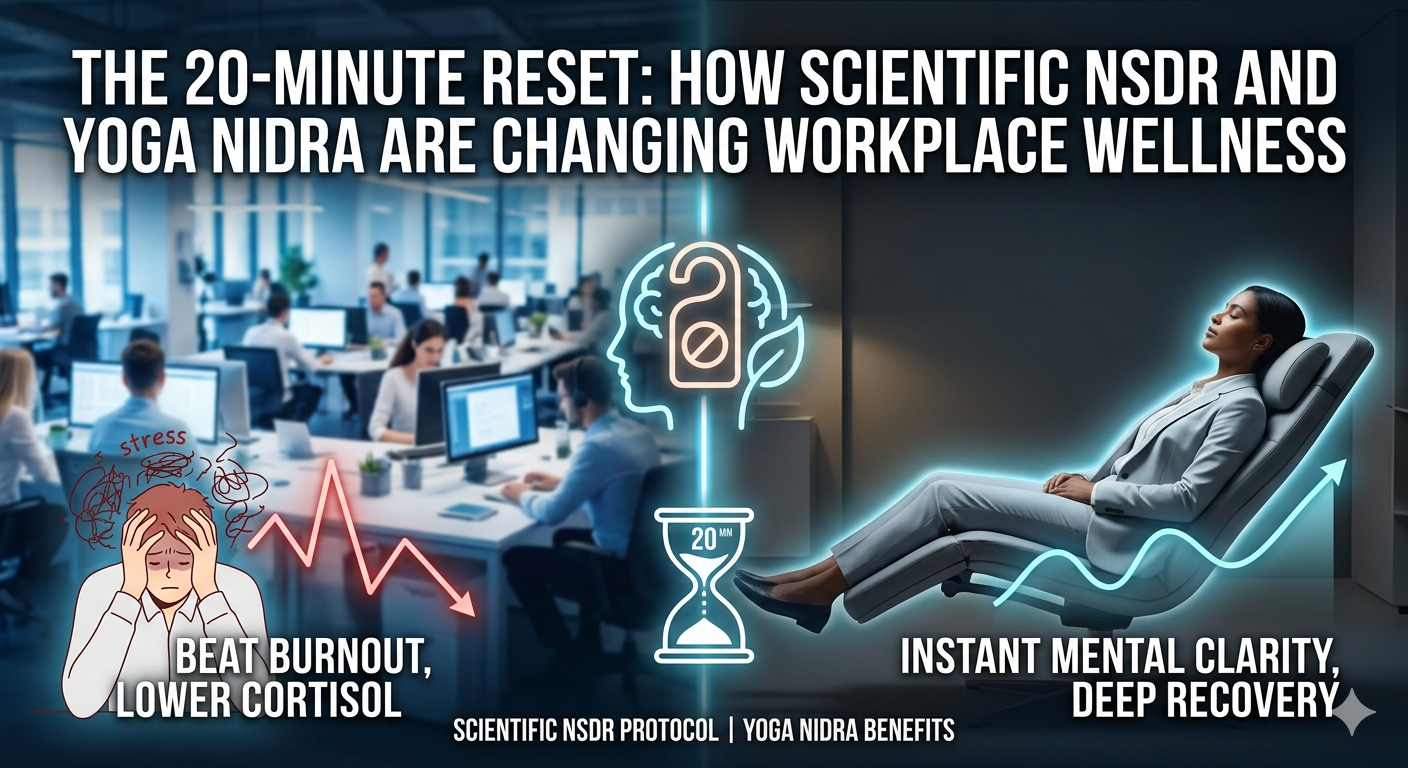
The 20-Minute Reset: How Scientific NSDR and Yoga Nidra Are Changing Workplace Wellness
The modern workplace operates at a pace that keeps the human nervous system in a state of perpetual high alert. By two o’clock in the afternoon, most professionals hit a profound cognitive wall, characterized by a sluggish brain, slipping focus, and a rising sense of irritability. The standard corporate response to this afternoon slump is usually another cup of coffee or a sugary snack, both of which offer a temporary spike in adrenaline followed by an even harsher energy crash.
As burnout numbers climb to historic highs across major industries, high-performing corporate professionals, tech executives, and elite creatives are abandoning artificial stimulants in favor of a zero-cost, scientifically validated physiological tool. This protocol is known as Non-Sleep Deep Rest, or NSDR, a term coined by Stanford University neurobiologist Dr. Andrew Huberman to describe a centuries-old practice under a modern lens.
By dedicating just twenty minutes to an NSDR protocol, professionals are actively resetting their nervous systems, clearing accumulated mental fatigue, and lowering cortisol levels right at their desks. This intersection of ancient wisdom and modern neuroscience is radically shifting how we view workplace wellness, transforming stress management from a vague weekend luxury into a precise daily tool for peak productivity.
The Science of Relaxation: Demystifying NSDR and Yoga Nidra
To understand why NSDR is so uniquely effective for reducing workplace stress, it helps to dismantle the terminology. NSDR is an umbrella term that encompasses specific practices designed to induce deep physical and mental relaxation without requiring the individual to fall into actual sleep. The most prominent and widely researched framework underlying NSDR is Yoga Nidra, a meditative practice that translates literally to psychic sleep.
+------------------------+---------------------------------------+---------------------------------------+
| State Profile          | High-Stress Working State             | NSDR / Yoga Nidra State               |
+------------------------+---------------------------------------+---------------------------------------+
| Brainwave Dominance    | Beta Waves (High Alert / Stress)      | Alpha and Theta Waves (Deep Rest)      |
| Nervous System Branch  | Sympathetic (Fight or Flight)         | Parasympathetic (Rest and Digest)     |
| Cortisol Production    | Elevated                              | Actively Suppressed                   |
| Cognitive Capacity     | Depleted by End of Day                | Restored and Refreshed                |
+------------------------+---------------------------------------+---------------------------------------+
When a person is stressed, racing to meet deadlines, or constantly checking emails, their brain operates primarily in a high-frequency Beta wave state. Prolonged exposure to this state triggers the sympathetic nervous system, releasing cortisol and adrenaline into the bloodstream, which increases heart rate and narrows cognitive focus.
An NSDR or Yoga Nidra session deliberately guides the brain down into Alpha and Theta wave states. These are the exact same brainwave patterns experienced during deep dreaming sleep and hypnagogic states.
The primary difference is that during NSDR, you remain completely awake and conscious. This specific physiological twilight zone flips the biological switch from the sympathetic fight or flight branch to the parasympathetic rest and digest branch. By slowing down the nervous system, the brain gets an opportunity to flush out cellular waste products and rest the prefrontal cortex, which is responsible for executive decision-making.
Corporate Performance Metrics: How a 20-Minute Reset Beats Burnout
The benefits of practicing NSDR extend far beyond a subjective feeling of calmness. When integrated into a demanding work day, the biological shifts translate into tangible professional advantages.
Rapid Cortisol Suppression
Cortisol is a vital hormone for morning alertness, but chronically elevated levels due to workplace pressures destroy sleep patterns, weaken the immune system, and impair memory retention. Clinical studies tracking individuals during Yoga Nidra show a marked reduction in stress hormones. By actively suppressing cortisol mid-day, professionals can prevent the cumulative neurochemical stress buildup that typically results in emotional exhaustion by the end of the workweek.
Accelerated Neuroplasticity and Skill Acquisition
Neurobiological research indicates that periods of deep non-sleep rest immediately following intense mental strain or skill acquisition vastly accelerate how fast the brain retains information. When you pause for a twenty-minute reset after an intense strategic meeting, a heavy coding session, or a complex data analysis task, your brain begins consolidating those memory traces. This means that a mid-day pause actually makes you sharper and more capable of handling complex work later in the afternoon.
Dopamine Replenishment
Sustained concentration, staring at screens, and dealing with workplace frustrations deplete the baseline dopamine reserves in the brain, leading to that distinct feeling of lack of motivation and severe mental fatigue. Brain imaging studies have shown that Yoga Nidra protocols can increase dopamine levels in the brain’s cognitive centers by up to sixty-five percent. This influx of neurotransmitters naturally restores intrinsic motivation, focus, and creativity without the jittery side effects of a caffeine overdose.
Step-by-Step Guide: How to Practice NSDR at Your Desk
One of the greatest advantages of an NSDR protocol over traditional mindfulness exercises or meditation is that it requires absolutely no prior training, spiritual alignment, or intense mental effort. In fact, trying too hard defeats the entire purpose. The practice is entirely passive and can be executed seamlessly in any corporate environment.
- Isolate Your Senses: Find a quiet space where you can sit comfortably in your office chair or lie down in a designated wellness room. Put your phone on do not disturb mode and put on noise-canceling headphones. If your workspace is bright, simply closing your eyes or using a basic sleep mask will work perfectly.
- Execute the Physiological Sigh: Begin the session by taking two deep inhalations through your nose, followed by one long, extended exhalation through your mouth. Take a deep breath until your lungs are nearly full, then take a quick, sharp sneak inhale right at the very top to completely inflate the air sacs in your lungs. Exhale slowly through your mouth. Repeat this sigh two or three times to instantly slow your heart rate down.
- Follow a Guided Audio Scan: Unlike traditional meditation where you must actively focus on a singular point, NSDR relies on following a voice script. You can easily find free twenty-minute NSDR protocols or basic Yoga Nidra audio tracks online. The script will guide your awareness across different parts of your body, such as your jaw, your hands, and your feet, in a rapid sequence. This structured rotation of consciousness acts as a distraction loop for your analytical mind, preventing your brain from ruminating on work deadlines.
- Embrace Intentional Disengagement: As you listen, your body will begin to feel incredibly heavy and relaxed, almost as if you are about to fall asleep. If your mind wanders or you drift off completely, do not worry. The nervous system still benefits from the deep physiological down-regulation even if you lose conscious track of the guided voice.
Strategic Integration: Creating a Workplace Wellness Routine
For individuals looking to maximize their mental longevity, consistency is far more important than duration. Integrating a twenty-minute NSDR protocol into your daily office routine requires treating it with the exact same respect as an important client meeting.
+---------------------+-------------------------------------------------------+
| Recommended Time    | Practical Application and Corporate Context           |
+---------------------+-------------------------------------------------------+
| 1:30 PM - 2:30 PM   | Post-lunch dip to counter digestive fatigue           |
| 5:30 PM - 6:00 PM   | Decompression bridge before commuting home            |
| Post-Meeting Reset  | 10-minute micro-session after intense negotiations    |
+---------------------+-------------------------------------------------------+
The absolute best window to practice NSDR is during the post-lunch dip, typically between one-thirty and two-thirty in the afternoon. This is when your body naturally diverts energy resources toward digestion, causing a major drop in cognitive performance. Instead of fighting this natural biological dip with sugars or liquids, stepping away for twenty minutes of structured rest allows your body to recover efficiently, returning you to your desk with a completely clear mind for the remainder of the workday.
Alternatively, using an NSDR protocol as a psychological decompression bridge at the end of the workday can completely transform your work-life balance. Spending twenty minutes resetting your nervous system before you start your evening commute helps ensure that you leave the stress, tensions, and frustrations of the office behind, allowing you to walk through your front door entirely present for your personal life.
The future of sustainable corporate productivity does not lie in working longer hours or consuming more stimulants. It relies entirely on mastering the art of strategic recovery. By embracing scientifically validated protocols like NSDR and Yoga Nidra, modern professionals can protect their mental health, maintain absolute cognitive clarity, and eliminate the threat of burnout entirely.
