
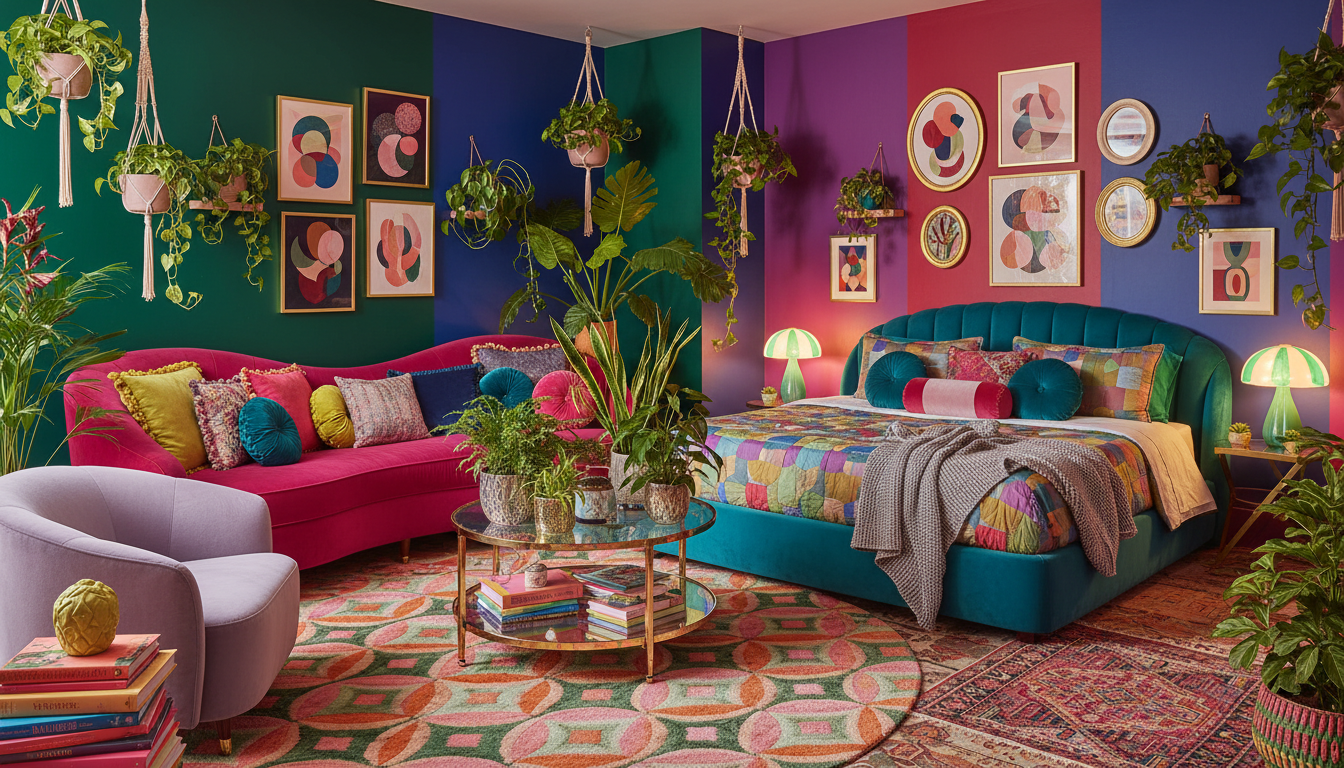
The gummy bear aesthetic is no longer confined to candy aisles. Young adults across India and globally are painting their walls in jewel tones, stacking mismatched velvet cushions, and swapping clean lines for soft, rounded furniture. Searches for “gummy bear aesthetic” on Pinterest have surged 50% according to design trend forecasts, signalling a seismic shift in how Gen Z and Millennials think about home decoration.
This maximalist swing represents a direct rebellion against the beige-dominated, deliberately sparse interiors that defined the 2010s. What was once aspirational—neutral walls, minimal furniture, the aesthetic of a high-end hotel lobby—now feels suffocating to a generation seeking comfort, personality, and joy in their living spaces.
“People are craving spaces that feel alive,” according to design trend analysis from Pantone and home décor forecasters. The gummy bear aesthetic delivers exactly that: dopamine decor designed to lift mood and reflect individual taste.
What Is the Gummy Bear Aesthetic?
The gummy bear aesthetic isn’t about actual candy. It’s a design philosophy centred on joy, colour, and tactile pleasure. Think of the visual language of a bag of gummy bears: bright pinks alongside lime greens. Soft, rounded shapes. A playful mix of hues that shouldn’t work together but somehow do.
In practical terms, this means:
Bold, saturated colours. Marigold yellows. Bubblegum pinks. Seafoam greens. Electric purples. Walls aren’t just painted—they’re statements. Accent walls are common, as are colourful furniture pieces that anchor a room’s energy.
Layered textures. Velvet against linen. Faux fur throws draped over woven chairs. Smooth ceramics beside rough woven baskets. The point is sensory richness, not visual silence.
Rounded shapes everywhere. Curved sofas replace angular sectionals. Bubble chairs hang from corners. Side tables sport soft, pudgy legs instead of spindly metal frames. Straight lines feel too austere for this aesthetic.
Maximalism as default. Clutter is welcomed. Books stacked on floating shelves. Plants clustering in corners. Art hung salon-style across walls. The rooms are intentionally full.
Rejecting Millennial Beige
The previous generation’s design obsession—often called “millennial beige”—treated home décor like a meditation practice. Warm neutrals, sparse accessories, everything curated to near-invisibility. It looked expensive and calm. It also looked, to many younger adults, profoundly depressing.
“Millennial beige made sense during the rise of Instagram minimalism,” design commentators note. Neutral spaces photographed well. They felt sophisticated. But after years of isolation during the pandemic, young people reconsidered what “home” should be. A backdrop for social media aesthetics? Or an actual place to feel good?
The answer, for many Gen Z and younger Millennials, was the latter.
The gummy bear aesthetic emerged partly as a coping mechanism. Designers and mental health observers have noted that this trend reflects a broader search for well-being through environmental design. Surrounding yourself with colours that energise you, textures that invite touch, and shapes that feel welcoming creates a fundamentally different emotional experience than a room full of beige.
This isn’t pseudoscience—colour psychology and sensory design are well-established fields. Warm colours stimulate energy. Soft textures soothe. Rounded shapes feel safer to the brain than sharp angles. Dopamine decor simply weaponises these principles deliberately.
The Gummy Bear Aesthetic Goes Global
In India, this trend is gaining particular traction among urban professionals and students in metros like Bangalore, Mumbai, and Delhi. Rental apartments that once felt sterile now sport vibrant tapestries, floor cushions in clashing jewel tones, and string lights that turn a modest bedroom into something joyful.
The appeal is partly practical. Many young Indians live in temporary housing. The gummy bear aesthetic is renter-friendly—it relies on moveable pieces, removable wallpaper, and accessories rather than structural changes. You can build it incrementally, adjusting as your taste evolves.
It’s also deeply expressive. In cultures where home décor has historically been conservative, the permission to fill a space with colour and personality feels liberating. There’s no pretence of studied restraint. A room decorated in the gummy bear aesthetic announces: this person likes joy.
How to Start Building the Aesthetic
You don’t need to repaint your entire flat tomorrow. The gummy bear aesthetic builds gradually.
Start with one bold accent colour. A jewel-toned throw pillow. A vibrant area rug. One colourful piece of furniture. Then layer in textures. Add a faux fur blanket. String up tapestries. Cluster plants in corners.
Thrift stores and online marketplaces like OLX and local craft fairs are goldmines for furniture with soft edges and unexpected colours. Vintage pieces naturally fit the maximalist energy. So does handmade pottery, woven baskets, and textile art.
The budget-friendly approach appeals to renters and young professionals who can’t commit to permanent renovations. You’re building a space that reflects you, one cushion and one wall hanging at a time.
FAQ
What’s the difference between gummy bear aesthetic and dopamine decor?
Dopamine decor is the broader concept: any décor designed to boost mood through colour and sensory pleasure. The gummy bear aesthetic is a specific expression of dopamine decor, characterised by soft, rounded shapes and multiple saturated colours in one space. All gummy bear aesthetic is dopamine decor, but not all dopamine decor is gummy bear aesthetic.
Is the gummy bear aesthetic just maximalism?
Not quite. Maximalism is about abundance and visual richness generally. The gummy bear aesthetic is maximalism with a specific playful, candy-inspired sensibility. It prioritises rounded shapes and bold colour combinations. You can be maximalist and minimalist in colour—think all-black maximal interiors. The gummy bear aesthetic is inherently bright.
Can I do gummy bear aesthetic in a rented flat?
Yes—it’s one of the most renter-friendly trends. You can use removable wallpaper, lean into furniture and textiles, and avoid permanent changes. All the core elements (rounded furniture, bold colours, layered textures) work with temporary décor.
Where do I buy gummy bear aesthetic furniture in India?
Online: Amazon, Flipkart, Myntra (for textiles), and Pepperfry. Local: thrift stores, craft fairs, and local furniture makers who often work with bold colours and soft shapes. Instagram-based small businesses selling handmade cushions, poufs, and art are also thriving in this space.
Will gummy bear aesthetic look dated quickly?
Design trends always shift, but joy and colour rarely feel dated. The specific palette might evolve—perhaps softer pastels replace neons—but the core principle of expressing personality through your environment is timeless.
