
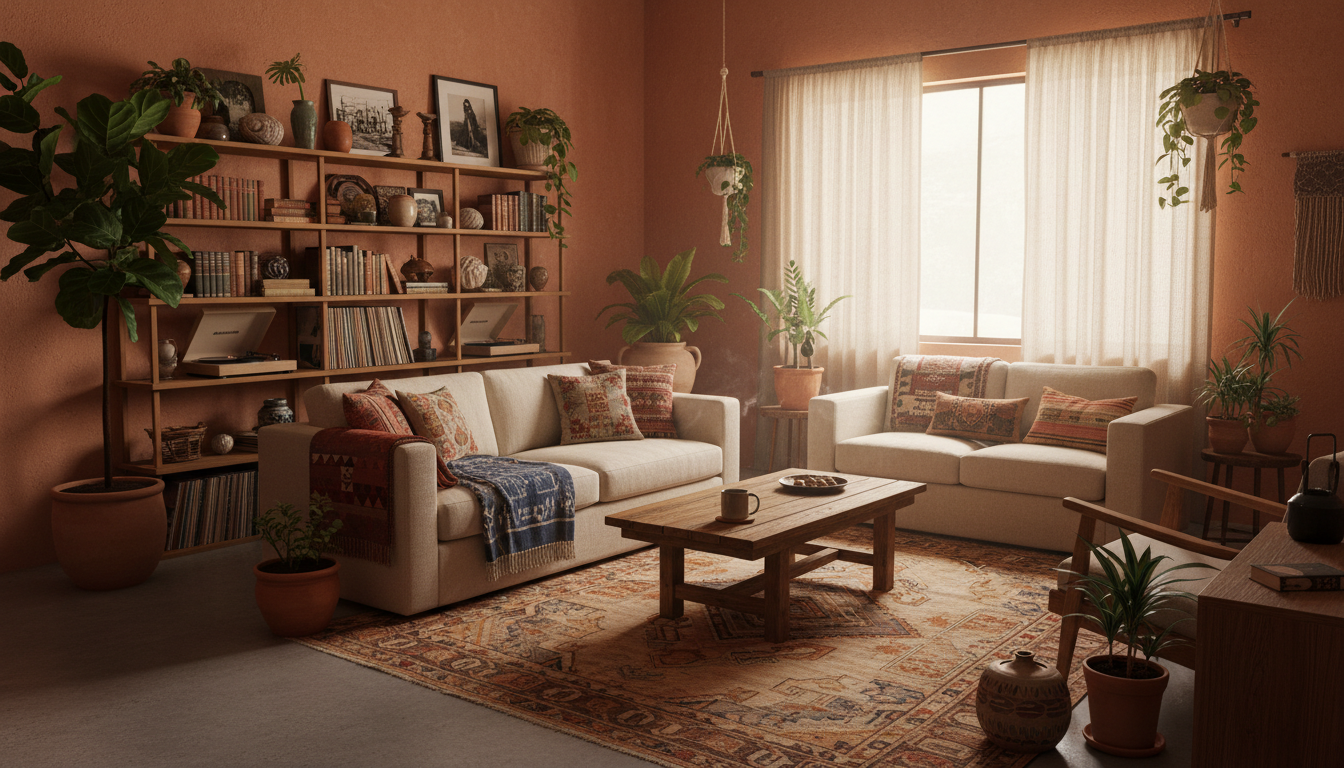
Home design trends are undergoing a marked shift away from the spare, clinical aesthetic that dominated the last decade. Homeowners are increasingly rejecting stark white-and-gray palettes in favour of warmer, more characterful interiors that tell a story.
The move reflects a broader fatigue with off-the-shelf perfection. According to Houzz’s 2026 fall design trends report, warmth is becoming a foundation for how people design their homes. This shift has real implications for how families—including multi-generational households—are choosing to live.
What’s driving this change? Part of it is pushback against Instagram-ready interiors. Part of it is a genuine desire for spaces that feel lived-in, collected over time, and reflective of personal history rather than a designer’s showroom vision.
The End of Stark Minimalism
For years, the design world preached the gospel of less. Empty walls. Monochrome schemes. Furniture with razor-sharp edges and no ornamentation. It was clean. It was marketed as peaceful.
But minimalism, taken to its extreme, also felt cold. Uninviting. Like living in a hotel lobby.
Designers and homeowners are now pushing back. Warm home design trends favour deeper colour palettes, layered textures, and rooms that accumulate meaning. Think terracotta walls. Ochre accents. Rooms where a vintage armchair sits next to a modern sofa, where a inherited rug anchors a space, where bookshelves hold objects chosen over years rather than curated in an afternoon.
This doesn’t mean cluttered. It means intentional. It means knowing why something is in your home, not just that it fits the colour scheme.
Natural Materials and Imperfection
One of the most tangible expressions of this trend is the renewed emphasis on natural materials—wood, stone, clay, wool, linen. Not the polished, uniform versions, but materials chosen for their variation, texture, and visible imperfections.
A wooden table with a live edge. Stone with natural veining. Textiles that wrinkle and age. These materials don’t pretend to be perfect. They’re valued precisely because they show character and time.
Martha Stewart’s fall and winter trends analysis notes the rise of such materials as a counterpoint to synthetic, mass-produced alternatives. The appeal is twofold: authenticity and depth. A space filled with natural materials feels different—warmer, more tactile, more rooted.
For Indian homeowners, this trend intersects interestingly with traditional design. Terracotta, brass, carved wood, handwoven textiles—these are materials with deep cultural resonance and long history in Indian homes. The global shift toward natural materials and collected interiors validates what many Indian design traditions have always understood: that imperfection and history add value, not detract from it.
Collected and Layered Interiors
The move away from home design trends favouring stark minimalism means embracing layering. This is interior design that evolves.
Collected interiors don’t happen overnight. They accumulate. A mirror from a flea market. A plant inherited from a friend. A rug bought during travels. Furniture that’s been repaired, reupholstered, moved around. Walls painted in colours chosen thoughtfully over months or years, not defaulted to white.
This approach also reduces the pressure to get everything “right” immediately. Homeowners can buy a piece, live with it, move it, replace it. The home becomes a draft, not a finished product.
For families and households—especially multigenerational ones—this flexibility matters. A living room might accommodate an elderly parent’s preferences one year, then shift to make space for grandchildren the next. Collected, layered interiors absorb these changes without looking chaotic.
Homes Designed to Evolve
The trend toward warm, collected interiors sits alongside another significant shift: homes designed to accommodate change.
Adaptable living spaces are increasingly central to how people think about home design. Features that support multigenerational living, guest accommodation, or future needs are moving from luxury to expectation. A bedroom that can function as an office. A living area that can be divided into two smaller rooms. Flexible kitchen layouts that work for both daily living and entertaining.
This isn’t just about square footage. It’s about intentional design that acknowledges life doesn’t stay static. Children grow. Parents age. Careers change. Friendships evolve. Homes that can adapt to these shifts are homes that remain relevant and liveable.
Wellness amenities are also becoming part of this conversation. Better lighting. Air quality considerations. Spaces for movement and rest. These aren’t luxury additions anymore—they’re part of how people evaluate whether a home will actually work for their lives.
The Warmth Factor in Home Design Trends
Warmth, as a design principle, goes beyond colour. It’s about how a space makes you feel.
A warm room invites you to stay. It suggests comfort, care, and time invested. Warm lighting instead of harsh fluorescents. Soft furnishings. Surfaces you want to touch. Colours that suggest earth, food, shelter—ochres, terracottas, deep greens, warm greys, burnt sienna.
This is part of a broader recognition that homes aren’t just containers. They’re places where people recover, gather, work, raise children, age, grieve, celebrate. A design approach that acknowledged this emotional reality was overdue.
FAQ
Q: Is minimalism completely out of fashion?
A: Not entirely. The shift is away from stark or extreme minimalism toward what might be called “warm minimalism”—homes that are organised and intentional but also textured, coloured, and personality-filled. Clutter is still avoided; emptiness is no longer the goal.
Q: What natural materials are most practical for Indian homes?
A: Teak, sheesham, marble, limestone, terracotta, and handwoven cotton or wool textiles are both beautiful and well-suited to Indian climates. These materials are also widely available and often locally sourced, reducing cost and environmental impact.
Q: Can I create a collected, layered interior on a budget?
A: Yes. Layering is actually budget-friendly because it happens over time. Start with basics—paint, a good sofa, basic lighting. Add pieces gradually: second-hand finds, inherited items, plants, artwork. This approach also reduces waste compared to replacing everything at once.
Q: What does “adaptable living space” actually mean in practice?
A: Concrete examples: moveable furniture instead of built-in units; rooms without fixed purposes; flexible storage; good natural light in multiple rooms; neutral base walls that can be repainted. These features let spaces serve different functions as needs change.
Q: How do I add warmth without making a room feel cramped?
A: Warmth comes from colour, texture, and lighting more than quantity of objects. Paint a feature wall in a warm tone. Add layered lighting—lamps, not just overhead lights. Choose natural materials with texture. Curate carefully; fewer, better-chosen pieces create warmth without clutter.
