
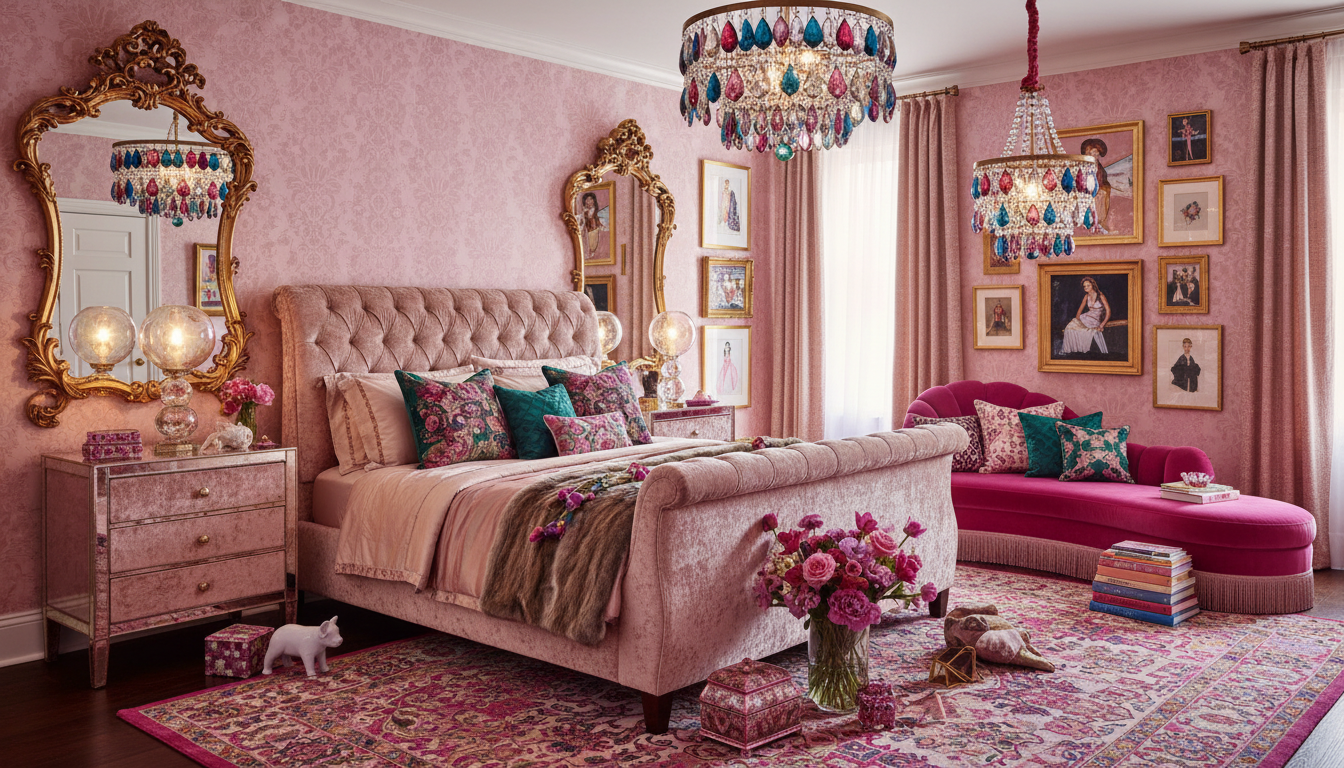
Barbiecore interior design is having a moment—and it’s pink, unapologetic, and powered by artificial intelligence.
Search data tells the story. Queries for “Barbie DreamHouse aesthetic” have jumped 72% on Pinterest. Searches for “pink apartment ideas” have climbed even higher, rising 224%. The pink-loving masses aren’t just daydreaming anymore. They’re actively hunting for ways to transform their homes into versions of the iconic doll’s ever-evolving residence.
Pinterest, sensing the trend, has moved to capitalize. The platform has launched Restyle, an AI tool developed in collaboration with Barbie that lets users upload photos of their existing spaces and experiment with five distinct Barbie-inspired aesthetics. The mechanic is straightforward. Upload an image. Watch the AI reimagine your room. Then shop the products directly through the platform.
For the furniture-weary or the indecisive, this removes friction. You don’t have to visualize the pink velvet headboard in your mind. You see it rendered on your own bedroom wall.
What Barbiecore Interior Design Actually Means
Barbiecore isn’t just slapping pink paint everywhere. The aesthetic embraces bold, expressive interiors that feel intentional and curated rather than accidental or overwhelming.
The trend centres on finishing touches. Pink rugs. Mirror frames—often ornate, sometimes sculptural. Lighting that doubles as decor. Jewel tones mixing with that signature Barbie hot pink. Metallics. Texture. Playfulness without irony.
This isn’t minimalism. It’s maximalism with a sense of humour.
The DreamHouse, Barbie’s fictional residence, has been reinvented countless times since the 1970s. The contemporary design pull borrows from multiple eras of the doll’s home aesthetic. Retro-futurism meets contemporary pink-on-pink layering. Curved furniture. Glamorous but liveable spaces.
For Indian readers, this trend offers an interesting counterpoint to the minimalist Scandinavian aesthetic that has dominated millennial home decor for the past decade. Barbiecore says: your home doesn’t need to apologize for being joyful. It doesn’t need to whisper. It can be loud, colour-saturated, and still feel intentional.
How Pinterest’s Restyle Tool Works
The mechanics matter because they explain why this trend is catching fire now, not five years ago.
Restyle uses generative AI to transform interior photos. You photograph your current living room. You select one of five Barbie-inspired design directions. The algorithm renders what that room could look like under that aesthetic. The results appear within seconds.
Then comes the commerce component. Pinterest lets you shop products directly from the visualized design. A lamp that appeared in your AI-generated rendering? Tap it. View the product. Check the price. Buy it.
This is different from the traditional mood board approach. You’re not scrolling through static images hoping inspiration strikes. You’re seeing your own space transformed in real-time. The visualization exists at the intersection of your actual dimensions, lighting, and layout—not in some magazine’s perfect studio setting.
For someone genuinely interested in a pink apartment aesthetic but hesitant to commit, Restyle lowers the barrier to experimentation. You can cycle through five different interpretations of Barbiecore without painting a single wall.
The Broader Search Surge
The numbers warrant attention beyond the novelty factor.
A 224% increase in searches for pink apartment ideas represents genuine consumer intent. People aren’t just musing. They’re actively seeking information about how to incorporate this aesthetic into their homes. The 72% jump in DreamHouse aesthetic queries suggests specificity in the search—people aren’t just googling “pink rooms.” They’re looking for that particular fantasy aesthetic that comes with nostalgia and cultural weight.
Search spikes for specific products tell another story. Pink rugs are up. Mirror frames are trending. Lighting fixtures are being searched at higher volumes. This isn’t abstract interest. This is people hunting for actual objects to purchase.
The trend has legs because it taps into something deeper than passing fad. Barbiecore represents permission. Permission to embrace colour in a moment when beige “quiet luxury” and greige minimalism have dominated design conversations. Permission to make spaces joyful and expressive. Permission, oddly enough, to feel sophisticated while doing something playful.
## Barbiecore Interior Design Across Indian Homes
In the Indian context, Barbiecore arrives into a design landscape already comfortable with colour. Bright textiles, jewel tones, and bold patterns have always belonged to Indian interior aesthetics. Barbiecore, in this sense, isn’t a radical departure. It’s a Western trend that aligns more naturally with Indian sensibilities than the Scandinavian minimalism it’s partly displacing.
However, adaptation matters. A direct copy of American Barbiecore might read as derivative. The most interesting Indian interpretations will likely blend the Barbie aesthetic—the hot pinks, the playfulness, the sculptural lighting—with existing Indian design languages. Think hot pink paired with traditional brass or wooden accents. Barbie-bright textiles sourced from Indian weavers. Curved contemporary furniture mixed with vintage Indian pieces.
This hybridisation is already beginning. Delhi and Mumbai interior designers are fielding requests for “fun” interiors after years of beige-minimalist commissions. They’re interpreting Barbiecore not as copying Mattel’s vision but as permission to bring colour and personality back into spaces designed for humans to actually live in.
## FAQ
What is Barbiecore interior design, exactly?
Barbiecore is a design trend inspired by Barbie’s DreamHouse aesthetic. It embraces bold pinks, playful finishes, curved furniture, ornate mirrors, statement lighting, and jewel tones. It’s maximalist, intentional, and unapologetically expressive rather than minimalist.
How do I use Pinterest’s Restyle tool?
Upload a photo of your current room to Restyle. Select one of five Barbie-inspired design aesthetics. The AI renders what your room could look like under that style. You can then shop products directly from the visualized design without leaving Pinterest.
Is Barbiecore just a trend or something with staying power?
Search data—especially the 224% surge in pink apartment queries—suggests genuine consumer interest beyond novelty. The trend taps into a broader fatigue with minimalism and a desire for more expressive, joyful interiors. However, like all trends, interpretation and adaptation will determine longevity.
Can I afford to go full Barbiecore?
Yes and no. The aesthetic works on any budget. You can start with pink accent pieces like rugs or throw pillows. A single statement mirror or sculptural lamp shifts an entire room’s tone. Pinterest’s Restyle tool helps identify which investments matter most for your specific space before you commit financially.
Will Barbiecore look dated quickly?
Good design, even playful design, doesn’t date if it’s executed intentionally. The risk comes with over-relying on trend-specific items purchased solely because they’re trendy. Choose pieces you genuinely like. The Barbie element should amplify your aesthetic, not define it entirely.
