
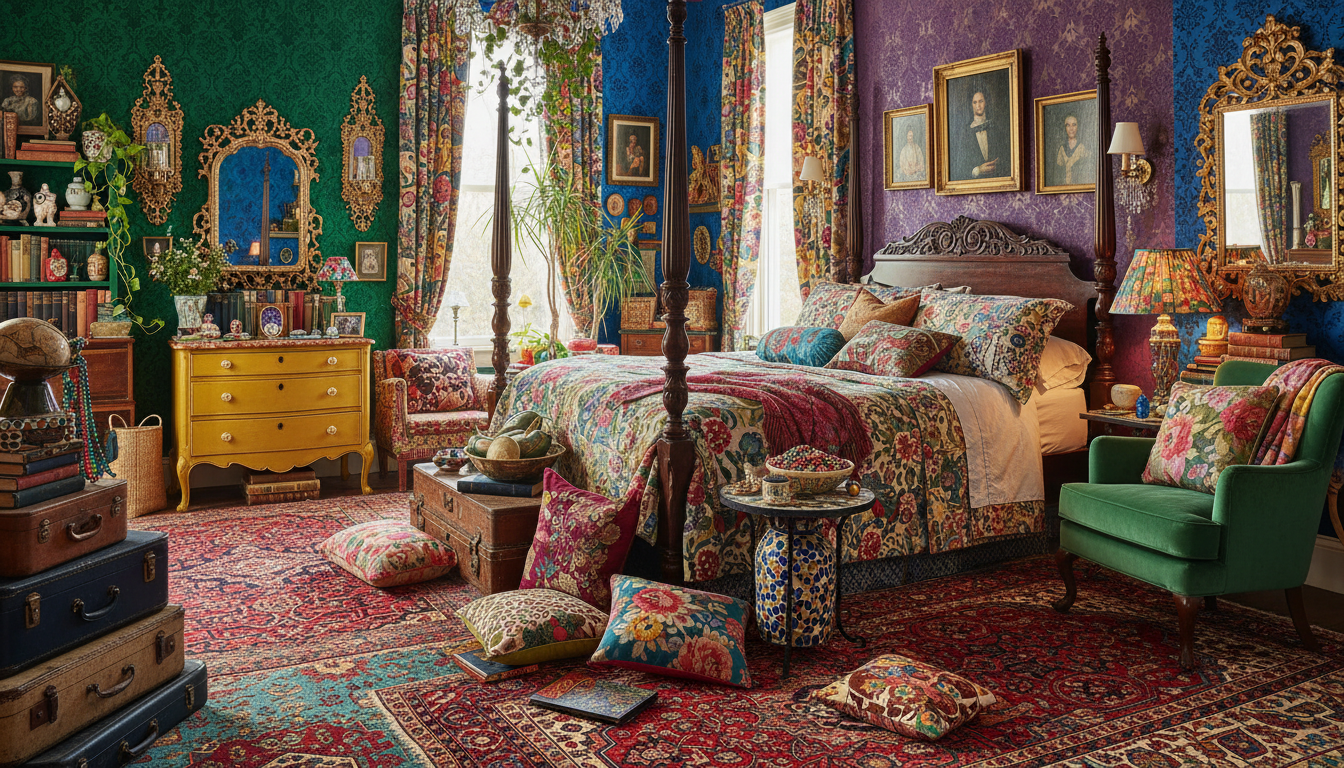
The dopamine decor trend is reshaping how young adults think about their living spaces. For years, the minimalist playbook ruled: clean lines, neutral tones, clutter-free shelves. Strip it down. Keep it sparse. Now, a generation is pushing back—hard.
Search interest in “gummy bears aesthetic” has jumped 50% on Pinterest. Instagram feeds overflow with jewel tones, patterned wallpapers, and deliberately layered rooms. Thrift stores are getting picked over for vintage finds. The shift is real, and interior designers are noticing. According to Fortune, this pivot reflects a deeper desire for homes that feel lived-in rather than staged.
The rejection of minimalism runs deeper than aesthetics. It’s personal. It’s psychological. And it’s actively challenging what “good taste” means.
The Rise of Dopamine Decor: What It Means
Dopamine decor isn’t a chaotic free-for-all. It’s maximalism with intention. Bold colours—hot pinks, electric blues, burnt oranges—share walls with textures: velvet, knit, ceramic, wood. Layers matter. Clashing patterns matter. A room should tell stories through its objects and colours, not whisper politely through absence.
The gummy bear aesthetic takes this further. Candy-coloured interiors with soft, tactile vibes. Think: pastel greens paired with terracotta. A lime-green chair next to burnt sienna shelving. The palette mimics childhood joy, literally.
Why now? Mental health consciousness among Gen Z and millennials has reframed how they think about their homes. A beige wall doesn’t soothe anymore—it depresses. A room full of colour, texture, and personality boosts mood. That’s the promise. That’s the sell. That’s increasingly the lived reality for younger homeowners and renters choosing how to fill their spaces.
The movement isn’t just about aesthetics. It’s rebellion against what came before.
Millennial Beige Is Dead—Long Live Colour
For the better part of a decade, “millennial beige” dominated. Soft whites, warm greys, the occasional blush pink. IKEA minimalism went mainstream. Marie Kondo taught millions to discard. Minimalism became a status symbol: proof you had your life together, that you weren’t weighed down by stuff.
Younger people inherited this. They bought the furniture. They adopted the mindset. Then they got tired of it.
According to home design analyses, the hunger for maximalist, antique-filled spaces signals a broader rejection of sterility. Homes should feel inhabited. They should reflect who you are, not who Instagram suggests you should be.
Pantone’s 2026 Colour of the Year, “Cloud Dancer” white, underscores the tension. Even colour forecasters are still reaching for neutrals. But the market isn’t following. Young adults are voting with their credit cards—and their search histories—for something louder.
Why Vintage and Antiques Are Having a Moment
Part of dopamine decor’s appeal lies in its anti-fast-fashion ethos. A Gen Z maximalist isn’t buying five identical throw pillows from a chain store. They’re hunting thrift shops for a 1970s kilim rug. A mismatched set of ceramic plates. A vintage side table that nobody else will have.
This creates an authenticity that new, mass-produced items can’t match. It’s sustainable by accident. It’s personal by design.
The resurgence in antique and vintage items reflects this. A room built from thrifted finds, family heirlooms, and intentional new purchases feels genuinely yours. Not curated by an algorithm. Not filtered through a lifestyle brand’s vision.
For renters—a huge portion of Gen Z and millennials—this is especially powerful. You can’t repaint the walls, but you can layer in colour through furniture, art, textiles, and objects. Dopamine decor works with rental constraints rather than against them.
The Psychology Behind the Trend
Interior designers and colour psychologists have long understood colour’s emotional weight. Warm tones stimulate. Cool tones calm. But dopamine decor takes this further: it’s about creating an environment that makes you feel alive, creative, and authentically yourself.
A minimalist room strips away distraction. A dopamine-decorated room provides stimulation. Both serve purposes. But for a generation already dealing with digital overwhelm, a quiet home can feel sterile rather than restful. A colourful, textured, layered space can feel joyful.
This isn’t frivolous. It’s mental health strategy dressed as home décor.
The Practical Shift
So what does this mean practically? Homeware retailers are adapting. Bold wallpapers sell. Textured, patterned fabrics move. Vintage marketplaces and second-hand platforms gain traffic. Thrift stores become destination shopping, not last-resort shopping.
For those redecorating, the approach differs from minimalism. Instead of curating ruthlessly, you’re layering thoughtfully. You’re mixing eras, styles, and palettes with intention rather than accident. You’re treating your home as a living, evolving expression of yourself.
It’s messier than minimalism. It requires more decision-making. But for many, it’s worth it.
FAQ
What exactly is dopamine decor?
Dopamine decor emphasises bold colours, textures, and layered objects chosen to boost mood and express personality. It’s maximalism with intention—the opposite of minimalist blank spaces. Think jewel tones, patterned wallpapers, vintage finds, and deliberately cluttered (but curated) shelves.
Is dopamine decor the same as the gummy bear aesthetic?
Not quite. The gummy bear aesthetic is a subset of dopamine decor. It specifically uses candy-inspired colour palettes—pastel greens, hot pinks, oranges—with soft, tactile textures. All gummy bear aesthetics are dopamine decor, but not all dopamine decor is gummy bear aesthetic.
Why is minimalism falling out of favour with Gen Z?
Younger generations view minimalism as sterile and impersonal. After years of “millennial beige,” they want homes that reflect their identities, boost their mood, and feel lived-in. Dopamine decor offers stimulation and authenticity instead of restraint.
Can renters do dopamine decor?
Absolutely. Since dopamine decor relies heavily on furniture, textiles, art, and objects rather than permanent changes, it works well for renters. You can layer in colour and personality without touching the walls.
Where do people source dopamine decor items?
Thrift stores, vintage markets, second-hand online platforms, and antique shops are popular. New items from maximalist-friendly brands also work. The key is mixing eras and styles intentionally rather than buying matching sets.
