
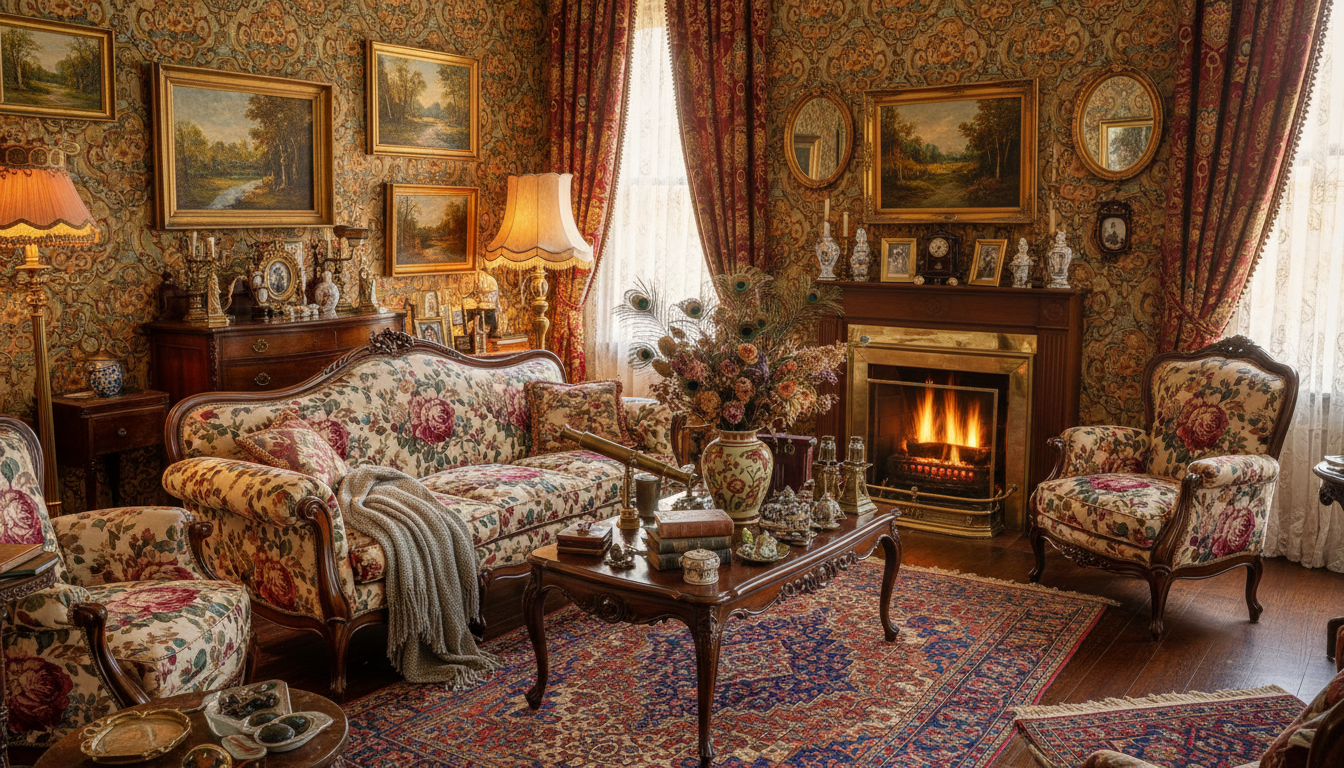
Grandma chic home decor is having a moment—and it’s upending everything young people thought they wanted in their living spaces.
For years, the prescription was clear: stark white walls, grey everything, minimal clutter, Scandinavian vibes. The millennial generation had turned their backs on their grandmothers’ homes with their dark wood furniture, floral fabrics, and unapologetic maximalism. That aesthetic felt stuffy, dated, tired.
Now Gen Z is doing something unexpected. According to reporting on the trend, younger generations are deliberately steering away from ultra-modern interiors. They’re embracing the very style their older siblings spent a decade rejecting: the warm, cluttered, colour-soaked homes of their grandmothers.
The shift marks a genuine departure from what felt like an iron grip of minimalist design. Where once a carefully curated shelf with three objects was aspirational, now Gen Z is filling their spaces with ornaments, mixing patterns, layering textures, and treating their homes less like showrooms and more like actual lived-in places.
What Exactly Is Grandma Chic Home Decor?
The grandma chic aesthetic draws heavily from the 1970s. Think dark wood furniture—not the light ash tones of modern Scandinavian design, but proper brown wood that feels weighty and substantial. Layer in floral patterns on upholstery and wallpaper. Add brass fixtures, vintage mirrors, and the kind of small decorative objects that previous design trends would have called clutter.
The approach is deliberately maximalist. Walls aren’t blank canvases. Rooms don’t whisper; they announce themselves. Colours clash in ways that somehow work. An orange velvet sofa sits beside a burgundy patterned armchair. A wall of vintage plates hangs above a credenza covered in family photos and small potted plants.
It’s the opposite of every design rule that dominated Instagram and Pinterest for the last decade. And young people are buying into it wholeheartedly.
The Celebrity Effect and Brand Response
The trend hasn’t emerged in a vacuum. Celebrity influence has accelerated its adoption. Kendall Jenner, among other high-profile personalities, has been spotted embracing the aesthetic in her own home designs. When someone with Jenner’s profile pivots away from minimalism, the rest of the industry takes notice.
Retailers have already begun capitalizing on the shift. Zara, the Spanish fashion and home brand, has started incorporating granny chic elements into its home collections. Other major furniture and decor brands are likely watching closely, ready to expand their vintage, maximalist offerings if the trend shows staying power.
The commercial attention matters because it validates what Gen Z is doing. This isn’t a niche movement. It’s becoming mainstream, which means more options, lower prices, and easier access to the pieces needed to achieve the look.
Where the Trend Shows Up Most
Living rooms are ground zero for the grandma chic transformation. These are the spaces where young people are most willing to experiment with colour and pattern. A previously beige living room becomes the canvas for a deep green wall, vintage floral sofas, and an eclectic mix of side tables from different eras.
Kitchens are another hotspot. Open shelving displays collections of vintage plates and bowls. Cabinets get painted in bold, warm tones. Copper and brass fixtures replace chrome. The kitchen transforms from a sleek, functional space into something with character and warmth.
Bedrooms, dining areas, and entryways are following similar patterns. The through-line is the same: reject the idea that a space should be monochromatic, minimal, and deliberately empty. Fill it instead with colour, pattern, memory, and personality.
Why Gen Z Is Choosing Maximalism
The psychological appeal makes sense. Minimalism promised calm and clarity. For some, it delivered. For others, particularly younger generations navigating economic uncertainty and social fragmentation, the emptiness started feeling cold rather than peaceful.
Grandma chic offers something different. It’s nostalgic without being ironic. It’s warm without being twee. A home decorated this way feels lived-in, accumulated, real. Each object can have a story. There’s room for sentimentality in a way that brutalist minimalism explicitly rejected.
There’s also a practical element. Thrifting and vintage shopping are environmentally friendlier than buying new. Gen Z, more conscious of sustainability than previous generations, can justify the aesthetic partly on environmental grounds. Rescuing a 1970s credenza from a junk shop feels better than ordering a new one from a fast-furniture retailer.
The Contrast With Previous Trends
The shift is stark when you consider what came before. The Instagram minimalism of the 2010s—the grey sofa, the white shelving, the single plant placed for maximum photographic effect—has given way to something messier, louder, and arguably more human.
This isn’t to say minimalism is dead. Plenty of people still prefer cleaner spaces and neutral palettes. But the cultural conversation has shifted. The default assumption that newer equals better, that empty equals peaceful, that matching equals tasteful—these ideas are being questioned.
Gen Z is asking a different question: what actually makes a space feel like home? For many, the answer involves their grandmother’s living room.
FAQ
Q: Where can I find vintage furniture and decor for the grandma chic look?
A: Thrift stores, estate sales, vintage furniture shops, and online marketplaces like OLX or Facebook Marketplace are primary sources. Brands like Zara Home now also stock new pieces designed in the grandma chic style, offering a more accessible entry point.
Q: Is grandma chic just another trend that will fade?
A: Design trends do cycle, but this one has psychological and practical staying power. The rejection of minimalism reflects genuine fatigue with that aesthetic, and the environmental appeal of thrifted furniture gives it substance beyond pure fashion.
Q: How do I mix grandma chic with my existing modern furniture?
A: Eclectic mixing is actually central to the trend. Combine dark wood vintage pieces with contemporary items. Use bold wallpaper or paint colours to tie disparate objects together visually. The goal isn’t perfect cohesion but intentional variety.
Q: Can renters do grandma chic, or does it require permanent changes?
A: Absolutely. Focus on removable elements: throw pillows, rugs, artwork, vintage mirrors, and portable furniture. Removable wallpaper works for walls. These pieces travel with you when you move, making the style renter-friendly.
Q: What’s the difference between grandma chic and actual maximalism or bohemian decor?
A: Grandma chic specifically channels 1970s family home aesthetics—dark wood, floral patterns, brass fixtures, and inherited-object vibes. While it borrows from maximalism and bohemian styles, it’s more specific in its historical reference and more grounded in nostalgia than either of those broader movements.
