
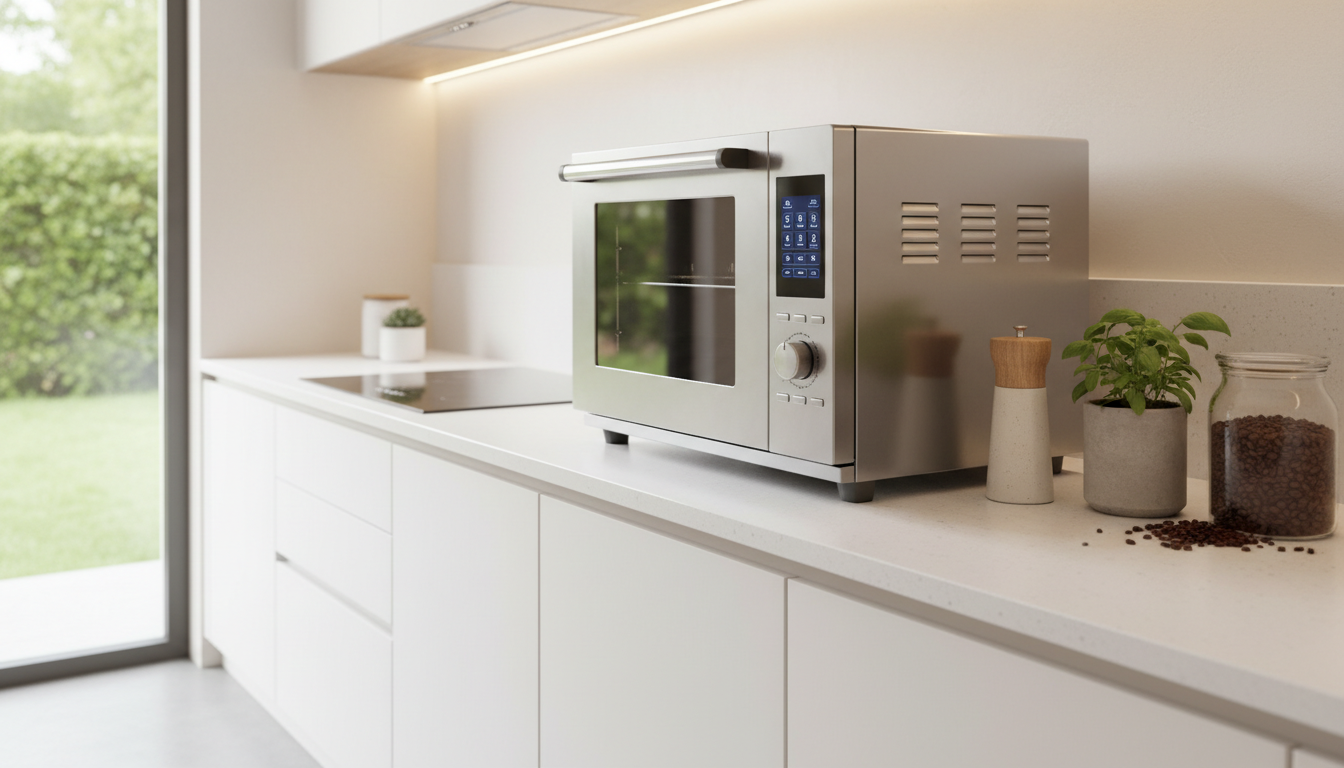
Multi-functional countertop ovens are quietly replacing the humble toaster in kitchens across India. The shift reflects a broader consumer preference for appliances that do more with less—a particularly practical consideration in homes where counter space comes at a premium.
The traditional toaster, a kitchen staple for decades, faces stiff competition from sleeker, smarter alternatives. Countertop convection ovens and air-fryer toaster hybrids now handle everything a toaster does, plus broiling, baking, reheating, and air frying. For homeowners undertaking kitchen renovations, the decision is becoming easier: buy one appliance that replaces five.
Data supports the trend. According to the 2025 Houzz U.S. Kitchen Trends Study, consumers increasingly favour appliances that handle multiple jobs. This preference has cascaded through appliance design. Manufacturers are releasing models packed with features. Home improvers are removing bulky single-function gadgets from their shelves.
The appeal extends beyond mere space-saving, though that matters enormously in Indian homes. These ovens offer genuine versatility. You can toast bread in five minutes. You can then bake samosas or reheat yesterday’s biryani in the same appliance. Air frying—a recent cooking phenomenon—comes built in on many models. That’s convenience that justifies the counter real estate.
Why the multi-functional countertop ovens are winning
Speed versus versatility has always been the trade-off. A conventional toaster browns bread faster than a convection oven. It heats up instantly. It’s simple and reliable.
But it does one thing. A multi-functional countertop oven does many things. For busy households, the flexibility often outweighs the marginal time difference. Baking a cake, air frying chicken wings, toasting bread, and reheating pizza—all possible in a single machine. Storage space, electrical outlets, and counter footprint all shrink accordingly.
The air-fryer functionality deserves special mention. Air frying has become mainstream in Indian kitchens over the past three years. Consumers investing in this cooking method no longer need a separate air fryer, a separate toaster, and a separate convection oven. One device replaces all three.
Kitchen planners and interior designers now recommend these units to clients. They free up valuable counter and cabinet space. That space can accommodate a coffee maker, a mixer, or simply remain clear—a luxury in compact urban kitchens.
Installation and safety considerations
These appliances require more planning than dropping a toaster on the counter. Adequate ventilation becomes essential. Countertop convection ovens and air fryers generate heat and steam. Placing them too close to cabinets or walls creates fire risks and damages cabinetry.
Standard safety practice applies: ensure at least 15 centimetres of clearance on all sides, especially above. Never run these appliances directly beneath wood or low-hanging shelves. Good air circulation keeps the appliance functioning efficiently. It also protects your kitchen.
After use, allow the appliance to cool before moving or storing it. Unplug it once it has cooled completely. This simple habit prevents accidents and extends the lifespan of electrical components. Many users leave their ovens plugged in constantly. That’s unnecessary and slightly risky. A quick unplug takes two seconds and offers genuine safety benefits.
Cleaning also matters more than with toasters. Crumbs still accumulate in crevices. Food particles can char on heating elements. Regular cleaning—every week for frequent users—prevents buildup and maintains performance. Most models include a removable crumb tray. Empty it after each use if you’re toasting regularly.
The economics of switching
A decent multi-functional countertop oven costs between ₹5,000 and ₹25,000 depending on brand and features. A basic toaster costs ₹800 to ₹3,000. The upfront cost is higher.
But you’re replacing multiple appliances. A mid-range air fryer costs ₹4,000 to ₹10,000. A convection oven costs ₹6,000 to ₹15,000. Add a toaster, and you’ve spent ₹10,000 to ₹28,000 on three devices occupying significant space.
One multi-functional unit delivering similar capacity can cost less overall. Energy consumption typically runs lower on combination appliances than on three separate devices running independently. The math shifts further when you factor in storage costs, cabinet real estate, and the inconvenience of managing three machines.
What’s driving kitchen trends now
Kitchen renovation decisions increasingly focus on practicality rather than tradition. Younger homeowners prioritise flexibility. They cook diverse cuisines—tandoori chicken, pasta, spring rolls—and want appliances that adapt to multiple cooking styles. Single-purpose gadgets feel antiquated.
Urban Indian households face unique constraints. Flat sizes are shrinking. Counter space is finite. Every appliance must earn its place. That’s why multi-functional devices resonate so strongly. They solve real problems. They reduce clutter. They work harder than alternatives.
Interior designers working on kitchen projects now routinely specify air-fryer toaster ovens instead of traditional toasters. It’s become standard practice in renovation specifications. Clients ask for “that combination oven thing” after seeing one in a friend’s kitchen or spotting it on social media. Word-of-mouth is driving adoption faster than advertising ever could.
The toaster isn’t going extinct. It will remain in commercial kitchens, offices, and homes where simplicity and speed matter most. For residential kitchens, though—especially those undergoing renovation—the multi-functional countertop oven represents the practical future.
FAQ
Can a countertop oven toast as quickly as a traditional toaster?
No. Countertop ovens toast bread in 4–6 minutes, while traditional toasters finish in 2–3 minutes. For households that prioritise speed above all else, a toaster remains faster. For most people, the few extra minutes are acceptable trade-offs for the appliance’s other capabilities.
How much counter space do these ovens actually require?
Modern air-fryer toaster ovens measure roughly 45–50 cm wide, 20–25 cm deep, and 25–30 cm tall. They take up less space than a traditional toaster plus a separate air fryer plus a convection oven would occupy combined. Exact dimensions vary by model.
Are they safe to use in small kitchens?
Yes, provided you maintain adequate clearance. Ensure 15 centimetres of space on all sides, particularly above. Never run them under cabinets or near curtains. Good ventilation is essential. In small kitchens, this often means keeping a window open when in use.
Will a multi-functional oven reduce my electricity bills?
Possibly. Running one combined appliance uses less total energy than running three separate devices. However, individual unit consumption varies widely by model. Check the wattage specifications before purchasing.
Do I really need to unplug it after every use?
Not strictly, but it’s recommended for safety and to prevent unnecessary standby power consumption. Unplugging takes seconds and eliminates any risk of electrical faults developing over time.
