
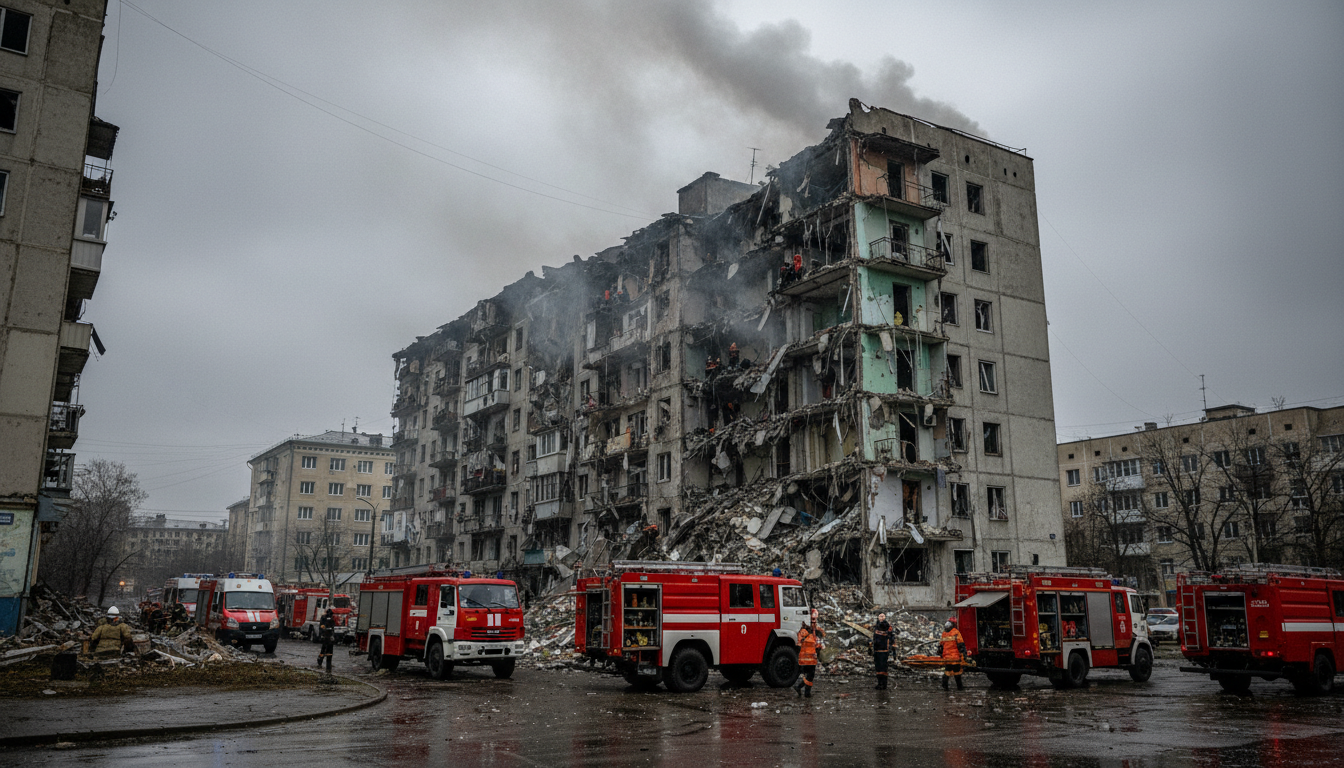
A Russian missile strike Ukraine killed at least 22 people, including five children, after hitting a residential building in the town of Pryluky on Tuesday. The attack came as part of a sustained bombardment campaign targeting civilian infrastructure across Ukrainian territory.
The strike on the apartment block in Pryluky represents the deadliest single attack in a 48-hour period that saw Russian forces deploy waves of drones and cruise missiles. On the day before, at least 11 people had been killed across Ukraine in similar attacks. Residents in Kyiv, the capital, had rushed to metro stations seeking shelter as air raid sirens wailed across the city.
Pryluky lies roughly 250 kilometres northeast of Kyiv in the Chernihiv region. The town had not seen attacks of this scale in recent weeks. Local officials have not yet released the names of the dead or provided additional details about the structure of the building or the time of impact.
The broader Russian missile strike campaign
Russian forces have intensified airstrikes on Ukrainian towns and cities over the past month. The strikes have targeted power plants, water infrastructure, and residential areas with little apparent military objective. This pattern follows Russia’s long-standing strategy of applying pressure on civilian morale through repeated bombardment.
Ukraine’s air defence systems have intercepted some incoming missiles. However, the sheer volume of Russian attacks—often involving dozens of missiles and drones in a single wave—means many projectiles reach their targets.
According to Democracy Now, the wave of attacks killing the 11 people the previous day had also struck multiple locations across the country. The timing and coordination of these strikes suggest a deliberate Russian strategy to maximise casualties and damage across a wide area rather than targeting specific military installations.
Why Pryluky matters
Pryluky is not a major military hub. The town’s significance lies mainly in its location as a transport and administrative centre. Striking residential buildings there suggests Russian forces are pursuing a war of attrition aimed at civilian populations.
The presence of children among the dead underscores the indiscriminate nature of these attacks. Five children were killed in the Pryluky strike alone. Schools, hospitals, and apartment blocks across Ukrainian towns have been struck repeatedly over the past months.
Kyiv residents seek shelter
In Kyiv itself, the latest wave of airstrikes sent residents into the metro system. The underground stations have become de facto bomb shelters for hundreds of thousands of people during air raids. Local authorities urge residents to remain in shelters until the all-clear signal is given.
The metro shelters operate around the clock during periods of intense Russian bombardment. Residents bring blankets, food, and sometimes pets. Some have set up makeshift living quarters, sleeping on benches and platform edges through multiple nights.
This pattern has become routine for Kyiv residents. The psychological toll of repeated evacuation to shelters, combined with the threat of death from incoming fire, has affected the city’s entire population.
Infrastructure damage continues
Russia has systematically targeted Ukraine’s energy infrastructure since the invasion began. Power plants, electrical substations, and water treatment facilities have suffered repeated damage. In winter months, such strikes threaten civilian populations with freezing temperatures and disease.
Hospitals have also been struck. Doctors operating in underground bunkers have reported a surge in trauma cases. Medical supplies are running low in many regions as supply lines face constant disruption.
International response
The scale and frequency of civilian casualties have drawn condemnation from Western governments and international organisations. However, diplomatic pressure has not slowed Russian attacks. The strikes continue regardless of international statements or threats of future accountability.
Ukraine has called for additional air defence systems and weapons from Western allies. The supply of such systems remains insufficient to intercept the full volume of incoming Russian missiles and drones.
FAQ
How many people have been killed in Russian missile strikes on Ukrainian towns this week?
At least 33 people have been killed in the past 48 hours. The Pryluky strike alone accounted for 22 deaths, while attacks the previous day killed at least 11 more.
Why are Russian forces attacking residential buildings in towns like Pryluky?
Pryluky has no major military installations. The strikes appear designed to terrorise civilian populations and damage civilian infrastructure rather than achieve specific military objectives.
What are Kyiv residents doing during air raids?
Most Kyiv residents seek shelter in metro stations when air raid sirens sound. The underground metro system provides protection from missile strikes and has become a de facto bomb shelter for hundreds of thousands of people.
Can Ukrainian air defences stop all incoming Russian missiles?
No. Ukraine’s air defence systems have improved over time, but they cannot intercept every missile and drone. Russian forces often launch attacks involving dozens of projectiles simultaneously, ensuring some reach their targets.
How does this attack compare to earlier stages of the war?
Russia has escalated the frequency and scale of civilian-targeting strikes significantly over recent months. Attacks on residential buildings have become routine rather than exceptional.
The death toll in Pryluky marks one of the deadliest single strikes on a residential area in weeks. With no end to the bombardment campaign in sight, Ukrainian civilian casualties are expected to continue mounting.
