
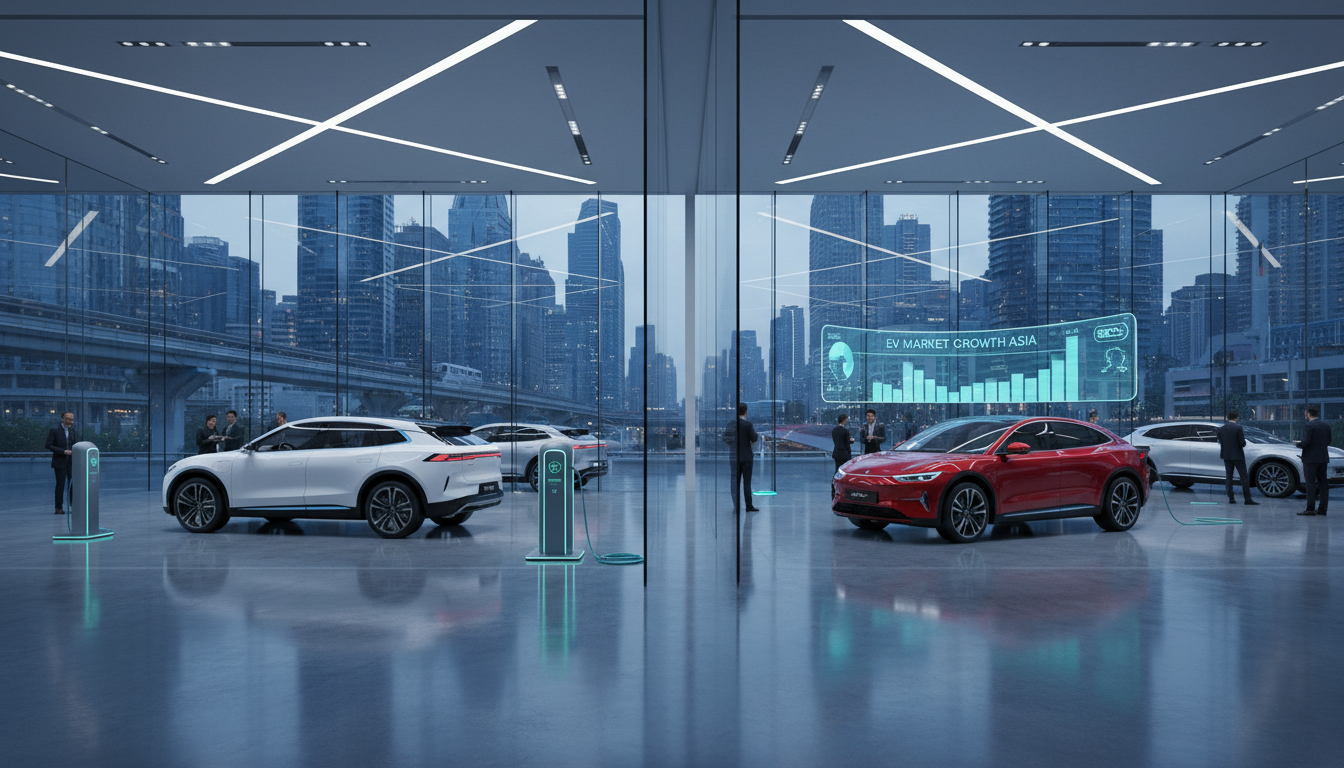
Electric SUV price competition is reshaping vehicle markets in China and India as automakers deploy newer battery platforms and aggressively cut costs to capture market share. Within weeks, three major manufacturers rolled out new electric sport utility vehicles with dramatically improved charging speeds, longer ranges, and lower price points than their predecessors.
The moves signal a turning point in the EV race across Asia’s two largest automotive markets. Consumers are no longer choosing between affordability and capability; they’re getting both.
BYD’s Seal 07 brings ultra-fast charging to budget segment
BYD launched its second-generation Seal 07 electric sedan in China with a starting price of approximately $18,200 USD—a nearly 12% reduction from the previous generation. The real headline is the charging performance. According to reports on the Seal 07, the vehicle can charge from 10% to 97% battery capacity in just 9 minutes using rapid charging technology.
That speed matters enormously in markets where many buyers lack home charging infrastructure. A commuter can refill during a coffee break rather than planning trips around charging stops. BYD is leveraging rapid advancements in battery chemistry and thermal management to deliver capability that was exclusive to premium vehicles two years ago.
The price cut is particularly aggressive. BYD is betting that volume will compensate for tighter margins. In China’s oversaturated EV market, where dozens of brands compete for buyers, this is a necessary move.
Mercedes arrives in India with premium electric option
Mercedes-Benz took a different approach by launching the locally assembled Electric GLC 400 4MATIC in India at ₹78.50 lakh (approximately $94,000 USD). The pricing positions the vehicle as a premium offering, not a volume play.
Built on the new MB.EA-M electric platform, the Electric GLC 400 carries a 94 kWh battery with an official range of up to 711 km. It supports 800V fast-charging architecture—the same technology appearing in multiple new EVs across the market.
For Indian buyers, this vehicle represents a significant shift. Mercedes has historically imported vehicles at prohibitive prices. Local assembly reduces costs and makes premium electric vehicles more accessible to India’s growing ultra-high-net-worth segment. The GLC nameplate already carries brand recognition, which helps justify the price tag.
The 800V charging standard appearing here and elsewhere indicates the industry has largely settled on a common fast-charging architecture. That standardization benefits consumers and reduces infrastructure fragmentation.
IM Motors stakes claim with steer-by-wire innovation
IM Motors (the electric vehicle subsidiary of SAIC) launched the LS8 Neo BEV SUV in China with prices starting at $35,800 USD. The model sits between BYD’s ultra-affordable segment and Mercedes’ luxury positioning.
The LS8 Neo features two standout capabilities: an 800V charging platform and steer-by-wire technology. The vehicle offers ranges up to 752 km under CLTC testing standards, matching or exceeding competitors with far simpler drivetrains.
Steer-by-wire removes the mechanical connection between the steering wheel and front wheels. It’s a technology that few consumers understand but increasingly influences purchase decisions among tech-savvy Chinese buyers. IM Motors is using it as a differentiation point in a crowded segment.
What the launches reveal about battery and charging advancement
These three vehicles represent three price tiers, yet all incorporate 800V architecture or rapid charging capability. Five years ago, that technology appeared only in the most expensive models. Today, it’s becoming standard.
Battery energy density has improved dramatically. Lighter, more efficient cells mean vehicles can achieve 700+ km range without massive weight penalties. Thermal management systems keep batteries cool during rapid charging, extending lifespan and reliability.
The practical impact: buying an electric SUV no longer means accepting severe range anxiety or hour-long charging waits. A 9-minute charge to near-full capacity (BYD) eliminates the primary objection many traditional car buyers voice when considering EVs.
Market dynamics in China versus India
China’s EV market is saturated. BYD’s 12% price cut reflects fierce competition. Dozens of startups and established automakers are fighting for limited market share. Buyers can shop across numerous options, so price and feature parity become survival requirements.
India’s market is earlier stage. Mercedes’ local assembly represents confidence that demand for premium electric vehicles exists. However, India’s charging infrastructure remains patchy outside major metros. The Electric GLC 400’s 711 km range partly compensates for infrastructure gaps—owners can travel between distant charging stations.
That infrastructure reality shapes vehicle strategy. In China, automakers assume charging access. In India, they design for longer range and reliability.
The broader competitive picture
These launches demonstrate how quickly the electric SUV segment is professionalizing. Charging times, battery capacity, and driving range are converging across price tiers. The differentiation increasingly comes from software, autonomous features, interior design, and brand prestige rather than raw EV performance metrics.
Consumers now evaluate electric SUVs against comparable petrol models on total cost of ownership, not just purchase price. In markets with cheap electricity, that calculation increasingly favors EVs.
Automakers are gambling that rapid improvements in battery manufacturing and charging infrastructure will continue. If that wager pays off, these 2026 launches will look primitive within three years. If progress stalls, aggressive pricing could destroy margins across the industry.
For now, Indian buyers entering the premium electric SUV market and Chinese buyers seeking affordability have genuine, capable options that barely existed twelve months ago.
FAQ
Q: Can the BYD Seal 07 really charge 10-97% in 9 minutes?
A: Yes, according to BYD’s specifications. The vehicle uses rapid charging technology and an optimized thermal management system. The 9-minute timeframe applies to ideal charging conditions with compatible infrastructure. Most public chargers won’t match that speed yet.
Q: What is 800V fast-charging, and why does it matter?
A: 800V architecture allows faster current flow without excessive heat generation. It reduces charging time by 30-40% compared to earlier 400V systems. Both the Mercedes GLC and IM Motors LS8 employ this standard, indicating industry convergence.
Q: Is the IM Motors LS8 Neo available outside China?
A: No confirmed markets outside China have been announced. IM Motors is focused on the domestic Chinese market, where competition is most intense.
Q: Will Mercedes-Benz locally assembled electric vehicles help India’s EV adoption?
A: Potentially. Local assembly reduces costs and establishes charging infrastructure partnerships. However, the ₹78.50 lakh price point limits appeal to affluent buyers, not mass-market consumers.
Q: How do these vehicles’ ranges compare to petrol SUVs?
A: The stated ranges (711-752 km) match or exceed comparable petrol SUVs in combined city/highway driving. However, actual range varies significantly based on weather, driving conditions, and terrain. Real-world results typically fall 10-15% below manufacturer claims.
