
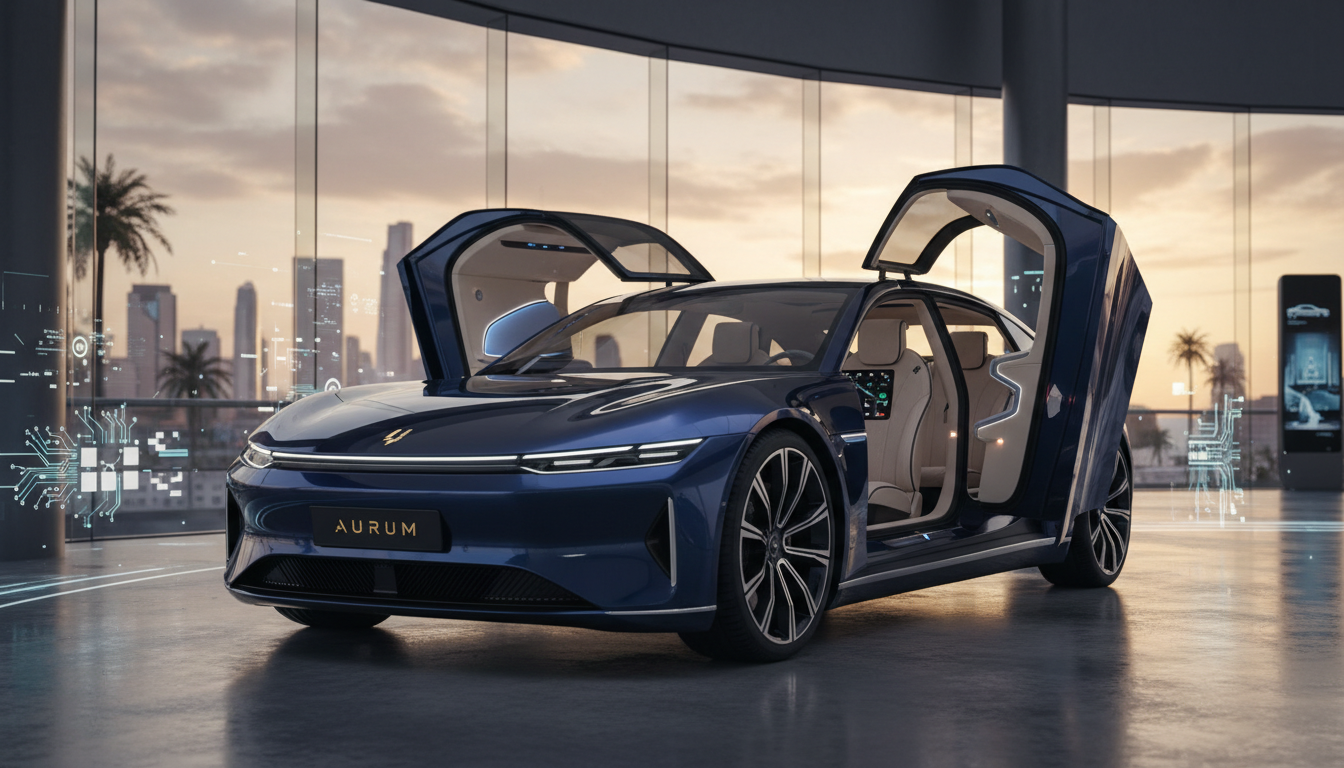
BYD’s luxury electric sedan, the Yangwang Altior, has made its global debut in Abu Dhabi with a price tag of approximately US$306,000 for its limited-edition model. The announcement marks a significant push by the Chinese automaker into the ultra-premium EV segment, targeting wealthy buyers who prioritise advanced technology and extreme range capabilities.
The limited-edition variant, called the Shanhe Dingyun, carries a sticker price of RMB 2.08 million. Deliveries are scheduled to begin in Q2 2027. For context, this positions the vehicle well above most mainstream luxury sedans available today, placing it squarely in territory occupied by traditional marques like Mercedes-Benz and BMW’s flagship models.
The BYD luxury electric sedan specs that matter
The Altior stretches 5.6 metres in length—comparable to a Rolls-Royce Phantom or Mercedes-Maybach. Four independent electric motors power the vehicle, one at each wheel. This architecture enables a parlour trick that separates it from conventional luxury cars: on-spot turning and sideways movement across its wheelbase.
The underpinnings rest on BYD’s e4 platform, engineered specifically for independent wheel control. Each motor can be regulated separately. This means the sedan can rotate 90 degrees without moving forward or backward, or shuffle sideways into a tight parking space. It’s the sort of party trick that sells million-dollar vehicles.
The battery pack uses BYD’s 1,000V Blade battery system. The CLTC range exceeds 1,000 kilometres on a single charge. For those unfamiliar with the Chinese testing standard, CLTC figures typically run 20–30 per cent higher than real-world figures, but even accounting for this, the Altior promises exceptional range for daily driving and longer trips.
Coach doors and interior luxury
According to Inside China Auto, the Altior features distinctive coach doors—rear doors that hinge from the rear pillar rather than the front. This design is a hallmark of ultra-luxury vehicles and eases passenger entry and exit in confined spaces.
The five-seat cabin targets executives and high-net-worth individuals accustomed to chauffeur-driven vehicles. The focus is on rear-passenger comfort rather than driver engagement. Climate control, massage seats, and premium audio systems are table stakes in this segment.
Advanced autonomous driving tech
At the heart of the Altior’s autonomous capabilities sits BYD’s 4nm Xuanji A3 chip. This processor handles advanced driver-assistance systems (ADAS) functions—highway cruising, lane-keeping, automatic parking, and collision avoidance.
The 4nm fabrication process is cutting-edge. BYD designed the chip in-house. By embedding semiconductors at this scale, the automaker reduces latency and improves real-time decision-making for safety-critical driving tasks.
Most mainstream EVs still rely on third-party chips from companies like Qualcomm or NVIDIA. BYD’s vertical integration here is notable. It suggests the company is building an ecosystem where hardware, software, and battery technology converge under one roof.
Market positioning and competition
The luxury EV segment remains fragmented. Tesla’s Model S Plaid costs around US$90,000–110,000 globally. Porsche’s Taycan sits in the US$80,000–150,000 range. BMW’s iX M60 pushes past US$110,000. The Altior, at US$306,000 for the limited edition, targets a different buyer entirely—one who prioritises chauffeur comfort over sportiness and is willing to pay for exclusivity and cutting-edge Chinese engineering.
Traditional luxury automakers have been slow to develop true flagship electric sedans. Mercedes-Benz’s EQS is the closest competitor, priced from US$104,000 upwards in the US. Audi’s e-tron GT and Porsche Taycan operate in similar territory. None offer the sheer length, four-motor architecture, or on-spot turning capability of the Altior.
For Indian buyers, the Altior represents an unlikely but illustrative case. While import duties and local regulations make a RMB 2.08 million vehicle impractical for the Indian market today, the technology—ultra-long range, independent wheel motors, and bespoke chips—will eventually trickle down to more affordable segments. BYD already competes aggressively in India’s EV space through partnerships with companies like Saic-GM-Wuling.
Deliveries and availability
The first Altiors will reach customers in Q2 2027. Production numbers remain undisclosed, but “limited edition” typically signals fewer than 1,000 units annually. At this price point and with this lead time, exclusivity is the product as much as the vehicle itself.
Global availability beyond China remains uncertain. Homologation and import regulations in Europe, the US, and the Middle East differ markedly. The Abu Dhabi debut suggests BYD is exploring Middle Eastern sales, where ultra-luxury EVs have found an audience among Gulf-based buyers.
FAQ
Q: What is the Yangwang Altior called in China?
A: The Yangwang Altior is known as the Dingyao in the Chinese market.
Q: How much does the limited-edition Altior cost in US dollars?
A: The limited-edition Shanhe Dingyun model is priced at approximately US$306,000 (RMB 2.08 million).
Q: What is the real-world driving range of the Altior?
A: The CLTC range exceeds 1,000 kilometres per charge. Real-world range will be lower—typically 20–30 per cent less than CLTC figures.
Q: When will the Altior be available for delivery?
A: Deliveries are expected to commence in Q2 2027.
Q: Can the Altior turn and move sideways?
A: Yes. The four independent electric motors and e4 platform enable on-spot 90-degree rotation and sideways movement across the wheelbase—a capability rarely seen on passenger vehicles.
