
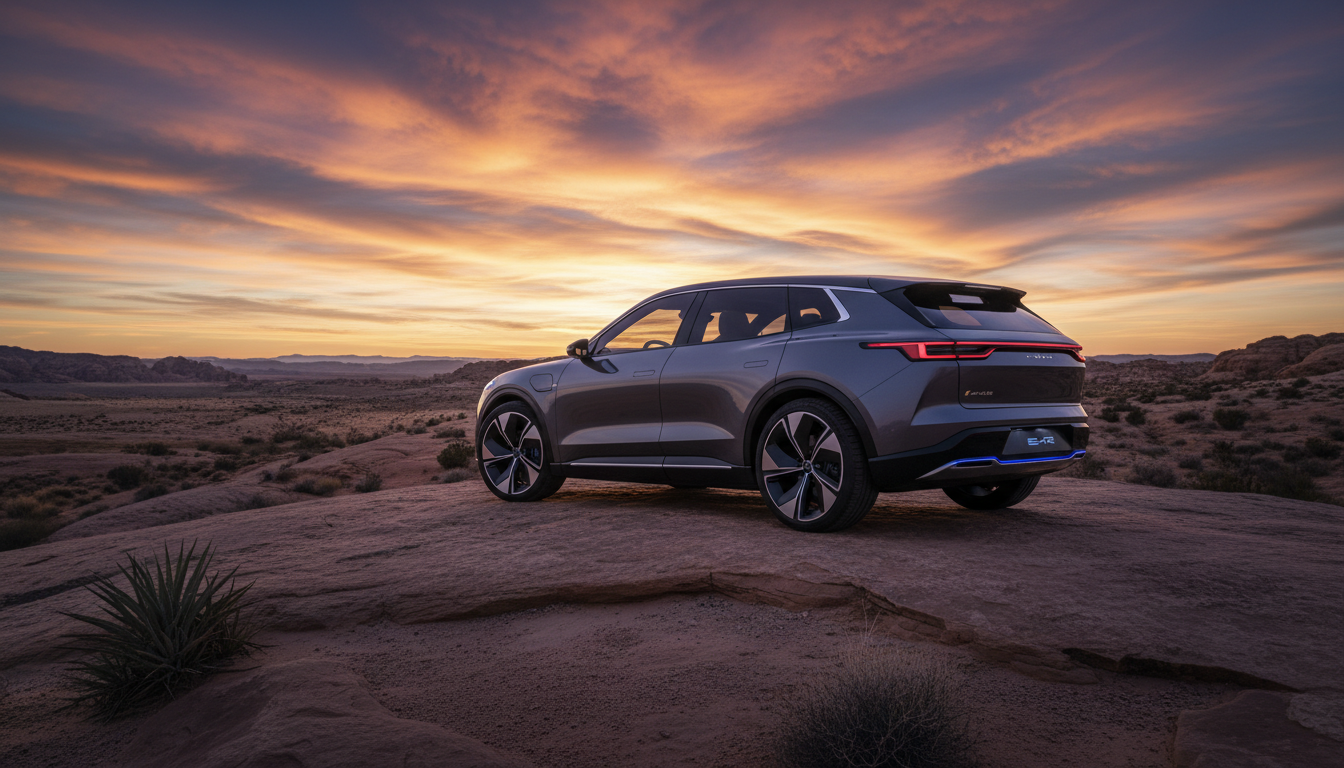
Chinese electric vehicle manufacturer XPeng’s extended-range SUVs launch marks a significant push into emerging markets. The company has opened pre-orders for its flagship GX and G9L models across 11 countries in the Middle East and Africa, including the UAE, Qatar, Morocco, and Nigeria.
The move signals XPeng’s ambition to compete beyond China’s borders. The company has set its sights on over 20 countries and regions across the Middle East and Africa by 2027, according to company reports. It plans to establish over 100 sales and service outlets in the region during this period.
What’s driving the expansion?
Extended-range vehicles—also called range-extended or plug-in hybrids in some markets—combine battery power with a petrol engine for longer distances. They appeal to buyers uncertain about charging infrastructure. For regions without dense charging networks, this hybrid approach removes the “range anxiety” that deters first-time EV buyers.
XPeng’s timing reflects a broader shift. Indian automakers and global manufacturers have also begun testing extended-range models in markets where pure battery EVs face adoption barriers. The Middle East and Africa represent underserved markets with growing wealth and weak existing EV infrastructure—ideal conditions for this technology.
The GX and G9L extended-range SUVs specifications
Both vehicles pack serious charging speed. They feature 800V architecture with 5C fast charging capability. A full charge from 10% to 80% takes approximately 10.7 minutes. That’s comparable to filling a petrol tank, a critical selling point in regions with sparse public charging networks.
The maximum combined NEDC range reaches 1,210 km. NEDC (New European Driving Cycle) figures are typically optimistic, so real-world range will vary. Still, this positions the vehicles well for long-distance drives across less-developed road networks.
The SUV format appeals across the Middle East and Africa. Larger vehicles suit varied terrain and buyer preferences in these regions. XPeng offers both the compact GX and the larger G9L, providing options for different segments.
XPeng’s regional strategy
Launching in 11 countries simultaneously represents an aggressive market entry. The UAE and Qatar bring wealthy, tech-savvy buyers with purchasing power. Morocco and Nigeria target different demographics: North Africa’s growing middle class and West Africa’s emerging markets with rising vehicle demand.
Pre-orders are the first step. Whether XPeng matches production capacity to demand remains unclear. The company faces competition from Tesla, BYD, and local brands already present in these markets.
Establishing over 100 service outlets by 2027 is crucial. EV buyers in these regions need confidence in after-sales support. A service network builds trust faster than marketing alone.
How this affects Indian buyers
India remains absent from XPeng’s announced expansion. However, the company’s success in these markets could influence its eventual India strategy. Extended-range technology may appeal in India, where charging infrastructure remains patchy outside major metros.
XPeng competes with Chinese rivals like BYD and NIO for international expansion. All are targeting similar regions. If XPeng succeeds in Africa and the Middle East, it may strengthen the case for entering South Asia—potentially India—in later phases.
Indian EV makers like Mahindra and Tata Motors should take note. A credible Chinese competitor offering long-range SUVs at scale could reshape regional competition.
The broader EV market context
Extended-range SUVs occupy a middle ground. They’re more expensive than pure petrol vehicles but cheaper than premium battery-only EVs. They also sidestep charging anxiety, the primary barrier to EV adoption in developing markets.
Global EV sales surpassed 14 million units last year, with China accounting for over 60% of new EV registrations. But outside China, EV penetration remains low in Africa and parts of the Middle East. XPeng’s expansion targets precisely these underserved zones.
The company’s 800V charging technology has become competitive standard. Hyundai, Kia, and others offer similar speeds. XPeng’s edge lies in integrating this into affordable SUVs aimed at mass-market buyers, not just luxury segments.
Timeline and targets
XPeng’s 2027 goal of over 20 countries suggests a measured rollout. Establishing 100+ outlets simultaneously would be expensive and risky. Expect staggered openings, focusing first on wealthy Gulf states and North African hubs like Morocco.
The pre-order phase will reveal actual demand. If take-up is weak, XPeng may scale back. If strong, expect rapid expansion and fresh investment in local assembly plants.
FAQ
What’s the difference between extended-range and battery-only EVs?
Extended-range vehicles (also called range-extended or REVs) combine a battery with a petrol engine. The engine kicks in when battery power depletes, extending total range. Pure EVs rely on batteries alone and require charging infrastructure. Extended-range vehicles suit regions with sparse charging networks.
How fast does the XPeng GX/G9L charge?
Using 800V fast charging, both vehicles charge from 10% to 80% in approximately 10.7 minutes. This requires access to compatible fast-charging stations, which may be limited in some launch markets.
What’s the maximum range of these vehicles?
The maximum combined NEDC range is 1,210 km. This figure assumes optimal driving conditions and includes both battery and engine power. Real-world range depends on driving patterns, terrain, and climate.
Is XPeng coming to India?
XPeng has not announced India expansion plans. The company is focusing on 20+ countries in the Middle East and Africa by 2027. India may follow later if regional expansion succeeds.
Which countries can pre-order the GX and G9L now?
Pre-orders are open in 11 countries, including the UAE, Qatar, Morocco, and Nigeria. Exact availability varies by country and model.
