
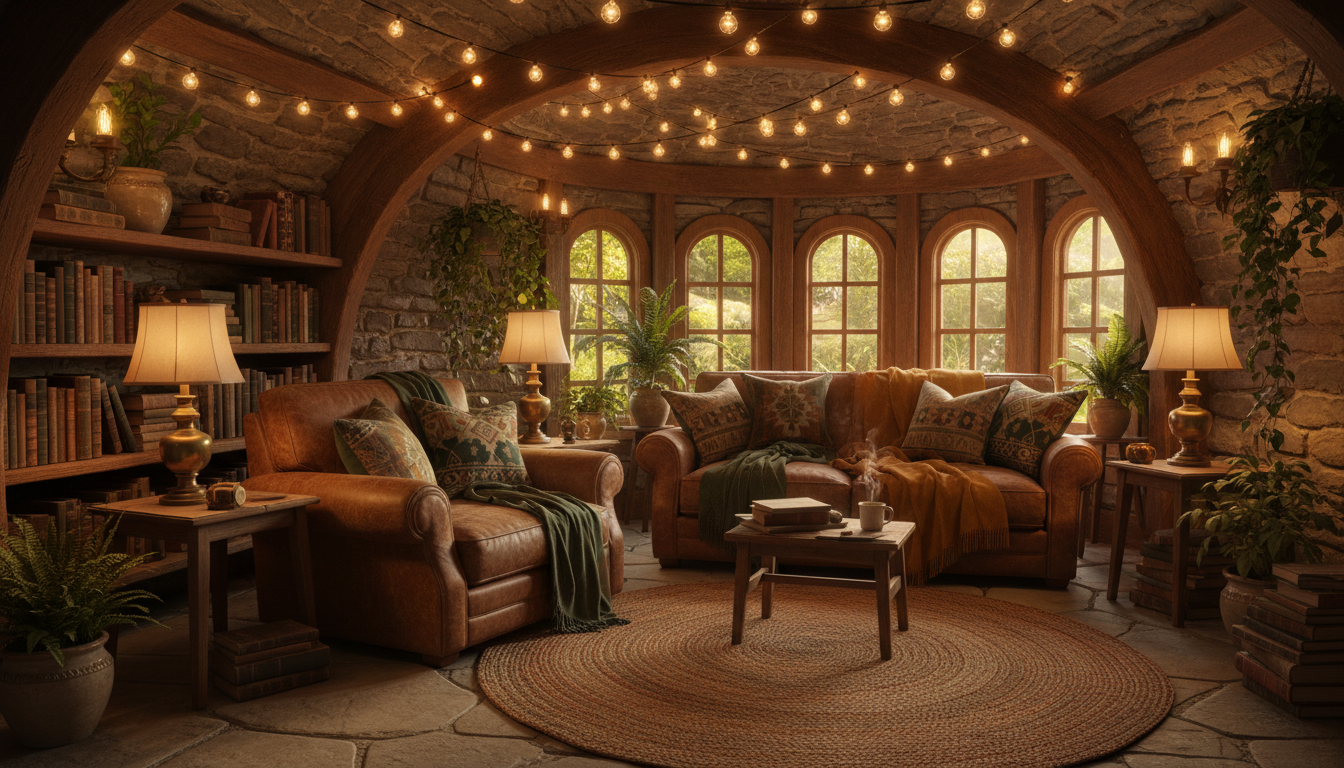
Burrowcore interior design has quietly replaced cottagecore as the season’s defining home aesthetic, with Google searches jumping 244.8% since early September. The trend, which emerged from reimagined storybook worlds and childhood memories of snug retreats, prioritizes comfort and refuge over the romantic countryside fantasy that dominated previous years.
The shift reflects a broader appetite for spaces that feel lived-in and protective rather than picture-perfect. Unlike cottagecore’s focus on rustic charm and floral pastels, burrowcore centres on warmth, texture, and layered lighting—elements that promise genuine comfort as temperatures drop.
What Is Burrowcore?
Burrowcore draws inspiration from classic children’s book illustrations, particularly those by Beatrix Potter. Think the cosy dens in The Tale of Mrs. Tiggy-Winkle or the snug interiors in The Tale of Jemima Puddle-Duck. These weren’t glamorous spaces. They were functional, cluttered, layered with necessity and affection.
The aesthetic celebrates what might otherwise be dismissed as clutter. Mismatched vintage finds, worn textures, books stacked on shelves, plants crowding windowsills, and soft furnishings piled on seating—these are features, not flaws. Burrowcore says a home should feel like a place you want to burrow into when the world feels overwhelming.
According to House Beautiful, the trend emphasises comfort and lived-in spaces that function as a refuge. This marks a clear departure from the polished minimalism that dominated design conversations for much of the past decade.
The Role of Warm Lighting in Burrowcore
Warm, layered lighting sits at the heart of burrowcore interior design. This isn’t about single overhead fixtures or stark task lighting. Instead, multiple light sources combine to create depth and intimacy.
Pinterest searches for “warm lighting” have climbed 66% in the past month, signalling how seriously people are taking this element. The trend favours table lamps, wall sconces, and ambient overhead fixtures that cast gentle, golden light. Lampshades matter too. Vintage linen, paper, or pleated fabric softens the glow.
According to Ideal Home, warm lighting is the microtrend’s defining feature. The goal is to eliminate harsh shadows and create zones of comfort within a room. A corner with a reading chair, warm wall light, and a side table becomes instantly more inviting than the same corner lit by a single bright bulb.
Layering also means combining different colour temperatures. Warm white bulbs (2700K or lower) work best. Mix pendant lights over a dining table with floor lamps beside seating and perhaps a string of soft fairy lights on a shelf. The cumulative effect feels enveloping.
Colour Palette and Textures
Burrowcore colour schemes draw from nature. Moss greens, terracotta, ochre, and mocha tones dominate. These aren’t the muted, cool greys of minimalism. They’re warm, grounding shades that anchor a space.
Textures matter equally. Wool blankets, linen cushions, velvet upholstery, cork, jute, and natural wood all feature prominently. The idea is tactile richness rather than visual minimalism. A burrowcore room invites you to touch things—to run your hand over a knitted throw or sink into layered cushions.
Flooring can incorporate sisal rugs, wool carpets, or polished concrete softened with rugs. Wood—whether original floorboards or vintage furniture—provides warmth. Hard, reflective surfaces are minimised in favour of materials that absorb light and feel soft underfoot.
Furniture and Layout
Burrowcore rejects the low-profile, floating furniture aesthetic popular in recent years. Instead, it embraces lower-slung seating, deeper sofas, and vintage or secondhand pieces with visible wear.
A burrowcore living room might include a mismatched collection of armchairs, each with its own character. Ottoman footstools piled with cushions. A bookshelf overstuffed with volumes, decorative objects, and framed photographs. Coffee tables laden with magazines, candles, and a steaming mug.
Secondhand and vintage furniture is central to the aesthetic. Not because it’s trendy to shop vintage, but because old furniture has soul. The worn leather of a 1970s wingback chair. A wooden side table with visible knots and grain variation. These tell stories.
This approach is sustainable by necessity rather than conscious signalling. Reusing and repurposing furniture reduces waste. For Indian audiences particularly, this aligns with long-standing household traditions of making furniture last generations and valuing the patina that comes with age.
How to Adopt Burrowcore at Home
Start with lighting. If you currently rely on a single overhead fixture, invest in table lamps, floor lamps, and wall sconces with warm bulbs. Budget £20–£50 per lamp to begin. Position them to create pools of light in key gathering spots.
Next, audit your colour palette. Paint an accent wall in moss green or terracotta if you’re ready for commitment. Alternatively, introduce colour through soft furnishings—cushions, throws, and curtains are easier to change if your taste shifts.
Embrace secondhand shopping. Thrift stores, online marketplaces, and antique fairs are goldmines for burrowcore pieces. A worn leather armchair. Brass candlesticks. Vintage ceramic vessels. These cost far less than new equivalents and carry genuine character.
Add textures through layering. Throw blankets over seating. Layer rugs. Mix fabric types—a velvet cushion next to a linen one, a wool throw draped over a jute rug.
Finally, let go of perfection. Burrowcore welcomes visible wear, asymmetrical arrangements, and the honest chaos of lived-in spaces. A stack of books on the floor beside a bed. Candles at varying heights on a shelf. Plants thriving or struggling, visible in their pots.
FAQ
What’s the difference between burrowcore and cottagecore?
Cottagecore emphasises romantic countryside aesthetics with floral prints, delicate details, and a yearning for rural simplicity. Burrowcore prioritises warmth, comfort, and refuge. While cottagecore looks outward to pastoral fantasies, burrowcore looks inward to create protective, cosy spaces.
Do I need to replace all my furniture to achieve burrowcore?
No. Start with lighting and textiles. These two elements shift a room’s feel immediately. Add secondhand furniture gradually as you find pieces that speak to you.
Is burrowcore expensive?
It doesn’t have to be. Thrift stores and online marketplaces offer furniture cheaply. Warm bulbs cost a few pounds each. Cushions and blankets are affordable at most homeware retailers. The aesthetic works on modest budgets.
Can burrowcore work in small apartments?
Yes. Layered lighting works especially well in smaller spaces, creating intimacy. Low-profile furniture and vertical storage help manage limited square footage. Focus on one burrowcore room—a bedroom or reading corner—if space is tight.
Where do I source vintage furniture if thrift shops nearby are limited?
Online platforms, estate sales advertised locally, and community buy-and-sell groups are good starting points. Facebook Marketplace and similar apps connect you with people selling furniture in your area.
