
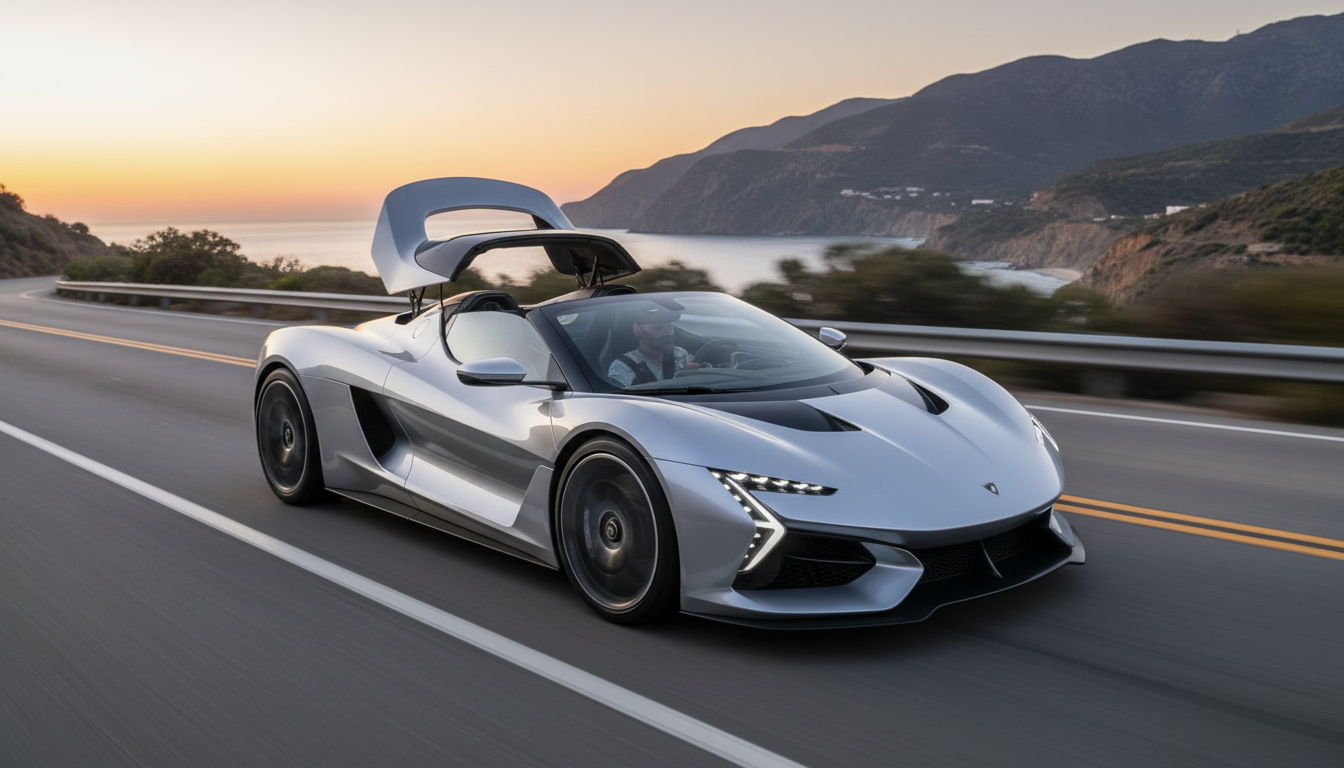
Aston Martin Valhalla Spider is now the fastest open-top production car the British marque has ever built. The convertible variant retains the coupe’s formidable 1,064 horsepower plug-in hybrid powertrain and can reach an electronically limited top speed of 350 km/h when fitted with its optional carbon-fibre hard-top.
The reveal marks a significant moment for Aston Martin’s performance line. Dropping the roof from the Valhalla coupe hasn’t compromised speed—a rare feat in the open-top supercar segment where aerodynamic efficiency typically takes a hit.
The Valhalla Spider’s Powertrain: Hybrid Performance Redefined
The heart of the Aston Martin Valhalla Spider is a sophisticated plug-in hybrid system. A 4.0-litre twin-turbo V8 engine works in tandem with three electric motors to deliver the full 1,064 hp output. This combination represents a departure from traditional V8-only supercars, embedding electrification into genuine performance rather than compromising it.
According to NDTV Auto, the hybrid setup allows Aston Martin to meet modern emissions standards without sacrificing the visceral experience purists expect from an open-cockpit drive. The three electric motors distribute power intelligently across the drivetrain, enabling torque vectoring and improved traction control.
The 350 km/h top speed is electronically limited and becomes achievable only with the carbon-fibre hard-top secured in place. Removing the roof for open-air motoring would likely reduce the maximum velocity slightly, though Aston Martin hasn’t published a specific figure for roof-down performance. Still, reaching 350 km/h in any convertible production car places the Spider in rarefied company.
Design and Engineering: Keeping Weight Down
Converting the Valhalla from a fixed-roof coupe to a convertible required structural engineering to maintain rigidity. The use of carbon-fibre components—including the optional hard-top—helps keep weight penalty minimal. Aston Martin’s experience with the DBS Superleggera Volante informed the Spider’s development, applying lessons learned from converting high-performance coupes without excessive mass penalty.
The retractable hard-top mechanism allows drivers to toggle between sealed coupe mode and open-air driving. In coupe configuration with the roof secured, the Spider achieves its 350 km/h peak. The engineering ensures that convertible buyers don’t sacrifice the performance credentials that make the Valhalla line desirable.
Market Context for High-Speed Convertibles
The convertible supercar market remains small but prestigious. Few production cars can claim both open-top capability and genuine 350 km/h performance. Competitors like Ferrari’s 296 GTS and Mercedes-AMG’s SL focus on luxury and driving comfort at speed rather than absolute velocity records.
Aston Martin’s positioning of the Spider as the fastest open-top production car is both factually grounded and commercially clever. It appeals to buyers who reject false compromises—those wanting convertible freedom without ceding performance credentials.
For Indian buyers interested in high-end sports cars, the Valhalla Spider represents an outlier. Import duties and luxury taxes make supercars of this calibre rare in India. However, the segment does attract ultra-high-net-worth individuals and serious collectors. The hybrid powertrain also signals Aston Martin’s response to tightening global emissions regulations, making the car technically relevant even in markets where few will actually own one.
Specifications at a Glance
The Aston Martin Valhalla Spider delivers impressive figures across the board:
- Horsepower: 1,064 hp combined output
- Powertrain: 4.0L twin-turbo V8 plus three electric motors
- Top Speed: 350 km/h (with carbon-fibre hard-top fitted)
- Drive Type: Plug-in hybrid electric vehicle (PHEV)
- Body Style: Convertible with retractable hard-top
These numbers place it firmly in the hypercar category rather than conventional supercar territory. The 1,064 hp figure, when combined with the hybrid system’s instant torque delivery from electric motors, should deliver explosive acceleration.
What This Means for Open-Top Enthusiasts
The Aston Martin Valhalla Spider signals that the convertible supercar segment is far from dead. Manufacturers continue investing in drop-top high-performance vehicles because demand from ultra-wealthy buyers remains consistent.
The hybrid powertrain represents the future direction for supercars generally. Combustion engines alone struggle to meet emissions targets. Electric motors, however, add performance rather than diluting it. The Valhalla proves this isn’t just compliance theatre—it’s genuine engineering advancement.
For buyers choosing between the coupe and Spider variants, the decision hinges on lifestyle preference rather than performance penalty. The Spider sacrifices neither speed nor power. What it offers instead is the sensory experience of 1,064 horses with wind in your face.
FAQ
Q: How much faster is the Valhalla Spider compared to the coupe?
A: Aston Martin has not published separate performance figures. Both versions share the same 1,064 hp powertrain and 350 km/h top speed (coupe speed with hard-top fitted on the Spider). The convertible’s aerodynamics may differ slightly, but the electronically limited top speed remains identical.
Q: Can you drive the Valhalla Spider with the roof down at 350 km/h?
A: The 350 km/h top speed is only achievable with the optional carbon-fibre hard-top fitted. Roof-down performance would be lower, though Aston Martin hasn’t disclosed the exact figure. The hard-top can be removed for open-air driving at lower speeds.
Q: Is the Valhalla Spider a true hybrid or just a plug-in hybrid?
A: It’s a plug-in hybrid electric vehicle (PHEV). The 4.0L twin-turbo V8 works alongside three electric motors. The system can draw from an onboard battery, making it capable of short electric-only driving, though primary power delivery relies on the gasoline engine and electric motors working together.
Q: Why does Aston Martin need three electric motors instead of one?
A: Three motors enable independent control of wheel torque, supporting advanced traction control and torque vectoring. This distributed architecture improves handling and acceleration characteristics beyond what a single motor could achieve.
Q: Is the Valhalla Spider road-legal in India?
A: The Valhalla Spider is available through Aston Martin’s global distribution, but India’s import duties and homologation requirements make such hypercars prohibitively expensive. No official figures exist for Indian pricing or availability, though private imports by collectors remain technically possible.
