
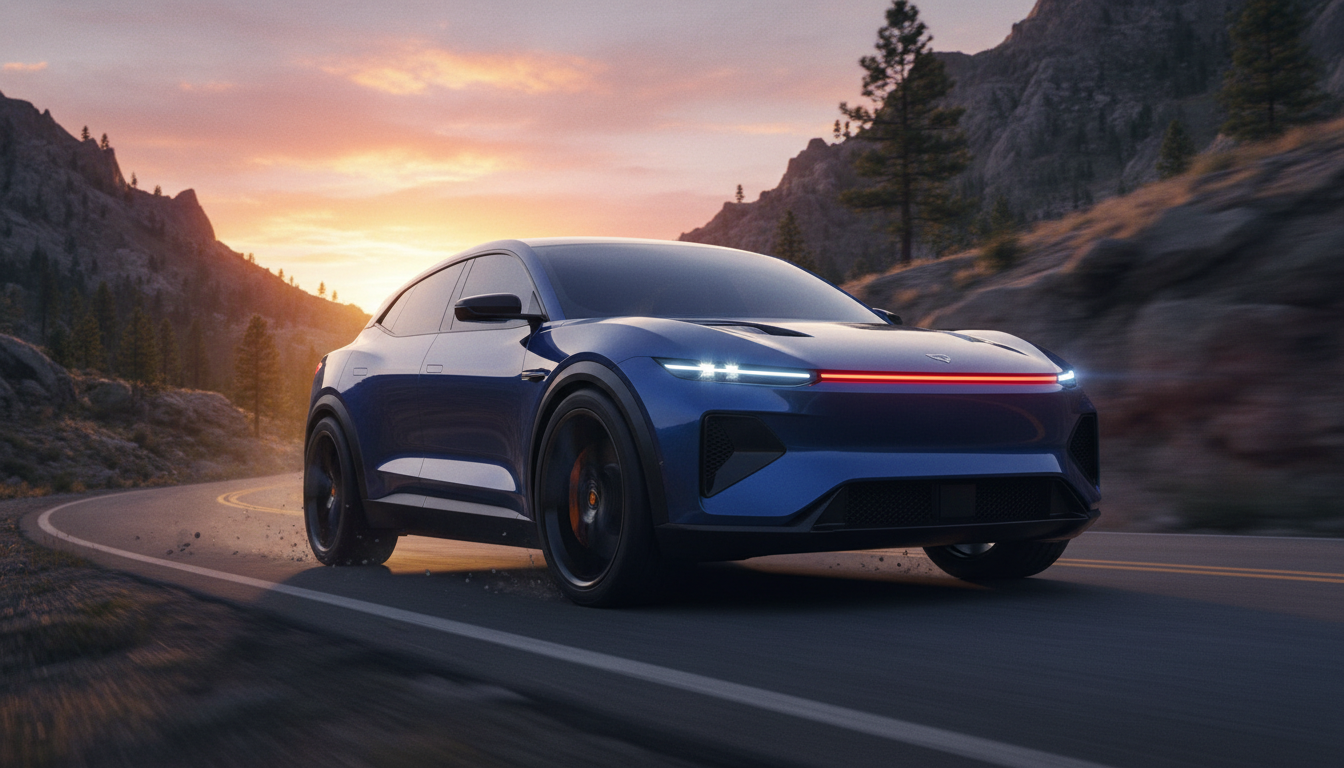
High-performance electric SUVs are reshaping the premium automotive segment, with luxury manufacturers abandoning the traditional trade-off between practicality and outright speed. Instead of choosing between family hauler and performance machine, buyers now get both in a single package.
Porsche has set the bar impossibly high with the Cayenne Turbo Electric. This model generates up to 850 kW of power—roughly equivalent to 1,136 horsepower—and delivers 1,500 Nm of torque. According to Australian Financial Review, it’s the most powerful road-going Porsche ever produced. That’s not a minor distinction. The company has spent decades building performance cars. For an SUV to wear that crown speaks volumes about the shifting priorities in the sector.
Mercedes-AMG has responded with a tri-motor variant of its GT SUV. The flagship version cranks out 1,153 horsepower and achieves 0–60 mph in 2.4 seconds. According to New Atlas, this acceleration outruns most of the hypercars that dominated performance rankings just five years ago. A Bugatti Chiron does 0–60 in 2.5 seconds. A Ferrari LaFerrari manages 2.4 seconds. Mercedes-AMG’s SUV sits squarely in that territory.
Even Japanese manufacturers, traditionally conservative in their performance ambitions, have shifted course. Mitsubishi’s new ASX VR-e represents the company’s return to the EV passenger car market. The dual-motor GSR variant reaches 0–100 km/h in 3.9 seconds, making it Mitsubishi’s fastest passenger car ever, according to The Driven.
Why luxury brands are targeting the high-performance electric SUVs segment
The strategy is straightforward: capture buyers who want speed without sacrificing practicality. An SUV offers space, commanding driving position, and capability for varied terrain. A high-performance electric powertrain offers instant torque, minimal maintenance, and silence at speed.
The numbers justify the investment. Global luxury SUV sales have outpaced sedan sales for a decade. Adding electric powertrains and hypercar-level acceleration creates a segment that barely existed three years ago. These aren’t niche vehicles for collectors. They’re practical family transport for the ultra-wealthy.
Electric powertrains also simplify the engineering challenge. Traditional V12 or V16 engines struggle to deliver clean power efficiently at high outputs. Electric motors, by contrast, hit maximum torque instantly and can scale easily across multiple units. Porsche’s 850 kW single motor doesn’t need to spin up. Mercedes-AMG’s tri-motor setup distributes power across all wheels with surgical precision.
Performance specs compared: where they stand
The Porsche Cayenne Turbo Electric leads in pure torque output with 1,500 Nm. Mercedes-AMG counters with a horsepower advantage at 1,153 hp versus Porsche’s 1,136 hp—a marginal difference that matters mainly on paper. The real victory goes to Mercedes-AMG on acceleration: 2.4 seconds from standstill to 60 mph is genuinely quick for any vehicle, let alone a family SUV.
Mitsubishi’s ASX VR-e occupies a different market tier. At 3.9 seconds for 0–100 km/h, it’s slower than both European rivals but still dramatically faster than traditional petrol SUVs. It also likely costs significantly less, making it accessible to upper-middle-class buyers rather than ultra-high-net-worth individuals alone.
Battery technology enables this shift. Modern EV packs can dump enormous amounts of energy into motors for short bursts without degradation. Regenerative braking recaptures energy during deceleration, partially recharging batteries on the move.
What this means for the broader market
These launches signal a definitive shift in automotive priorities. Performance and practicality are no longer opposing forces in the premium segment. Luxury buyers increasingly demand both, and manufacturers can now deliver.
Traditional hypercars—Bugatti, Pagani, Koenigsegg—don’t build SUVs. That gap represents an opportunity. Why spend £2 million on a low-slung supercar that can barely navigate a speed bump when a £300,000 electric SUV accelerates nearly as hard and carries four passengers?
For Indian buyers specifically, the implications are delayed but real. Electric SUVs with this performance profile won’t hit Indian roads immediately. Import duties, taxation, and local production timelines create barriers. Yet established players like Mercedes-Benz, BMW, and Porsche already operate in India. Trickle-down effects are inevitable. Even Mitsubishi’s entry signals manufacturers reconsidering the Indian market after earlier exits.
The technology will eventually reach more affordable segments. What costs £1+ million today becomes a £500,000 option in five years and £250,000 within a decade. Volume production and battery cost reductions drive this trajectory.
FAQ
Q: How do electric SUVs achieve hypercar-level acceleration?
Electric motors deliver maximum torque instantly, unlike combustion engines. Multiple motors—one per wheel or twin rear motors—distribute power efficiently. All-wheel-drive systems maximize grip. Battery packs in modern EVs can handle these power surges without damage, unlike older designs.
Q: Which is fastest: Porsche Cayenne Turbo Electric or Mercedes-AMG GT SUV?
Mercedes-AMG GT SUV is faster in acceleration: 2.4 seconds 0–60 mph versus Porsche’s performance figures. However, Porsche delivers more peak torque at 1,500 Nm. Both vastly outperform traditional petrol SUVs in any metric.
Q: When will high-performance electric SUVs reach India?
No confirmed timeline exists. Import duties on EVs and local production capacity create delays. However, once battery costs drop further and manufacturing scales up, premium electric SUVs will likely reach Indian luxury dealerships—probably within 3–5 years for select models.
Q: How does Mitsubishi’s ASX VR-e compare to the European models?
The ASX VR-e is slower: 3.9 seconds 0–100 km/h versus Mercedes-AMG’s 2.4 seconds. It’s positioned as an affordable entry into the high-performance electric SUV segment rather than a direct competitor to ultra-luxury options.
Q: Can these SUVs actually perform at these speeds in real-world driving?
Yes. The acceleration figures are tested, repeatable performance metrics, not theoretical maximums. However, owners must manage battery thermals carefully during sustained high-performance driving, much like traditional performance cars require cool-down periods.
