
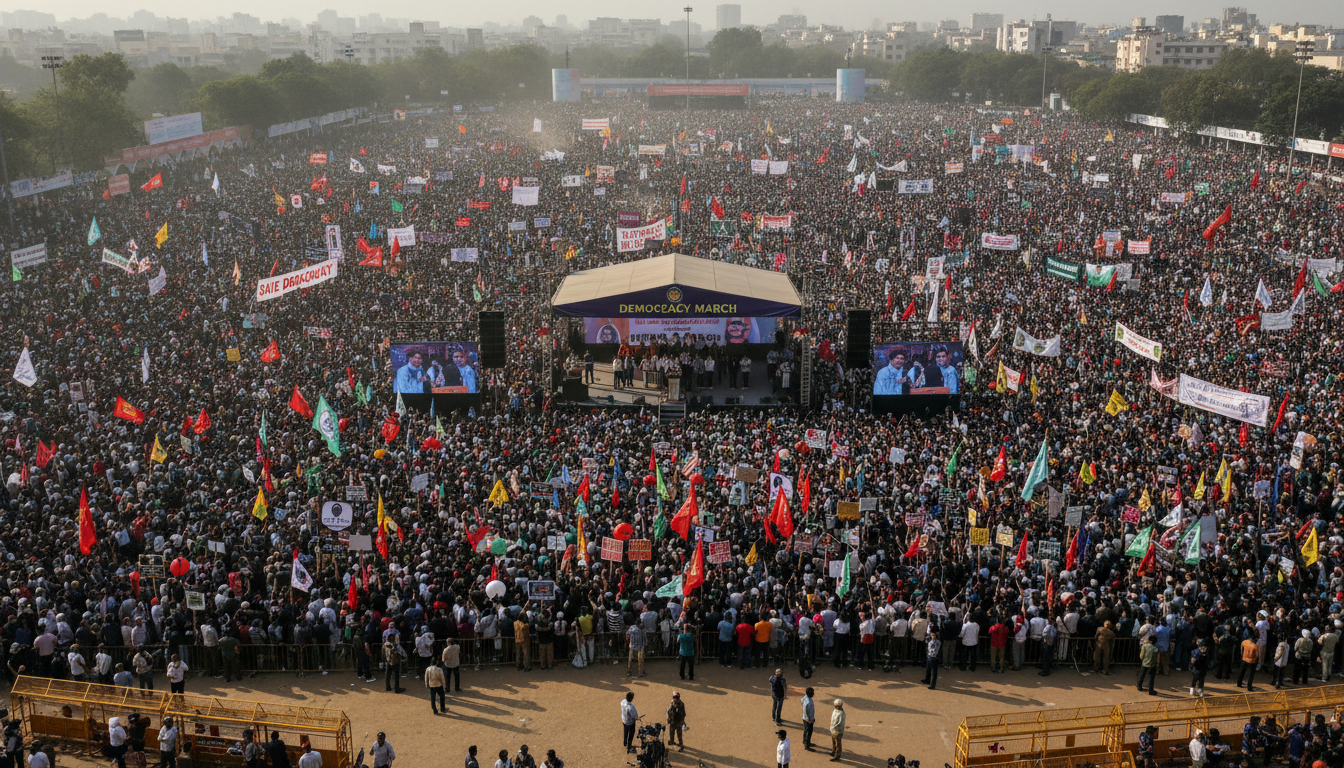
The INDIA bloc rally electoral fraud protest is set to transform New Delhi on November 1, as opposition parties prepare a massive show of force against what they describe as systematic vote theft through the electoral roll revision process.
Congress leader Priyanka Gandhi Vadra visited Ramlila Maidan on October 29 to inspect preparations for the mega rally. The inspection signaled the seriousness with which the opposition coalition is approaching the event. The bloc plans to deploy hundreds of thousands of protesters to the sprawling venue in central Delhi.
The immediate trigger is the Special Intensive Revision (SIR) of electoral rolls. According to reports on today’s news, the process has deleted tens of millions of voters across multiple states. This is not a minor clerical error. The numbers are staggering. Karnataka saw 64.5 lakh voters removed from rolls. Delhi initially excluded 47.56 lakh electors. Tamil Nadu reported 97.37 lakh excluded voters.
Opposition leaders frame the deletions as strategic. Congress leader Rahul Gandhi has called for a “Chalo Dilli” march to “save democracy.” The framing reflects deep suspicion among opposition parties that the Election Commission is facilitating voter suppression.
INDIA bloc rally electoral fraud: What the opposition wants
The coalition’s demands are threefold. First, they want Chief Election Commissioner Gyanesh Kumar to resign. Second, they’re planning a march to Election Commission headquarters by opposition MPs. Third, they’re mobilizing protests across the country to amplify pressure.
The scale of the planned action suggests the opposition views this as an existential issue. A single rally in Delhi might have been dismissed as theatre. But a national mobilization combined with an MP delegation to EC offices carries more weight.
State-wise figures paint a pattern the opposition claims shows intentional disenfranchisement. Karnataka’s 64.5 lakh deletions matter because the state is politically contested. Delhi’s initial 47.56 lakh exclusions matter because the capital is the seat of national government and symbolically important. Tamil Nadu’s 97.37 lakh deleted voters is the highest figure and signals to southern opposition parties that their supporters are being targeted.
November 1 rally: Logistics and political strategy
Ramlila Maidan has hosted major political gatherings before. It can accommodate very large crowds. The choice of venue signals confidence in the opposition’s ability to draw numbers.
Priyanka Gandhi’s October 29 inspection wasn’t ceremonial. It was operational. She needed to assess logistics. The opposition needs to manage crowd flow, security, sound systems, and medical facilities for a venue that could host over 500,000 people.
The timing matters too. November 1 falls after the key state elections are completed. Opposition parties have calculated that the rally can be massive without being tied to specific electoral outcomes that might be ongoing.
The opposition is also coordinating across multiple parties. This is a coalition effort, not a Congress-only event. The INDIA bloc includes regional parties with strong ground presence in affected states. Tamil Nadu’s DMK, Karnataka’s Congress-JDS alliance, Delhi’s Aam Aadmi Party—each brings networks and cadre.
The electoral roll revision process explained
The Special Intensive Revision is supposed to clean electoral rolls of duplicate registrations, deceased voters, and those who’ve moved. In principle, it’s administrative maintenance. In practice, opposition parties allege it’s being weaponized.
When 64.5 lakh people disappear from Karnataka’s rolls, or 97.37 lakh from Tamil Nadu’s, the opposition asks basic questions. Were they notified? Did they get a chance to appeal? How many were wrongly deleted?
The Election Commission maintains the process is neutral and legal. Opposition parties say the scale of deletions across states where they have support is too suspicious to be coincidental.
Voter deletion has been an issue in Indian elections before. But the numbers in this case—running into crores across multiple states—have prompted an unprecedented opposition response.
Opposition’s comprehensive action plan
The November 1 rally is the headline event, but it’s one part of a broader strategy. Opposition MPs will march to Election Commission headquarters. This sends a signal to bureaucrats and media that parliament itself is mobilized.
Simultaneous protests across multiple states will distribute the pressure. Delhi rally alone might be managed or ignored. But coordinated action in Karnataka, Tamil Nadu, Delhi, and other states creates a national narrative the media cannot easily dismiss.
Congress leader Rahul Gandhi’s “Chalo Dilli” call is a mobilization phrase designed for social media and ground organizing. It’s simple, memorable, and actionable. It tells opposition supporters exactly what to do: travel to Delhi on November 1.
The demand for CEC Gyanesh Kumar’s resignation is confrontational. It’s not a request for a review or an inquiry. Removing the Chief Election Commissioner requires political pressure or constitutional action. The opposition is signaling it will not accept incremental responses.
Historical context and stakes
Electoral roll management has been contentious before. But the scale here, combined with the opposition’s unity across regional lines, represents a significant escalation. The opposition is treating this as a core democratic issue.
If voter deletions are as systematic as the opposition alleges, elections lose legitimacy even if technically conducted fairly. Millions of people cannot vote. The democratic principle of universal adult suffrage is compromised.
Conversely, if the opposition’s claims are overstated, they risk being seen as sore losers. But they’ve bet their credibility on the November 1 event and the campaign leading up to it.
FAQ
Q: Why is the INDIA bloc calling for the CEC’s resignation?
A: The opposition alleges that Chief Election Commissioner Gyanesh Kumar has presided over a systematic voter deletion process that disproportionately affects opposition-supporting states and constituencies.
Q: How many voters have actually been deleted from electoral rolls?
A: According to reports, at least 209 lakh voters have been deleted across multiple states. Karnataka lost 64.5 lakh, Tamil Nadu 97.37 lakh, and Delhi initially excluded 47.56 lakh.
Q: What is the Special Intensive Revision process?
A: The SIR is an Election Commission procedure meant to remove duplicate registrations, deceased voters, and those who’ve relocated. Opposition parties allege it’s being used to suppress opposition voters.
Q: When and where is the November 1 rally happening?
A: The rally is scheduled for November 1, 2026, at Ramlila Maidan in New Delhi. Congress leader Priyanka Gandhi Vadra inspected the venue on October 29 to oversee preparations.
Q: What is the “Chalo Dilli” call that Rahul Gandhi made?
A: It’s a mobilization slogan urging opposition supporters and concerned citizens to march to Delhi on November 1 to participate in the opposition’s protest against alleged electoral fraud and voter deletions.
