
Retro bathroom restoration is no longer a niche hobby for period-home purists. It’s become a genuine homeowner movement, fuelled by social media creators who document the painstaking work of peeling back decades of modern updates to reveal—and revive—original fixtures and finishes.
The numbers tell the story. Searches for “retro bathrooms” have climbed 250 per cent year-on-year, according to trend analysis tracking un-flipping content and period-feature restoration. This isn’t Americans nostalgic for their grandparents’ homes. It’s a global phenomenon catching fire among millennials and Gen Z buyers who are actively rejecting the sanitised, beige-and-marble aesthetic that dominated property flipping for two decades.
The trend spans multiple eras. Homeowners are hunting for pieces from the Art Deco bathrooms of the 1920s, the pastel-tiled charm of the 1950s, the bold geometric statements of the 1970s, and the coloured-suite eclecticism of the 1980s. Each period carries its own visual language—and its own set of sourcing challenges.
What’s Driving the Shift Away from Modern Flips?
The so-called “un-flipping” trend represents a philosophical break from decades of renovation orthodoxy. The standard playbook was simple: strip everything old, install neutral finishes, list at a premium. But that recipe has become exhausted. Thousands of homes now look identical. Buyers scroll through property listings and see the same white subway tiles, the same frameless glass showers, the same floating vanities.
Social media has amplified the alternative. Content creators—particularly on platforms like TikTok, Instagram, and YouTube—have documented the emotional and aesthetic rewards of restoration work. A bathroom that started as a generic 1990s renovation gets carefully, methodically returned to its original 1950s state. Avocado and harvest-gold fixtures, once ridiculed, now read as charmingly retro. The narrative shifted. Instead of “rip it out,” the new refrain is “save it.”
This resonates especially with younger homeowners who’ve grown tired of FOMO-driven design trends. They’re investing in permanence, character, and authenticity. A restored 1970s bathroom with its original tilework and fixtures tells a story. A modern bland bathroom doesn’t.
Retro Bathroom Restoration Across the Decades
1920s Art Deco Bathrooms
The earliest restorations target Art Deco–era bathrooms. These are typically found in older urban townhouses and heritage buildings. The hallmarks include black-and-white geometric tilework, chrome fixtures with sculptural flair, and pedestal sinks that function as sculptural objects in themselves. Restoration here is meticulous and expensive. Original hexagonal or Moroccan-patterned tiles rarely survive intact. Sourcing authentic replacements means working with specialist tile makers, many of whom have begun reproducing period patterns specifically for the restoration market.
1950s Pastel Suites
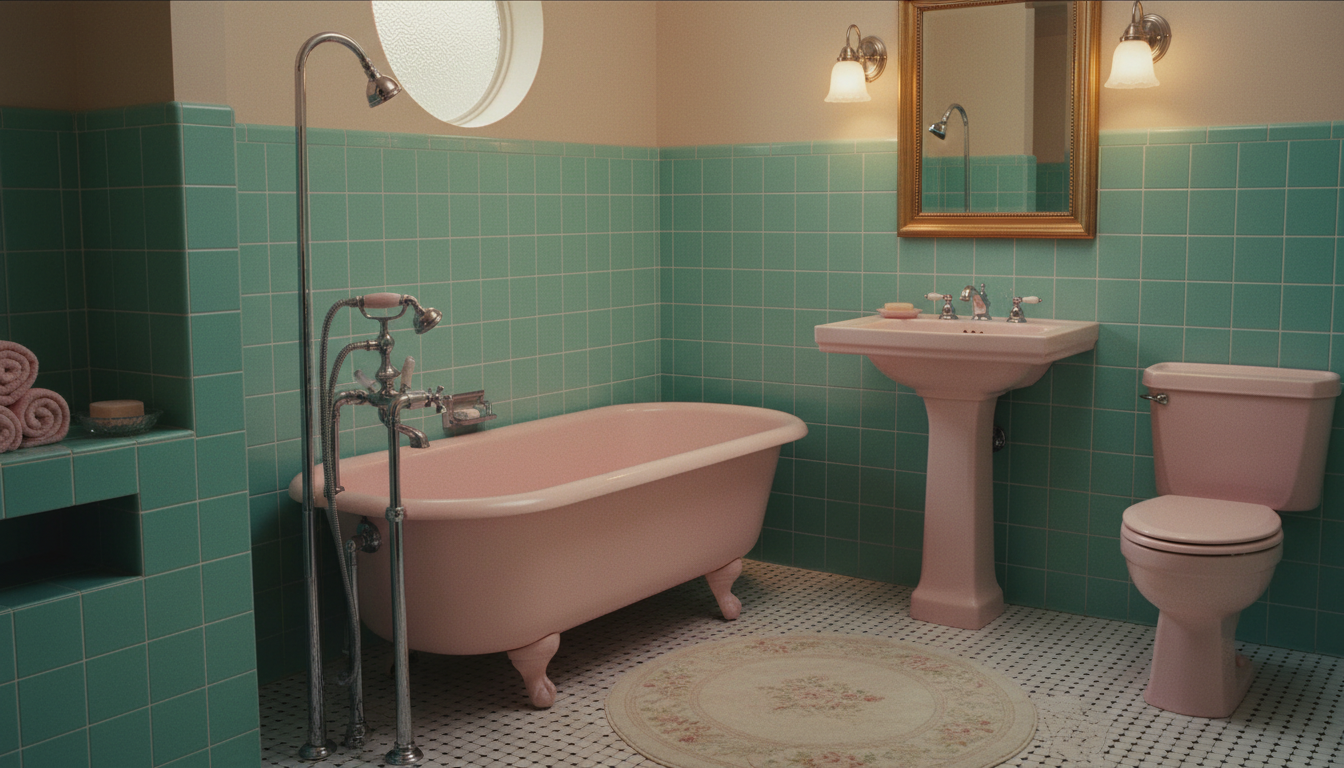
The 1950s brought colour to the bathroom in a way earlier decades hadn’t dared. Pink, mint, and pale blue suites became standard. Unlike the Art Deco period, 1950s bathrooms are more commonly found and easier to restore. Original porcelain fixtures from reputable manufacturers are still available through salvage yards and online marketplaces. The challenge here is often structural: finding vintage plumbing that still functions, or retrofitting modern plumbing to look period-appropriate.
1970s Bold Geometry
The 1970s bathroom was maximalist. Harvest gold, burnt orange, and avocado were deployed with confidence. Tilework exploded into bold geometric patterns. For restorers, the abundance of surviving 1970s bathrooms makes this era relatively accessible. Original fixtures are plentiful. The real skill lies in knowing which elements to restore and which to tastefully update (modern plumbing, ventilation, electrical) without erasing the period character.
1980s Eclecticism
The 1980s bathroom borrowed from every preceding era and added its own maximalist twist. Coloured suites continued. Marble became fashionable. Brass fixtures proliferated. Restoring an 1980s bathroom means walking a tightrope between kitschy and charming. The best restorations preserve the boldness of the era without slipping into parody.
The Practical Side: Restoration vs. Renovation
Restoring a retro bathroom is fundamentally different from a standard renovation. It requires patience, detective work, and a willingness to embrace imperfection. Many homeowners begin by researching the exact year their home was built. Old photographs help. Archived interior design magazines provide reference points. Some hire historians specializing in period homes.
The financial commitment is real. Sourcing authentic fixtures often costs more than buying new reproductions. Professional restoration of original tilework demands specialized skills. Structural updates—plumbing, electrics, ventilation—must integrate seamlessly without destroying the period aesthetic. A modest retro bathroom restoration can cost as much as a full modern overhaul. The payoff, restorers argue, is a bathroom that feels genuinely lived-in, with character that new construction can’t manufacture.
Where to Source Retro Bathroom Fixtures
Salvage yards remain the primary hunting ground. Many now specialize in period bathrooms, cataloguing everything from original medicine cabinets to cast-iron tubs. Online marketplaces have democratised access. Specialist tile makers now produce period-accurate reproductions. Vintage fixture retailers have proliferated to meet demand. For those without time or expertise, a growing cohort of restoration specialists now markets their services directly to homeowners.
FAQ
Q: How much does a typical retro bathroom restoration cost?
A retro bathroom restoration typically costs between ₹3,50,000 and ₹7,50,000 depending on the era, the extent of structural work needed, and how many original fixtures survive. Sourcing authentic pieces and specialist labour tends to be the largest expense.
Q: Can I mix original fixtures from different eras?
This depends on the overall aesthetic you’re pursuing. Most restorers advocate for period-accurate design, but thoughtful mixing—say, pairing 1950s fixtures with 1970s tilework—can work if the colour palette and visual weight feel intentional rather than accidental.
Q: Are restored retro bathrooms more difficult to maintain?
Older plumbing and fixtures require more vigilance than modern systems. Original brass can tarnish. Cast-iron tubs need regular maintenance. However, vintage fixtures were often built more robustly than contemporary alternatives, meaning repairs tend to be straightforward once you find the right specialist.
Q: Should I restore a bathroom or leave it modern?
This depends on your home’s era and your personal preference. A home built in the 1920s or 1950s often gains value and coherence when period bathrooms are restored rather than erased. Modern bathrooms in older homes can feel jarring. Conversely, some homeowners prefer the practicality and lower maintenance of contemporary design.
Q: Where do I find original or reproduction retro bathroom tiles?
Salvage yards remain the most reliable source for genuine vintage tiles. For reproductions, search for tile makers specialising in historical patterns. Many now produce 1920s geometric, 1950s pastels, and 1970s geometric designs on demand.
