
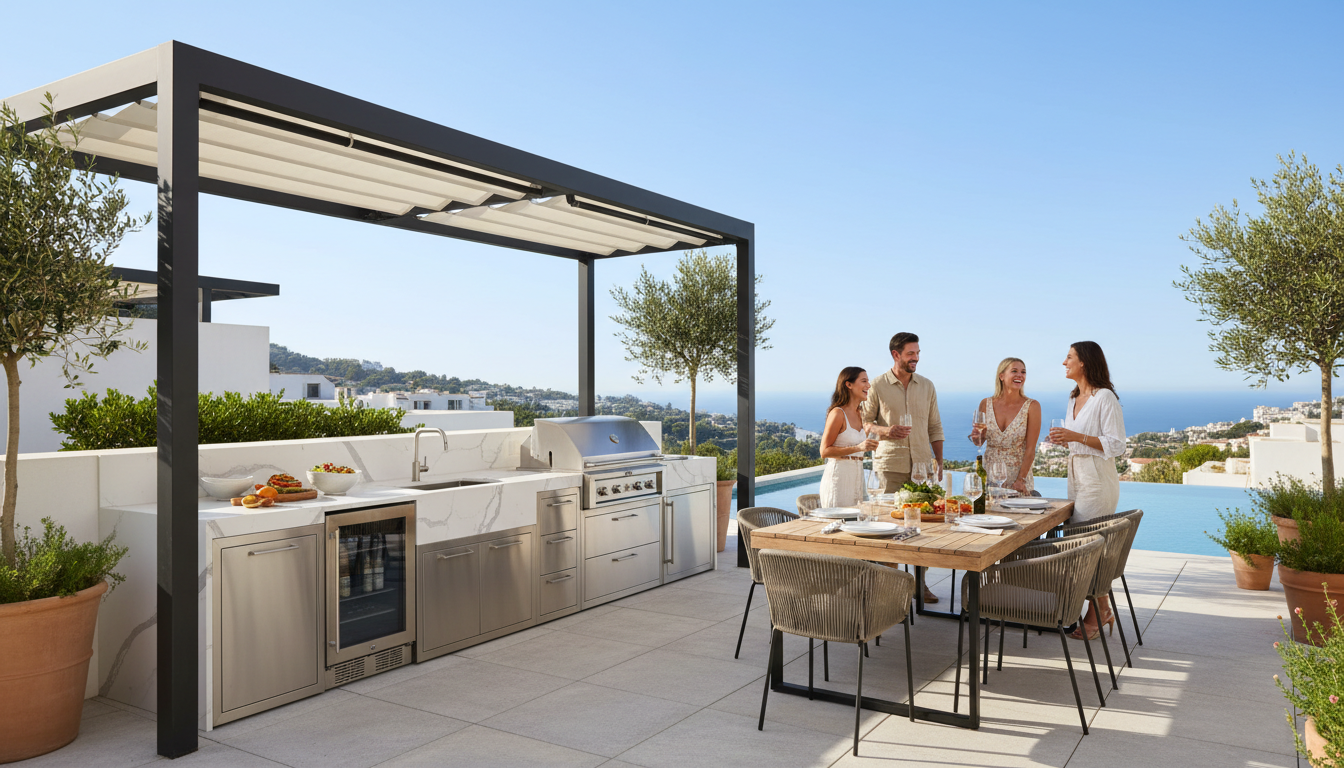
Outdoor kitchen design has shifted from a weekend indulgence to a core part of how people live. No longer confined to high-end properties or resort-style homes, these spaces now represent a genuine rethink of how Indian homeowners approach entertaining, cooking, and daily life outside their four walls.
The change is real. What started as a gas burner and a small counter has matured into full-fledged outdoor cooking and dining zones. These aren’t afterthoughts anymore—they’re planned alongside the house itself, integrated with the same care as an indoor kitchen.
What’s Driving the Shift
The reasons are straightforward. People spend more time outdoors now, whether hosting guests or simply eating a meal under the sky. Indian weather makes this practical for much of the year. And crucially, the materials available today can actually withstand that weather—something that wasn’t reliably true a decade ago.
According to ArchDaily’s analysis of contemporary outdoor kitchen trends, outdoor kitchens are becoming “a natural extension of the home, allowing for cooking and entertaining without stepping inside.” This reframing matters. It’s no longer a separate structure. It’s part of the house.
The driver behind this isn’t just sentiment. It’s the emergence of high-performance materials that can actually handle the demands of outdoor use.
Materials That Don’t Quit
For decades, outdoor kitchen countertops meant either concrete (which stains and cracks) or stainless steel (which gets too hot to touch and shows every fingerprint). The options were limited.
Today’s materials are different. Porcelain surfaces like XTONE and engineered stone like Krion® are designed specifically for outdoor work. These materials resist impacts and scratches. They handle high temperatures without warping. UV radiation doesn’t fade or degrade them the way it does older materials.
This durability matters practically. A countertop in an outdoor kitchen endures direct sun, temperature swings, and weather that indoor surfaces never see. When materials fail, the whole space becomes unusable. High-performance alternatives mean the investment actually lasts.
The cost premium for these materials has also come down. As demand increases, prices stabilize. What was once prohibitively expensive is now competitive with premium indoor options.
The Modular Advantage
The real flexibility, though, comes from modular design. Rather than building a fixed structure, homeowners now choose components that fit their specific space and needs.
One homeowner might need a cooking area, washing station, and storage. Another prioritizes a large prep surface with minimal cooking equipment. Modular systems accommodate both without waste or compromise. Dimensions can be customized to fit odd-shaped patios or terraces. The cooking, washing, and storage areas integrate seamlessly, creating a functional flow.
This approach has particular appeal in Indian homes, where outdoor spaces vary wildly. A Mumbai apartment terrace works differently than a Delhi villa courtyard or a Bangalore garden. Modular design doesn’t force a one-size-fits-all solution.
Outdoor Kitchen Design for Indian Homes
The shift toward outdoor kitchens aligns naturally with Indian entertaining traditions. Families have long hosted gatherings on terraces, in courtyards, and gardens. The formalization of these spaces with proper cooking facilities simply acknowledges what’s already happening.
Weather is a practical consideration. The winter months—October through March in most of India—offer ideal conditions for outdoor entertaining. Summer presents challenges but isn’t prohibitive in hill stations or cooler regions. A well-designed outdoor kitchen can be partially sheltered or have retractable covers for seasonal use.
There’s also the matter of space efficiency. Many Indian urban homes have limited interior kitchen space. An outdoor kitchen doesn’t replace the indoor one but extends functionality. Summer meals happen outside. Indoor kitchens handle monsoon cooking and winter meal prep indoors. Both serve their purpose.
Planning an Outdoor Kitchen
Homeowners considering this shift should think through basics first. Where does water and gas come from? How will utilities reach the outdoor space? What’s the existing patio or terrace like—is it structurally sound for heavy equipment?
The modular approach helps here. Starting small with a cooking surface and counter is feasible. Adding a washing station or storage later is straightforward. This phased approach also lets homeowners test what they actually use before investing heavily.
Orientation matters too. Which direction does the space face? Afternoon sun in summer can make outdoor cooking uncomfortable. Some form of shade—permanent or temporary—becomes practical thinking, not luxury.
FAQ
What materials are best for outdoor kitchen countertops?
High-performance porcelain like XTONE and engineered stone like Krion® are the current standards. Both resist scratches, impacts, high temperatures, and UV radiation. These materials last significantly longer than concrete or basic stainless steel in outdoor conditions.
Can I build an outdoor kitchen in phases?
Yes. Modular design allows you to start with basic cooking and counter space, then add washing stations or storage later. This approach spreads costs and lets you understand how you’ll actually use the space before committing fully.
What’s the difference between an outdoor kitchen and a backyard grill?
An outdoor kitchen is a complete cooking and entertaining zone. It includes food preparation areas, cooking equipment, washing stations, and storage. A grill is a single cooking appliance. An outdoor kitchen is the full ecosystem.
Do outdoor kitchens work in Indian monsoons?
They work best during dry seasons. During monsoons, a covered or partially sheltered design helps. Some homeowners use temporary coverings or retractable canopies. In regions with heavy rainfall, integration with existing covered outdoor spaces (like verandas) works better than fully exposed designs.
How much does an outdoor kitchen cost?
Costs vary widely based on materials and scope. A basic setup with cooking surface and counter might start at moderate investment. Full systems with premium materials, multiple cooking zones, washing areas, and storage run significantly higher. Modular systems let you control spending by choosing components that fit your budget.
