
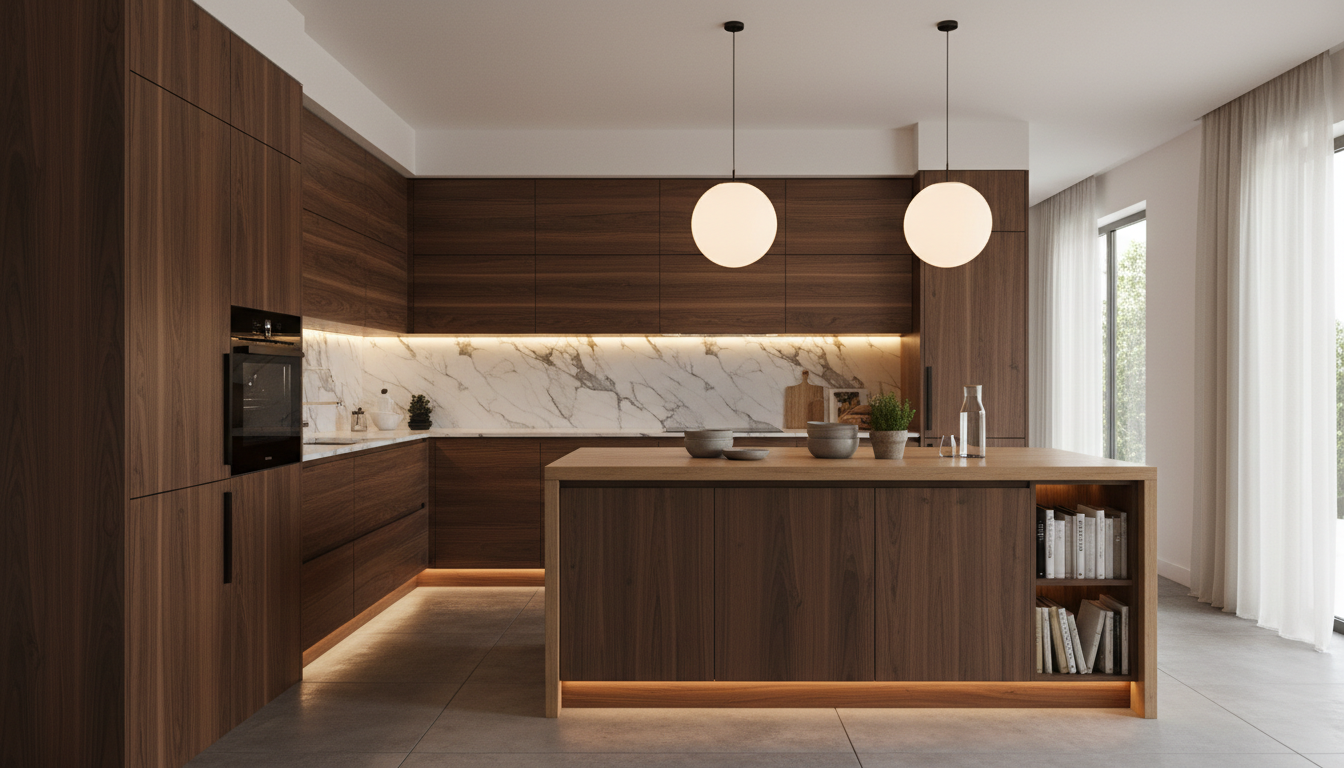
The reign of the all-white, minimalist kitchen is ending. According to interior design predictions for 2027, designers are steering kitchens toward warmer wood tones, bolder natural stones, and living-room-like comfort. This marks a decisive break from the clinical aesthetic that has dominated high-end kitchens for nearly a decade.
The shift reflects something deeper than a passing fad. Homeowners are tired of sterile spaces. They want kitchens that feel like homes.
What’s Driving 2027 Kitchen Design Trends
The move away from stark minimalism isn’t random. A growing number of designers are noticing that people spend more time in kitchens now. Work-from-home arrangements mean kitchens do double duty. They’re cooking spaces and gathering spots. That changes what people want them to feel like.
“Soft kitchens” are the industry term gaining traction. These kitchens blend kitchen functionality with living-room warmth. Think freestanding furniture instead of built-in cabinetry. Artwork on walls. Textures. Personality.
This design philosophy reflects a broader nostalgia creeping through interiors. The 90s aesthetic is making a comeback, and that includes warmer, less clinical spaces. People remember kitchens that felt inviting. Lived-in. The new designs tap into that memory.
Warm Woods Dominate Counters and Cabinetry
Walnut is the headline wood tone for 2027. Its rich, chocolate-brown hues add immediate depth to a kitchen. Unlike lighter woods or the grey tones of recent years, walnut feels substantial. It grounds a space.
But walnut isn’t alone. Designers are exploring the full spectrum of warm wood tones. Oak makes an appearance. So does cherry and other heritage timber varieties. The common thread: richness and character.
Warm wood isn’t just for cabinetry anymore. It appears on islands, open shelving, and even as accent wall panelling. The goal is to break up visual monotony. A kitchen with multiple wood tones—say, walnut cabinetry with an oak island—creates movement and interest without feeling chaotic.
For homeowners considering a kitchen refresh, warm woods offer practical advantages too. They’re forgiving. Dust and fingerprints show less. They age gracefully, developing patina rather than looking worn out.
Natural Stones Get Bold and Expressive
If warm woods provide the kitchen’s foundation, expressive natural stones provide drama. Forget uniform, predictable countertops. 2027 design celebrates movement and variation in stone surfaces.
This means stones with visible veining, colour variation, and geological character. A slab of marble with pronounced grey veining becomes a focal point. A granite with multiple colour bands catches the eye. Quartzite with movement patterns adds visual intrigue.
The aesthetic builds on a simple principle: these stones tell a story. Each slab is unique. That uniqueness is celebrated rather than downplayed.
Interestingly, this trend ties to the “soft kitchen” philosophy. A kitchen with character needs countertops with character. A bland, uniform surface undermines the entire warm, inviting aesthetic designers are pursuing.
Practically speaking, bolder stones do require attention to maintenance. Marble is porous. Some natural stones need sealing. But for homeowners willing to invest the effort, these stones create kitchens that feel curated and intentional rather than mass-produced.
The “Soft Kitchen” Concept Explained
The term “soft kitchen” might sound abstract. In practice, it’s straightforward. It means kitchens designed for lingering, not just cooking.
Soft kitchens include freestanding furniture. A vintage table becomes a kitchen centrepiece. Open shelving displays not just functional items but decorative ones. Artwork hangs on walls. A comfortable chair in the corner invites someone to sit and chat.
This contrasts sharply with the minimalist kitchen model. Minimalist kitchens hide everything behind closed cabinetry. They present a blank slate. Soft kitchens do the opposite. They reveal and celebrate.
Consider the island, traditionally a functional counter. In a soft kitchen, it becomes a social hub. It might feature mixed materials—a warm wood base with a stone top. It might have barstools with upholstered seats in warm tones. It tells you something about the people who live there.
How to Incorporate These Trends into Your Home
Jumping fully into 2027 kitchen design doesn’t require a complete overhaul. Most kitchens can shift toward warmer, more characterful aesthetics incrementally.
Start with what you can control. If a full cabinet replacement isn’t feasible, warm wood stain on existing cabinetry moves the needle. New countertops—especially in expressive natural stone—immediately change a kitchen’s personality. A fresh paint colour on walls, paired with artwork, adds softness.
For those planning a full renovation, the opportunity is broader. Choose warm wood species. Select natural stone with pronounced character. Include freestanding furniture where possible. A vintage console table can serve as additional storage and add visual interest.
Budget matters. Expressive natural stones cost more than uniform, predictable surfaces. Walnut commands a premium over cheaper timber. But these upgrades don’t require luxury budgets. Mid-range options exist at every stage.
FAQ
Q: Is the all-white kitchen completely out of style?
A: Not entirely, but it’s no longer the default choice. All-white kitchens are moving from mainstream to niche preference. Designers predict they’ll become more popular with minimalist enthusiasts and those seeking clean aesthetics, but the industry mainstream is shifting decisively toward warmer tones and more character.
Q: What makes a “soft kitchen” different from a regular kitchen?
A: Soft kitchens integrate living-room elements into kitchen design. This includes freestanding furniture, artwork on walls, comfortable seating, and visible styling rather than hidden storage. Traditional kitchens prioritize function and efficiency. Soft kitchens prioritize both function and comfort, encouraging people to linger rather than rush through.
Q: Is walnut wood expensive compared to other options?
A: Walnut is mid-to-premium priced among wood species. It costs more than pine or basic oak but less than exotic species. For budget-conscious renovations, lighter warm woods or wood-look finishes offer similar aesthetic appeal at lower cost. Professional consultation can help balance design goals with budget constraints.
Q: Will expressive natural stone countertops require special maintenance?
A: It depends on the stone. Marble requires regular sealing and is susceptible to etching from acidic substances. Granite is more durable. Quartzite falls between them. All stones benefit from proper sealing and care, but the maintenance demands vary. Your stone supplier can recommend specific care protocols for your chosen material.
Q: Can I achieve 2027 kitchen design trends with a modest budget?
A: Yes. Start with warm wood stain on existing cabinetry rather than new cabinets. Choose moderately expressive stone for visible surfaces. Add artwork and freestanding furniture from vintage shops. These incremental changes capture the aesthetic without requiring luxury budgets.
