
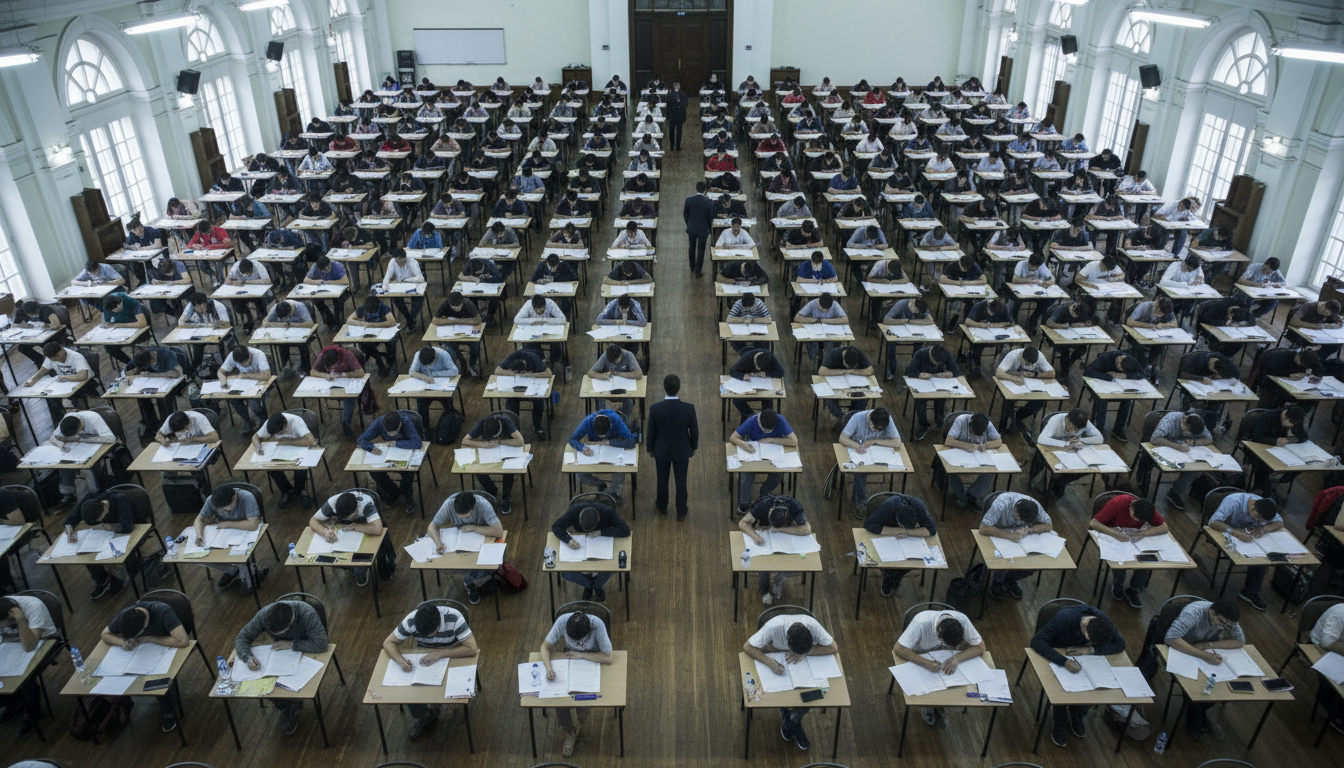
The UPSSSC PET exam schools closed across 60 districts of Uttar Pradesh on October 30, 2026, as more than 3.5 million candidates sat for the Preliminary Eligibility Test. The mass closure reflects the scale of this year’s recruitment drive—one of the largest state-level competitive exams in India.
Schools shuttering their doors on exam day is standard practice in Uttar Pradesh. It clears venues for use as examination centers and keeps student traffic off roads clogged with candidates and invigilators. But the sheer number of districts affected—60 out of 75 in the state—underscores how central the UPSSSC PET has become to UP’s civil service pipeline.
According to Education Times, the exam is administered across 1,372 centers statewide. That’s a massive logistical operation. Each center must deploy trained staff, secure question papers, and manage queues of anxious candidates. Schools serve as the backbone of this infrastructure.
Why Schools Closed for UPSSSC PET Exam
The UPSSSC PET exam schools closed today for two practical reasons. First, schools provide the physical space. Classrooms are ideal exam halls—they’re spread across neighborhoods, reducing candidate travel. Second, closure prevents disruption. Children at home means no noise, no foot traffic, no interference with exam protocols.
The Uttar Pradesh Subordinate Services Selection Commission conducts the PET annually to filter candidates for Group C posts. Teachers, clerks, stenographers, and dozens of other roles depend on this gateway exam. A candidate must clear PET before attempting the main examination. Missing it means another year of waiting.
The 60-district closure also speaks to candidate distribution. Not every district has equal numbers of aspirants. But spreading centers across 60 districts ensures no one travels more than 30-40 kilometers to their assigned center—a deliberate effort to boost attendance and fairness.
Scale and Stakes: 3.5 Million Candidates Register
3.5 million registrations is staggering. To put it in perspective, that’s more people than the population of several Indian states. Each candidate paid an application fee. Each candidate studied for weeks or months. Each candidate showed up today hoping to clear the cutoff.
The competition is fierce. UPSSSC PET typically sees cutoff scores around 60-70 percent depending on the category. That means hundreds of thousands will not advance. The exam is objective multiple-choice, 100 questions in 120 minutes, covering general knowledge, current affairs, and basic reasoning.
For many candidates, today was their third or fourth attempt. UPSSSC allows unlimited retries, but hopes fade after repeated failures. The stakes extend beyond jobs. For rural youth without family connections in government, the UPSSSC ladder offers one of the few paths to secure, pensioned employment.
1,372 Examination Centers Across the State
Coordination of 1,372 centers requires weeks of planning. Each center gets allocated invigilators, supervisors, and security personnel. Question papers are printed in secure facilities and transported in sealed packets. Attendance registers, OMR sheets, and candidate lists must be triple-checked.
Logistical delays are common. Some centers open late. Others run out of OMR sheets or face printing errors. In previous years, candidates have complained of overcrowding and insufficient seating. With 3.5 million candidates, such hiccups ripple across the entire state.
The UPSSSC has invested in technology in recent years. Some centers now feature CCTV monitoring and biometric attendance. But infrastructure remains uneven across UP’s urban and rural areas. Centers in Lucknow and Kanpur operate differently from those in remote districts.
Impact on Students and Schools
School closures disrupt routine. A single day off may seem minor, but it compounds. Three or four such closures per year add up. Teachers lose instructional time. Students fall behind the syllabus. Parents scramble for childcare.
However, most stakeholders view these closures as unavoidable. Government jobs remain the gold standard in Indian society. Supporting the UPSSSC PET is seen as a civic duty. Schools dutifully open their gates to become exam centers.
Some private schools have negotiated exemptions by providing alternative venues or making up lost hours. Public schools, bound by government directives, have no such flexibility.
When Results and Next Steps
Candidates won’t see results immediately. Answer keys are typically released within 10-15 days. Results follow within a month. Those who clear will advance to the main examination, scheduled weeks or months later.
The main exam tests subject-specific knowledge and is far more demanding. PET is merely the first filter. Most aspirants understand they’ve cleared only the first hurdle today.
Unsuccessful candidates can retake PET next year. The UPSSSC typically conducts the test once annually, though the commission has occasionally held special drives.
FAQ
Q: Why were schools closed in 60 out of 75 UP districts?
A: Schools serve as examination centers for the UPSSSC PET. Closing them ensures dedicated, quiet spaces for the exam and prevents disruption from regular school activities. The 60-district spread ensures candidate accessibility.
Q: How many candidates appeared for UPSSSC PET 2026?
A: Over 3.5 million candidates registered and appeared for the exam across 1,372 centers on October 30, 2026.
Q: What comes after clearing the UPSSSC PET exam?
A: Candidates who clear the PET cutoff score advance to the main examination, where they are tested on subject-specific knowledge for their chosen Group C position.
Q: Is UPSSSC PET held every year?
A: Yes, the UPSSSC typically conducts the Preliminary Eligibility Test annually. Candidates have unlimited attempts to clear it.
Q: How long does it take to get UPSSSC PET results?
A: Answer keys are released within 10-15 days. Final results are declared within approximately one month of the exam date.
