
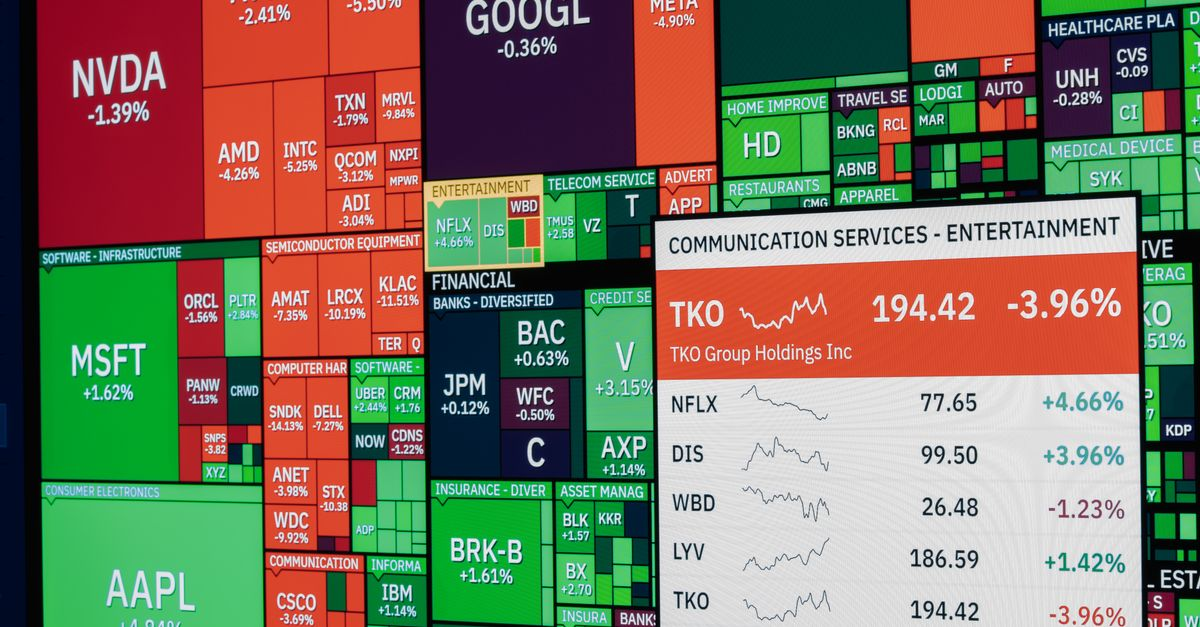
A market rotation away from tech stocks accelerated sharply on October 12, 2026, as investors fled semiconductor and mega-cap technology names and poured cash into energy and financial shares. The catalyst: geopolitical tension in the Middle East and a crude oil spike that sent the Dow Jones to a near three-week high while the Nasdaq stumbled.
The Dow climbed 0.3% on the day. The broader S&P 500 slipped 0.1%. But the Nasdaq—heavy with big technology stocks—fell 0.5%, signalling a decisive shift in where investors wanted to deploy their money.
Deadly attacks on Riyadh’s airport and airline advisories warning of threats in Saudi airspace pushed Brent crude oil up 1.8% to $106.65 per barrel. That geopolitical risk premium in crude prices fed directly into sector performance. The Energy Select Sector SPDR ETF (XLE) surged 1.43%. The Financial Select Sector SPDR ETF (XLF) gained 0.60%.
Meanwhile, the Technology Select Sector SPDR ETF (XLK) dropped 1.37%. The Semiconductor ETF (SMH) fell harder still—2.02%—as investors abandoned the high-flying chips space.
Energy and Financials Benefit from Oil Spike
The oil price move was driven by real, tangible geopolitical risk. Strikes on Riyadh’s airport and warnings affecting Saudi airspace created immediate uncertainty about supply and shipping lanes. Energy companies stand to benefit from higher crude prices, at least near term. Higher oil prices also boost bank profitability through wider lending spreads and elevated trading volumes—making the financial sector’s 0.60% gain a natural follow-on to the energy rally.
According to market reports, major bank earnings were expected to land the very next day. That timing amplified the sector’s appeal on October 12, as traders positioned ahead of results.
The Dow’s composition—dominated by old-economy and financial stocks—made it the day’s winner. The index benefited from holdings in energy firms and banks. The Nasdaq’s tech-heavy weighting made it the laggard.
Why Investors Are Dumping Tech
This is not the first time in 2026 that investors have questioned the valuations and dominance of mega-cap technology stocks. But the October 12 move was sharper and more decisive than typical profit-taking.
Semiconductor stocks took the hardest hit. The SMH ETF’s 2.02% fall reflects real selling pressure in a sector that has powered much of the market’s gains. Concerns about valuations, slowing growth, or simply a crowded trade can trigger swift reversals.
The broader technology sector (XLK) down 1.37% suggests the selling was not confined to chips alone. Investors rotated—they didn’t just take profits and sit in cash. The money moved into areas that stand to benefit from inflation, higher interest rates, or economic stress: energy and financials.
The Geopolitical Backdrop Matters
Middle East tensions have a long history of moving oil markets, and oil moves reliably flow through to equities. A 1.8% rise in Brent crude is meaningful but not extreme by historical standards. Yet it was enough to trigger a shift in sector positioning.
This kind of rotation also reflects investor psychology. In periods of uncertainty, traders often move toward “safer” or more defensive holdings. Energy stocks have been relatively beaten down for much of the bull market in tech. Financials have also lagged. A geopolitical shock can make previously neglected sectors suddenly attractive.
Market Rotation Away from Tech: Competing Narratives
One narrative is that the market is finally recognizing tech valuations as stretched and is rebalancing. Another is that geopolitical risk is real and temporary, and traders are hedging. A third is that both are true simultaneously.
The data from October 12 supports a straightforward rotation thesis. The Dow’s gain, the Nasdaq’s loss, the energy surge, and the financial bounce all point in the same direction: money leaving tech, money entering traditional sectors.
Whether this lasts—whether it marks a genuine shift in market leadership or just a day’s trading—remains to be seen. The earnings season that followed October 12 would provide clues. Major bank results would show whether financial sector strength was justified.
What the Numbers Tell Us
The Dow’s move to a near three-week high is noteworthy not because it’s dramatic in absolute terms (0.3% is modest), but because of what it signals. The index was making progress even as the S&P 500 and Nasdaq marked time or lost ground. That divergence is a textbook sign of rotation.
The semiconductor ETF’s 2.02% fall stands out. Chips have been central to the AI narrative and to mega-cap tech outperformance. A sharp one-day drop can shake confidence in the narrative itself.
The Energy ETF’s 1.43% rise is solid but not explosive. Oil was up 1.8%, so energy stocks underperformed crude slightly. That’s normal—energy equities don’t always move in lockstep with crude prices. Company earnings, cash flow, and balance sheet strength matter too.
FAQ
Q: What caused the market rotation away from tech on October 12?
A: Geopolitical tensions in the Middle East—specifically, attacks on Riyadh’s airport and airline advisories affecting Saudi airspace—pushed oil prices up 1.8% to $106.65 per barrel. Rising crude prices made energy and financial stocks more attractive to investors, who moved money out of technology and semiconductor holdings.
Q: Which sectors gained the most on October 12?
A: Energy (XLE) surged 1.43% and Financials (XLF) gained 0.60%. These outpaced the broader market. Technology (XLK) fell 1.37% and Semiconductors (SMH) fell 2.02%.
Q: Why did the Dow outperform the Nasdaq?
A: The Dow is weighted toward industrial, financial, and energy stocks—the sectors that rallied on October 12. The Nasdaq is heavily weighted to technology and semiconductor stocks, which sold off sharply.
Q: Is this rotation permanent or temporary?
A: That depends on the duration of geopolitical risk and underlying economic conditions. One day of rotation does not indicate a trend. Major bank earnings the following day and subsequent market action would provide clearer signals about whether the shift has staying power.
Q: How do rising oil prices help financial stocks?
A: Higher oil prices can boost bank profitability through wider net interest margins and increased trading volumes. Banks also tend to benefit from economic uncertainty as traders increase activity. Additionally, energy sector strength can improve loan demand and creditworthiness in commodity-linked regions.
