
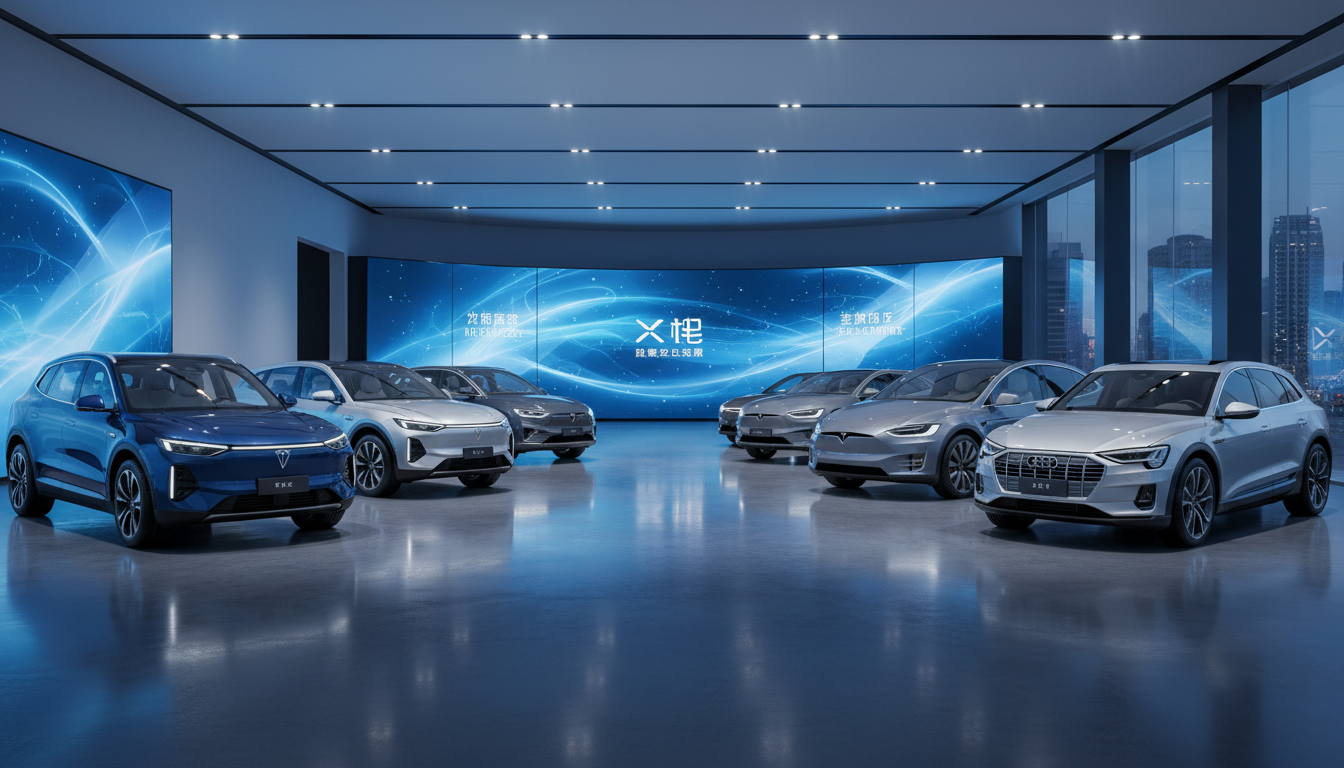
Electric SUV sales are splitting sharply between winners and losers as Chinese carmakers expand aggressively abroad while established automakers grapple with slowing demand in key markets.
The picture emerging across Asia and beyond reveals a market in motion. Chinese brands are notching wins in markets from Singapore to Australia. Meanwhile, a major joint venture in China itself is hitting a wall. The divergence underscores how quickly the electric vehicle sector is reshaping, and how regional performance no longer tracks global patterns.
Strong starts for new electric SUV sales models
XPENG’s L03 SUV coupé landed in Singapore with immediate traction. The model sold 500 units in its first three weeks, a clip that suggests strong market appetite for the Chinese brand’s design and technology. An all-wheel-drive variant is on the way, indicating XPENG is banking on expanding the lineup to sustain momentum.
That performance matters because Singapore is a discerning market with plenty of premium options. It’s not a captive audience. XPENG’s ability to move half a thousand units in 21 days signals the brand has cleared a credibility threshold in Southeast Asia.
Back in China, BAIC’s new Xingtan 5X hybrid-electric SUV logged strong pre-sales. The vehicle targets outdoor enthusiasts and integrates Huawei’s driver-assistance system—a feature set that appeals to tech-savvy buyers and those concerned with autonomous driving capabilities. The pre-sales numbers suggest BAIC has hit a nerve with its positioning.
Hongqi enters Australia with a six-seat luxury play
Hongqi’s entry into Australia marks a significant geographic leap for the Chinese luxury brand. The brand launched its E-HS9 electric SUV in Australia, a large model offering six seats and a 120 kWh battery under AU$150,000.
The pricing positions the E-HS9 as an alternative to established European and local premium models. Australia’s EV adoption rate has been climbing, and Hongqi’s arrival—offering size, battery capacity, and price positioning—tests whether Chinese luxury brands can convert early-adopter markets.
For Indian buyers watching the global EV race, the Hongqi move signals a pattern. Chinese manufacturers are not simply competing on price. They’re entering premium segments and offering feature sets (spacious interiors, advanced batteries, integration with Chinese tech ecosystems) that challenge conventional Western luxury positioning.
Electric SUV sales stall for Volkswagen’s Chinese joint venture
Not all launches are succeeding. Volkswagen Anhui’s joint venture is facing weak demand for its ID. Unyx SUV series, with no new models planned for 2027-2028. The stalled sales reflect broader headwinds in China’s EV market—a market that has become hypercompetitive and price-sensitive.
Volkswagen’s position in China, once unassailable, has eroded as local brands have accelerated up the value and technology ladder. The ID. Unyx represents the traditional VW approach: solid engineering, global platform, incremental innovation. That formula no longer guarantees success in a market where BYD, NIO, Li Auto, and others are redefining what customers expect from electric vehicles.
The failure to launch new models through 2028 is telling. It suggests Volkswagen Anhui is in recovery mode rather than growth mode. The company is likely reassessing its product strategy and investment commitments in one of the world’s largest EV markets.
The divergence: regional dynamics matter more than brand heritage
These divergent outcomes reflect a fundamental shift in automotive dynamics. Global brand prestige no longer predicts local market success. Distribution networks, pricing discipline, and alignment with regional buyer preferences now dominate.
Chinese brands are winning in markets—Singapore, Australia—where they’ve built credibility and offered competitive value. They’re also winning in China itself, where they have scale and cost advantages.
Western brands like Volkswagen, meanwhile, are facing margin pressure in China and must reconsider their product-market fit. The company’s decision to halt new model launches suggests Volkswagen is stepping back to rethink its strategy rather than doubling down on a failing formula.
What’s driving electric SUV sales momentum and stagnation
Several factors explain the divergence:
Technology integration. BAIC’s partnership with Huawei on driver assistance, and XPENG’s focus on autonomous driving features, align with buyer priorities in tech-forward markets. Volkswagen’s offering, while competent, doesn’t differentiate as sharply.
Pricing and positioning. Hongqi’s AU$150,000 price point for a six-seat luxury SUV undercuts comparable German rivals. That value proposition resonates. Volkswagen’s pricing strategy in China appears to have eroded profit margins without winning market share.
Market saturation. China’s electric vehicle market has matured rapidly. Buyers are no longer choosing between EV and combustion. They’re choosing between dozens of EV models, many from local brands with lower prices and faster feature updates.
Regional expansion strategy. XPENG and Hongqi are targeting growth markets methodically. Singapore, Australia, and other Asia-Pacific regions offer buyers with disposal income and environmental interest. Volkswagen’s strategy appears more defensive—managing existing commitments rather than aggressively expanding into adjacent markets.
FAQ
Q: Why is XPENG doing well in Singapore while Volkswagen struggles in China?
A: XPENG enters Singapore as a new entrant with strong pricing and driver-assistance technology; buyers are choosing it over established brands. Volkswagen in China faces entrenched competition from BYD, NIO, and Li Auto, all of which have lower costs and stronger local brand loyalty.
Q: What does Hongqi’s Australia launch mean for premium electric SUV competition?
A: It means Chinese brands are no longer competing only on value. Hongqi is entering the premium segment at price points that undercut European rivals, offering size and battery capacity that appeal to buyers who prioritize practicality over heritage.
Q: Why has Volkswagen Anhui halted new model launches?
A: The joint venture’s ID. Unyx sales have fallen short of targets. Halting launches through 2028 signals Volkswagen is reassessing its product strategy and cost structure in a hypercompetitive Chinese market where margins have compressed.
Q: How does the electric SUV market differ from the combustion vehicle era?
A: Competition is no longer primarily based on engineering reputation or global brand reach. Technology integration, regional pricing, and ability to iterate quickly now determine success. This favours brands with lower cost bases and closer ties to regional ecosystems.
Q: Are Chinese electric SUV brands reliable long-term competitors?
A: Yes. XPENG, BAIC, and Hongqi have moved beyond cost-cutting competitors to technology leaders. Their aggressive expansion into Australia and Singapore indicates serious global ambitions backed by manufacturing scale and capital.
