
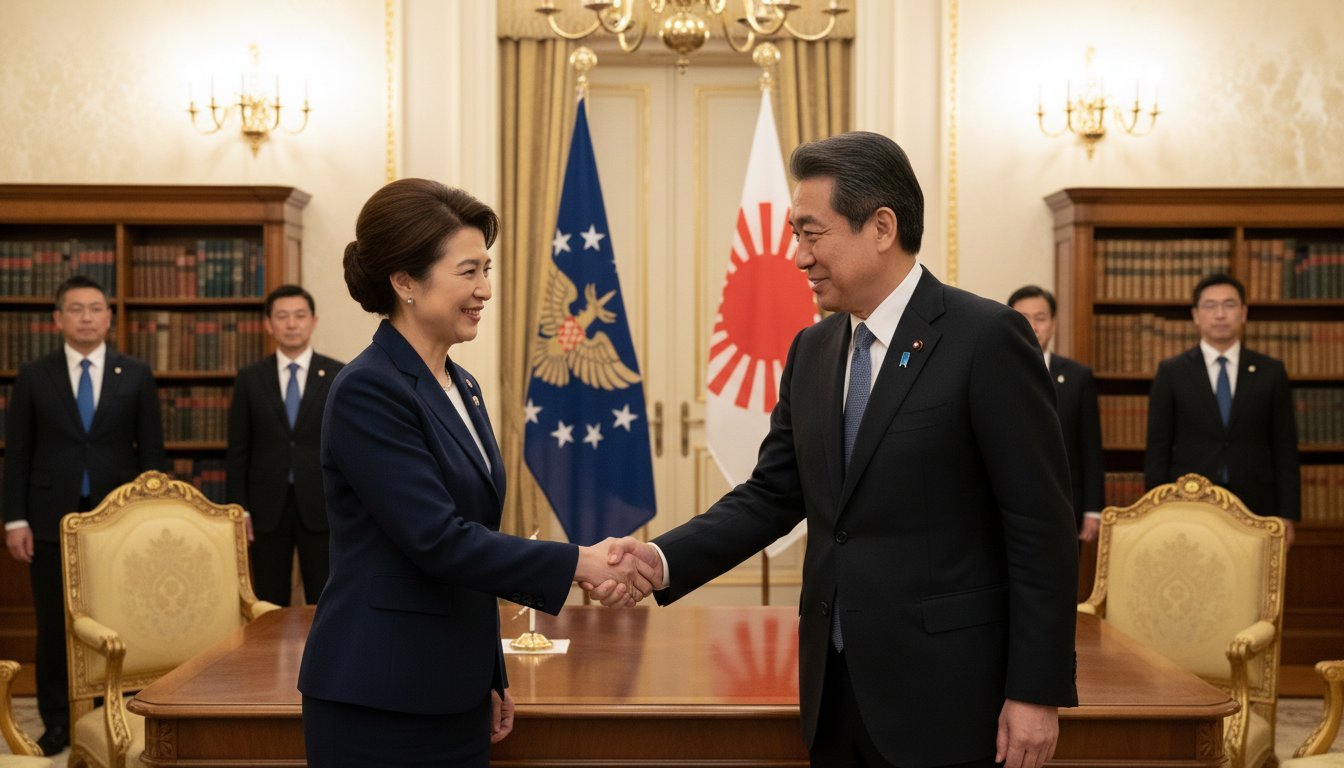
Nepal Prime Minister India visit: PM Balen Shah arrived in India on November 22, 2026, marking his first international engagement since taking office. The visit sets the stage for high-level talks with Indian Prime Minister Narendra Modi on November 23 to chart the course of India-Nepal relations at a critical juncture for both neighbors.
Shah’s itinerary includes meetings not just with Modi but also with India’s External Affairs Minister S. Jaishankar and President Droupadi Murmu. The discussions will span the full spectrum of bilateral cooperation and address regional and international matters of mutual concern, according to official statements.
The timing of this visit carries weight. Nepal has long navigated a delicate balance between its two major neighbors—India and China—while managing internal political pressures. Shah’s choice to make India his first stop signals where his government intends to place immediate emphasis.
Background
Balen Shah took office as Nepal’s Prime Minister after winning elections that reflected growing voter appetite for younger, non-traditional politicians. His administration inherited a relationship with India that, while historically close, has faced strain over border demarcation disputes, water-sharing agreements, and Nepal’s strategic tilt toward China in infrastructure projects.
India-Nepal ties rest on centuries of cultural, religious, and familial bonds. Yet practical cooperation on trade, hydropower development, and security has often moved haltingly. The two nations share a porous, 1,751-kilometer border. Movement of goods, people, and services across this boundary remains central to Nepal’s economy.
Previous prime ministerial visits to India have typically focused on resetting relations after periods of tension. This visit appears aimed at preventing fresh friction while identifying concrete areas where cooperation can deepen.
Nepal Prime Minister India visit: What’s on the table
The agenda for the Modi-Shah meeting remains broad. Border issues will likely feature, though not necessarily as the headline item. Nepal has periodically raised concerns about demarcation in the Kalapani area, where Indian and Nepali claims overlap.
Water resources are another persistent topic. Nepal possesses enormous hydropower potential, estimated at 83,000 megawatts. India has long sought involvement in Nepali hydroelectric projects. Joint ventures have faced delays due to financing disputes, land acquisition challenges, and disagreement over project design and revenue-sharing.
Trade imbalances also feature in Delhi-Kathmandu talks regularly. India runs a substantial surplus in bilateral commerce. Nepal’s exports to India remain concentrated in a narrow range of products, while Nepal imports everything from fuel to manufactured goods from India.
Regional stability and terrorism present shared concerns. Both nations worry about cross-border militant activity. Pakistan-based groups have used Nepali territory for logistics. India’s security establishment views Nepal as part of its extended security perimeter.
The visit may also touch on China’s growing footprint in Nepal. Chinese investment in Nepali infrastructure has accelerated since 2015. India watches these developments, fearing encirclement. Balancing these great-power dynamics will be central to Shah’s foreign policy.
What this means for India
For New Delhi, Shah’s visit is an opportunity to reset ties with a new interlocutor. Building rapport with young leaders early in their tenure often pays dividends. Modi has experience with this approach—he has cultivated relationships with neighborhood leaders across South Asia.
A stable, prosperous Nepal matters for India’s economic and strategic interests. Instability in Kathmandu can trigger refugee flows into Indian border states like Bihar and Uttar Pradesh. It can also create vacuums that adversarial powers exploit.
The visit also signals to Beijing that India retains centrality in Nepal’s strategic calculus. While India cannot match China’s current investment capacity, it offers geographic proximity, cultural affinity, and security guarantees that China cannot replicate.
Domestically, as we reported earlier, Indian politics has been consumed by other matters, but the foreign office recognizes that border region stability requires constant diplomatic attention.
What happens next
The Modi-Shah bilateral is set for November 23. Joint statements typically follow such meetings, outlining shared commitments. These statements often announce task forces or working groups on specific issues—water resources, trade facilitation, or security cooperation.
The visit is unlikely to yield dramatic breakthroughs on longstanding disputes. Instead, expect incremental progress: agreements to restart stalled committees, new frameworks for dialogue, or expanded cultural exchange programs.
Shah will depart India with either a strengthened partnership or a mapped agenda for future engagement. The quality of this first interaction will shape bilateral relations for years.
Key takeaways
- Nepal PM Balen Shah arrived November 22 for his first international visit, holding talks with Modi on November 23
- Agenda covers water resources, trade imbalances, border issues, and regional security concerns
- The visit is Shah’s signal about Nepal’s strategic priorities and his government’s approach to major neighbors
- Bilateral relations depend on managing overlapping interests in hydropower, commerce, and regional stability
- Chinese infrastructure investment in Nepal adds urgency to India’s diplomatic efforts
FAQ
Q: Why is Balen Shah visiting India before other countries?
A: As a newly minted prime minister, Shah’s choice of India as his first destination emphasizes the relationship’s importance. India is Nepal’s largest trading partner and a geographic anchor for Nepali politics and economics. First visits abroad typically go to the nearest significant power or closest ally.
Q: What is the main dispute between India and Nepal?
A: The Kalapani border dispute, where India and Nepal’s territorial claims overlap in the Himalayas, remains unresolved. The two nations also differ on how to demarcate sections of their shared boundary. Beyond borders, disagreements over water-sharing and hydropower projects have caused friction.
Q: How does China factor into India-Nepal relations?
A: China has significantly increased investment in Nepali infrastructure, particularly roads and hydropower projects. India views this as part of Beijing’s strategy to encircle it strategically. Managing Nepal’s relationships with both India and China is a central challenge for Kathmandu’s leaders.
Q: What is Nepal’s hydropower potential and why does India care?
A: Nepal has an estimated 83,000 megawatts of hydroelectric capacity, one of the world’s largest untapped reserves. India needs power and sees Nepal as a source. Joint projects could supply electricity to northern India while generating revenue for Nepal, but past ventures have faced delays over financing and terms.
Q: Will this visit resolve long-standing disputes between India and Nepal?
A: Unlikely in the short term. Bilateral visits typically establish frameworks for dialogue rather than settle contentious issues. Progress on borders and water-sharing requires sustained negotiation across multiple visits and working groups. This visit is better viewed as a foundation-laying exercise.
