
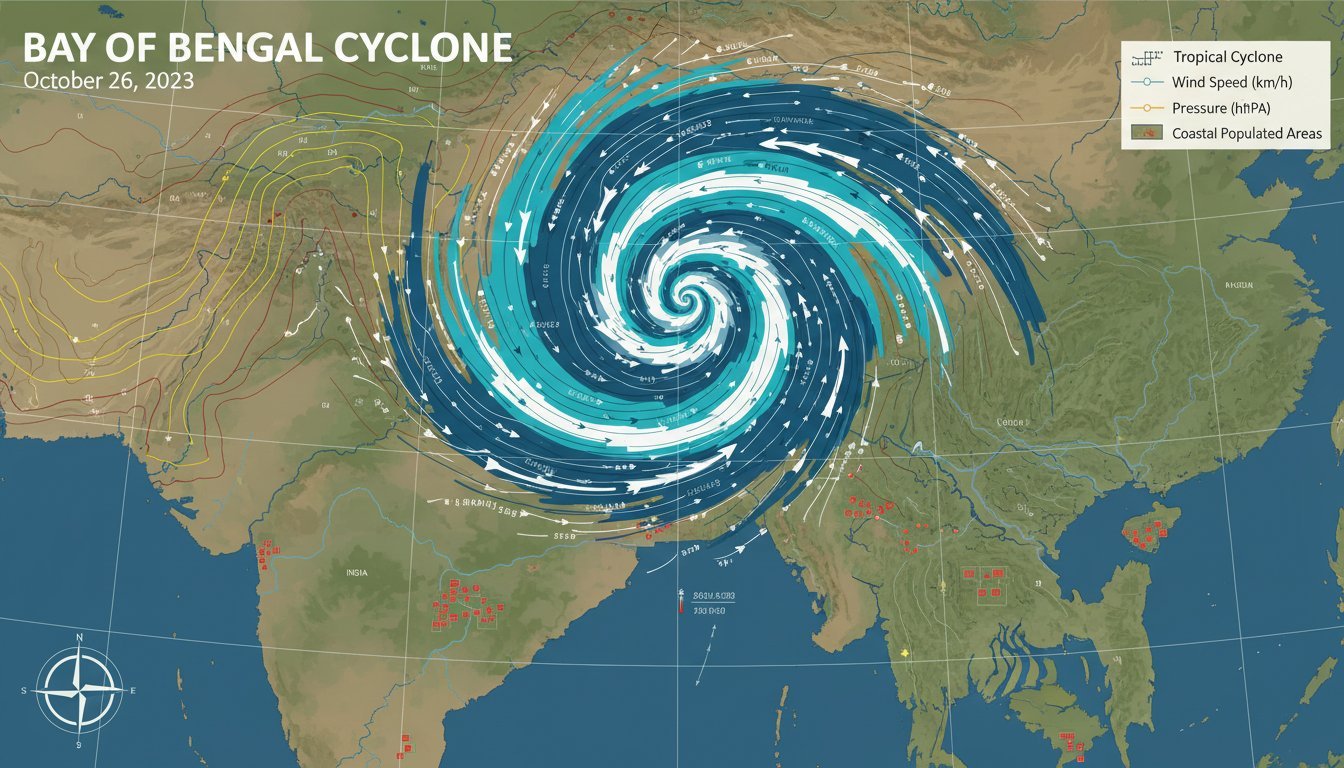
Cyclone Akvan evacuation efforts have shifted into high gear as the severe cyclonic storm intensifies over the Bay of Bengal, with authorities bracing for landfall expected by noon on November 20 between Narsapur in East Godavari district and Puri in Odisha.
Over one lakh people—approximately 100,000—have already been moved to safety from vulnerable coastal and low-lying areas. Among them are nearly 10,000 pregnant women who have been relocated to secure shelters and medical facilities, a precaution aimed at ensuring their safety during the storm’s passage.
The storm has been downgraded slightly from earlier forecasts. Wind speeds are now predicted at 90-100 kmph with gusts reaching up to 110 kmph, according to meteorological agencies tracking the system. Earlier forecasts had projected much stronger winds of 120-130 kmph with gusts exceeding 145 kmph.
Odisha and Andhra Pradesh have borne the brunt of recent cyclones. As we reported earlier, Cyclone Akvan had been tracked since mid-November as a developing threat to both states’ coastlines.
Background
Cyclone Akvan formed over the warm waters of the Bay of Bengal and has been steadily tracked by the India Meteorological Department. The cyclone’s path took it northwestward, with the expected landfall zone narrowing to a more precise stretch of coastline between the two states.
The refined landfall location marks a shift from earlier predictions, which had placed the storm’s entry point further south. This adjustment allows disaster management authorities to better target evacuation and preparedness measures in the most vulnerable districts.
The storm represents the latest in a series of cyclonic systems to impact India’s eastern seaboard in recent years, underlining the region’s exposure to monsoon-season weather hazards.
Cyclone Akvan evacuation: scale and logistics
State governments in Odisha and Andhra Pradesh have mobilized disaster relief teams, coast guard units, and local administration to execute one of the largest pre-cyclone evacuations in recent months. Evacuees have been moved to designated cyclone shelters, school buildings, and community centers away from storm surge zones.
The evacuation of pregnant women signals official concern about healthcare access during and immediately after the storm. Most have been shifted to hospitals and health centers in safer inland areas where medical staff can attend to emergency deliveries if labour begins during the cyclone period.
District administrations have conducted multiple rounds of door-to-door surveys in coastal villages to identify people unwilling to evacuate voluntarily. Persuasion teams have been deployed in some areas, though enforcement has remained largely cooperative as residents recognize the danger.
Fishing communities, among the most vulnerable to cyclone impact, have been advised to cease all maritime activities. Boats have been secured or brought to shore, and fishermen warned against venturing into the Bay of Bengal.
What this means for affected residents
For people in the evacuation zones—primarily coastal blocks of East Godavari, Srikakulam, and Visakhapatnam districts in Andhra Pradesh and Balasore, Bhadrak, and coastal Puri in Odisha—the next 48 hours will involve sheltering away from home with minimal personal belongings.
Power outages are likely once the storm arrives. Roads in low-lying areas may become impassable, potentially isolating villages for 24-48 hours post-landfall. Residents should stock essential medicines, water, and non-perishable food before evacuation begins, though relief supplies will be pre-positioned at shelters.
Agricultural areas facing inundation risk will see crop damage. Paddy fields in their final growth stages are most vulnerable. Livestock owners in vulnerable talukas have been urged to move animals to higher ground.
Communication disruptions are probable. Mobile networks may go down during peak storm hours. Residents should note emergency helpline numbers: 1070 (Odisha) and 1077 (Andhra Pradesh).
Heavy rainfall alert for West Bengal
Beyond the immediate landfall zone, heavy to very heavy rainfall is forecast for southern West Bengal districts, including Kolkata, for the next two days. While Kolkata lies outside the direct cyclone track, the system’s outer bands will bring significant precipitation to the region.
The Indian Meteorological Department has issued yellow and orange alerts for parts of West Bengal. Urban flooding in low-lying areas of Kolkata and adjacent municipalities is a possibility if rainfall becomes intense.
Key takeaways
- Over 1 lakh people evacuated from Odisha and Andhra Pradesh, including 10,000 pregnant women relocated to medical facilities.
- Cyclone Akvan landfall expected November 20 between Narsapur (East Godavari) and Puri (Odisha) around noon.
- Wind speeds predicted at 90-100 kmph with gusts to 110 kmph—a downgrade from earlier 120-130 kmph forecasts.
- Heavy to very heavy rainfall likely in southern West Bengal districts including Kolkata for the next two days.
- Fishing activities banned; maritime operations suspended in the Bay of Bengal until the system passes.
FAQ
When will Cyclone Akvan make landfall?
Landfall is expected by noon on November 20, 2026, between Narsapur in East Godavari district and Puri in Odisha.
What wind speeds will accompany the cyclone?
The storm is carrying wind speeds of 90-100 kmph with gusts reaching up to 110 kmph at the time of landfall.
How many people have been evacuated?
Over one lakh (100,000) people have been evacuated from vulnerable areas. This includes nearly 10,000 pregnant women who have been moved to hospitals and medical shelters.
Which areas face the highest risk?
Coastal blocks of East Godavari, Srikakulam, and Visakhapatnam in Andhra Pradesh, and Balasore, Bhadrak, and coastal Puri in Odisha face direct impact. Southern West Bengal, including Kolkata, will experience heavy rainfall.
What should residents in evacuation zones do now?
Evacuees should move to designated cyclone shelters with essential medicines and documents. Stock water and non-perishable food before leaving. Note emergency helplines: 1070 (Odisha) and 1077 (Andhra Pradesh).
Also read
- Odisha Cyclone Threat: Depression Over Bay of Bengal to Intensify; Schools Shut, High Alert
- Opposition intensifies pressure on CEC Gyanesh Kumar over electoral roll irregularities and alleged government influence
