
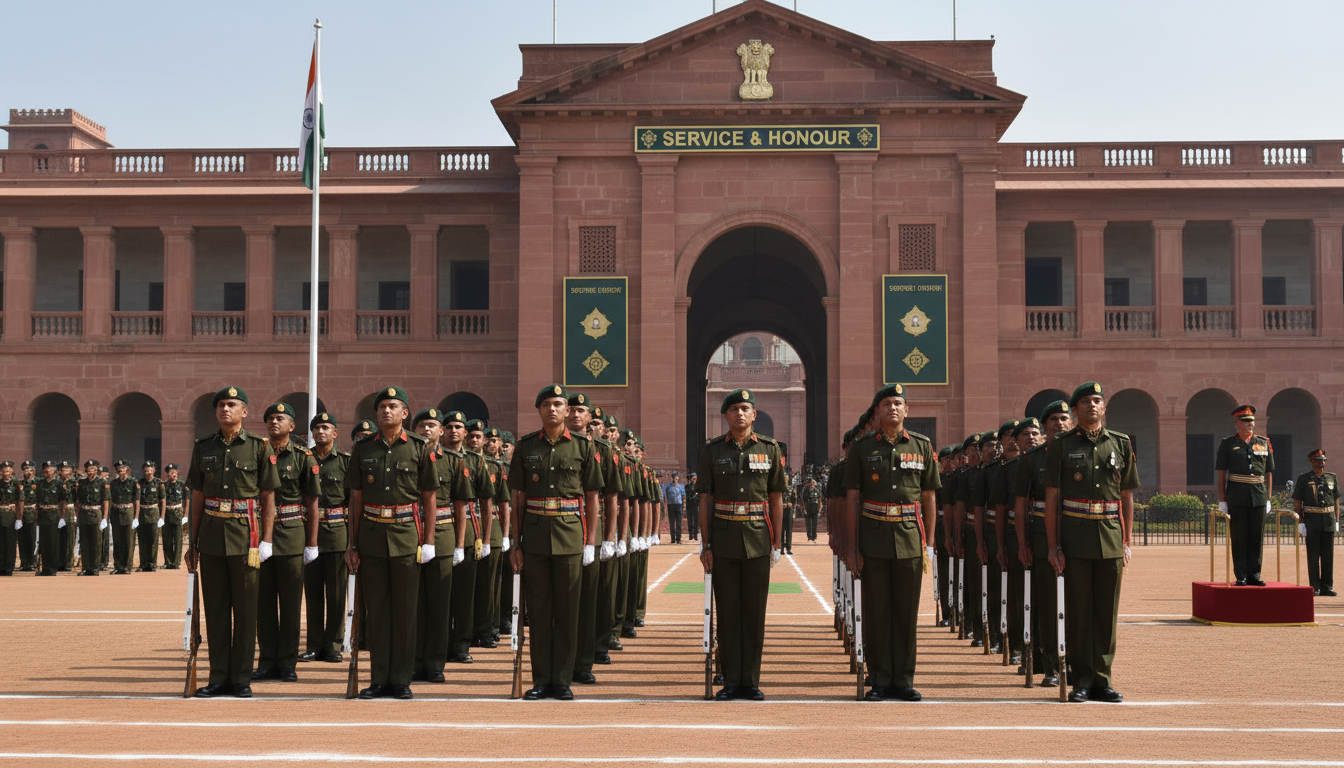
The government has approved an Agnipath scheme extension that will allow Agniveers to serve for two additional years after completing their initial four-year contract, according to recent cabinet decisions. This move marks a significant recalibration of the recruitment model introduced in 2022.
The extension addresses longstanding concerns from Agniveers about career security. Young soldiers who complete their mandatory four-year stint can now opt for an additional two years of service. Those who perform well during this extended period will be considered for permanent commissions or regular positions in the armed forces.
The cabinet’s decision came after sustained pressure from multiple quarters. Agniveers had protested over limited career prospects since the scheme’s rollout. Opposition parties questioned whether the initial four-year term left recruits without adequate benefits or long-term stability. The extension tacitly acknowledges these critiques while attempting to retain the scheme’s core structure.
How the Agnipath scheme extension works
Under the revised framework, an Agniveer’s service now breaks into two phases. The first four years remain unchanged—these are the core contract years where recruits serve without any guarantee of extension. After completion, those meeting eligibility criteria can apply for the two-year extension.
Performance during the initial stint matters. The armed forces will assess each Agniveer’s conduct, efficiency, and suitability. Not all will qualify for the extension. Those selected move into what amounts to a probation-cum-evaluation period. Merit-based selection ensures only capable personnel advance further.
Upon completing the extended two-year term, high performers may be offered permanent positions. These could be regular commissions for officers or permanent enrollments for other ranks. The exact absorption numbers and criteria remain to be operationalized.
Why the two-year extension addresses earlier concerns
When the Agnipath scheme launched in June 2022, recruitment officers promoted it as a modernization move. The scheme was supposed to inject youth into the armed forces while keeping the average age low. Policymakers argued younger soldiers meant better fitness and adaptability.
Agniveers themselves saw it differently. Four years was short. Military pensions required longer service. Veterans’ benefits seemed distant for a four-year contract holder. Many worried about civilian employment prospects after such a brief stint.
The protests that followed were sharp. In several states, demonstrations turned violent. Agniveers demanded job security. Some alleged that the scheme was merely cost-cutting dressed as reform. The government initially defended the model but faced sustained criticism throughout 2022 and 2023.
The extension now provides what the original scheme withheld: a tangible pathway to permanence. An Agniveer who performs well can now aim for a career spanning six or more years, with prospects of longer service. This transforms the scheme from a fixed-term contract into a potential career ladder.
Permanent absorption criteria yet to be detailed
While the extension principle has been cleared, many operational details remain unclear. How many Agniveers will the armed forces absorb per year? Will there be service-wide quotas or force-specific numbers? What exactly constitutes “performance” meriting permanent status?
These questions matter because they determine whether the extension is real opportunity or symbolic window-dressing. If only a tiny fraction of extended Agniveers get permanent slots, the scheme remains essentially unchanged in its core weakness: temporary employment.
The defence ministry will need to announce absorption guidelines soon. Agniveers considering the extension will want concrete numbers and transparent criteria before committing to another two years. Vagueness here invites fresh rounds of protest and suspicion.
Broader implications for armed forces recruitment
The Agnipath scheme extension signals a partial retreat from the original model’s rigid structure. It acknowledges that military recruitment cannot function like a fast-moving consumer goods factory where throughput matters most.
Armed forces need stability. Soldiers need to trust that good performance leads somewhere. Institutional knowledge accumulates over years, not months. The extension recognizes this, even if implicitly.
However, the scheme’s core DNA—shorter service contracts, lower pension liabilities, higher turnover—remains intact. The armed forces are not reverting to the old permanent commission model where most recruits stayed for decades. They’re adding flexibility at the margins.
This hybrid approach may work. It retains cost controls while improving retention of quality personnel. Or it may prove administratively messy, creating multiple tiers of service with different benefits and expectations. Implementation will show.
FAQ
Q: What happens to an Agniveer if they don’t get the two-year extension?
A: They exit after their initial four-year contract, as originally planned. The extension is not automatic; selection is merit-based.
Q: Can an Agniveer apply for permanent commission after just four years?
A: Not directly. They must first qualify for and complete the two-year extension. Only then are they considered for permanent positions.
Q: Will the two-year extension have different pay or benefits than the initial four years?
A: The cabinet approval doesn’t specify changes to compensation. This detail will likely come in detailed guidelines from the defence ministry.
Q: How many Agniveers will actually be absorbed as permanent?
A: The government has not announced absorption numbers yet. This remains a critical unknown that will determine the extension’s real impact.
Q: Is the extension mandatory or optional for Agniveers?
A: It appears optional—Agniveers who qualify can choose to extend or exit. Full terms remain to be clarified in official guidelines.
The approval marks a pragmatic adjustment to a controversial scheme. Whether it resolves underlying tensions depends on how the armed forces implement the absorption pathway.
