
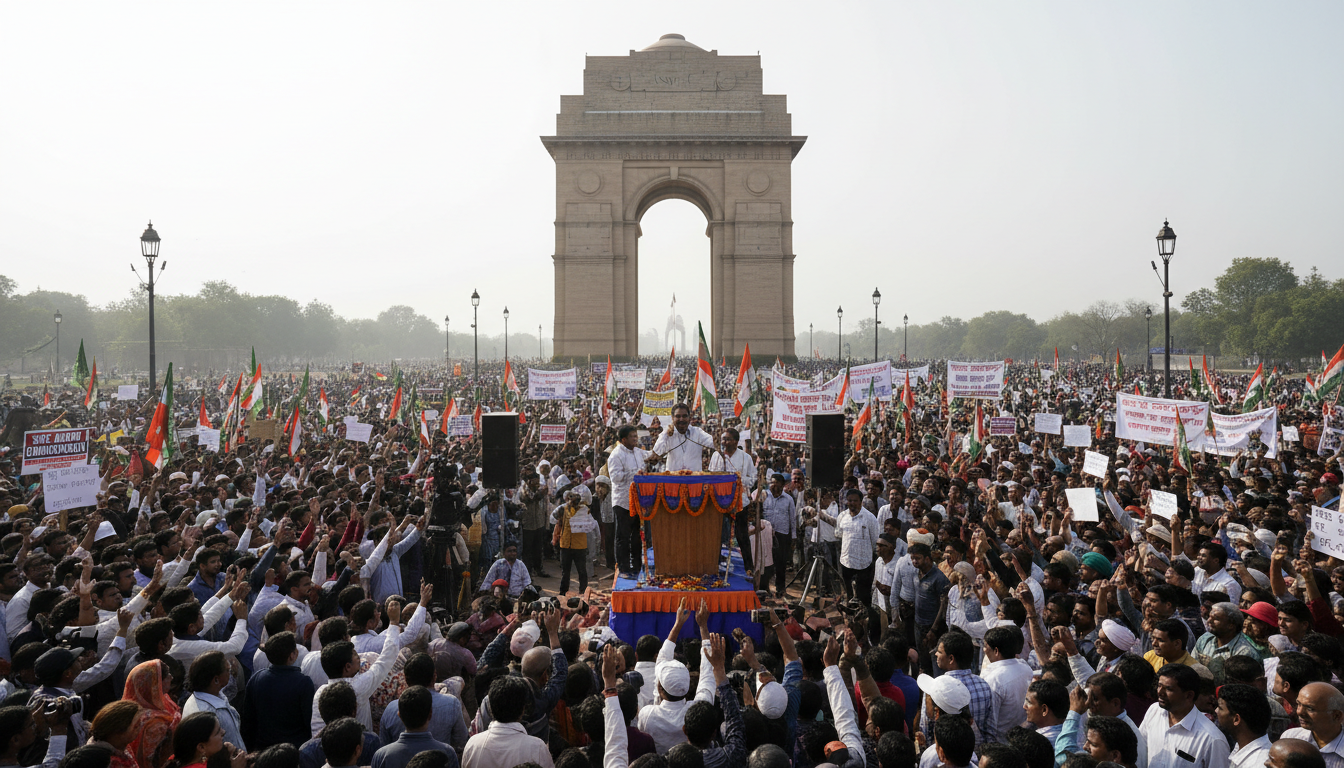
Opposition demands CEC resignation as the INDIA bloc intensified its challenge to Chief Election Commissioner Gyanesh Kumar at a massive rally in Delhi yesterday, accusing him of presiding over systematic vote theft and demanding his immediate removal from office.
The assembly at Ramlila Maidan brought together opposition parties under the INDIA bloc banner to air grievances they say have been ignored by electoral authorities. Rahul Gandhi, the Congress leader, levelled the most direct attack, according to reports accusing CEC Gyanesh Kumar of treason. He vowed legal action not only against the election commissioner but also against Prime Minister Modi.
The specific charges paint a damaging picture. Opposition leaders allege “vote chori”—vote theft—and deliberate manipulation of voter rolls. They claim these practices disproportionately harm minority communities. The allegations go beyond loose rhetoric; they suggest systemic bias in how electoral machinery functions under current commission leadership.
Opposition demands CEC resignation amid fraud allegations
Gandhi’s rhetoric crossed into territory rarely heard in Indian politics. Labeling the CEC’s conduct as treasonous signals the opposition views this as a fundamental threat to democratic function, not merely a procedural dispute.
The rally represented a show of unity across fractious opposition parties. In a fragmented political landscape, such consensus on election commission criticism is noteworthy. Multiple party leaders spoke, each adding their own grievances about electoral fairness and voter list accuracy.
Yet the opposition faces a structural problem: the Election Commission operates with significant autonomy. Forcing a CEC’s resignation requires either political pressure that reaches critical mass or documented malfeasance so severe that the government itself initiates removal. Resignation demands, however loud at rallies, rarely translate into institutional change without either evidence that shifts public opinion or political circumstances that make keeping the CEC untenable for those in power.
Voter roll manipulation and minority concerns
The allegation of voter roll tampering has specific weight in Indian electoral politics. Voter lists form the bedrock of democratic participation. If minority voters find themselves systematically excluded or their registrations mysteriously altered, it undermines their franchise.
Opposition parties claim such patterns exist. They have not, based on available reports, presented district-by-district statistical evidence at the rally. But such allegations resonate in constituencies where communities already feel marginalized.
The timing matters. The opposition is building a narrative frame for approaching elections. Whether these allegations gain traction depends partly on independent verification and partly on whether electoral outcomes appear to validate opposition suspicions.
Broader political context
The rally unfolded against a backdrop of other political controversies. Former J&K Chief Minister Mehbooba Mufti used the occasion to argue that Kashmir’s problems require dialogue, not coercive measures like UAPA or PSA detentions.
Separately, the Enforcement Directorate conducted raids on former Punjab minister Sunder Sham Arora in a money laundering investigation. Such simultaneous pressure on opposition figures inevitably feeds opposition narratives about selective targeting.
Additionally, a Delhi High Court intervened to stay JNU’s order terminating Congress MP Angomcha Bimol Akoijam over sexual harassment allegations. Courts balancing institutional autonomy against individual rights complicate any simple opposition narrative about victimization.
Election Commission’s track record under scrutiny
How has the Election Commission responded to such criticism? The reports available do not show direct rebuttals from CEC Gyanesh Kumar to the specific allegations. Silence from the commission itself—or from government officials defending it—leaves opposition claims occupying media space unchallenged by concrete counterarguments.
Election commissions in India have historically enjoyed broad respect, but that respect is not unconditional. Previous commissions faced criticism over voter accessibility, EVM controversies, and irregularities in specific states. The current commission is not the first to face serious questioning about its impartiality.
What distinguishes the current moment is the unified opposition voice and the explicit call for resignation. Opposition rallies often denounce electoral processes. Formal demands for a specific official’s removal escalate the confrontation.
Legal action threatened
Gandhi’s vow of legal action against the CEC and PM Modi suggests the opposition may move beyond rhetoric. Criminal charges of treason carry severe consequences. Civil litigation over electoral administration is more common but slow.
The opposition likely intends to file cases in courts. Whether courts accept jurisdiction over electoral commission operations remains partly unsettled law. Political branches typically defer to electoral commissions on technical matters, though courts do intervene when constitutional rights appear violated.
FAQ
What exactly is the opposition accusing the Chief Election Commissioner of?
The INDIA bloc alleges that CEC Gyanesh Kumar has presided over vote theft and voter roll manipulation that disproportionately affects minority communities. Rahul Gandhi specifically accused him of treason.
Why is voter roll manipulation a serious charge?
Voter rolls determine who can vote. If minorities are systematically excluded or their registrations altered, they lose their franchise without due process. This strikes at the foundation of democratic participation.
Can the opposition actually force the CEC to resign?
Resignation demands rarely succeed without either public outrage that reaches critical mass or political circumstances making retention costly for the government. Institutional autonomy protects election commissions from easy removal.
What legal action has Rahul Gandhi threatened?
Gandhi vowed legal action against both CEC Gyanesh Kumar and PM Modi. He did not specify the charges, though his use of “treason” suggests criminal allegations, not merely civil disputes.
Has the Election Commission responded to these allegations?
Available reports do not show direct public responses from CEC Gyanesh Kumar or the commission to the specific charges of vote rigging and voter roll manipulation raised at the rally.
