
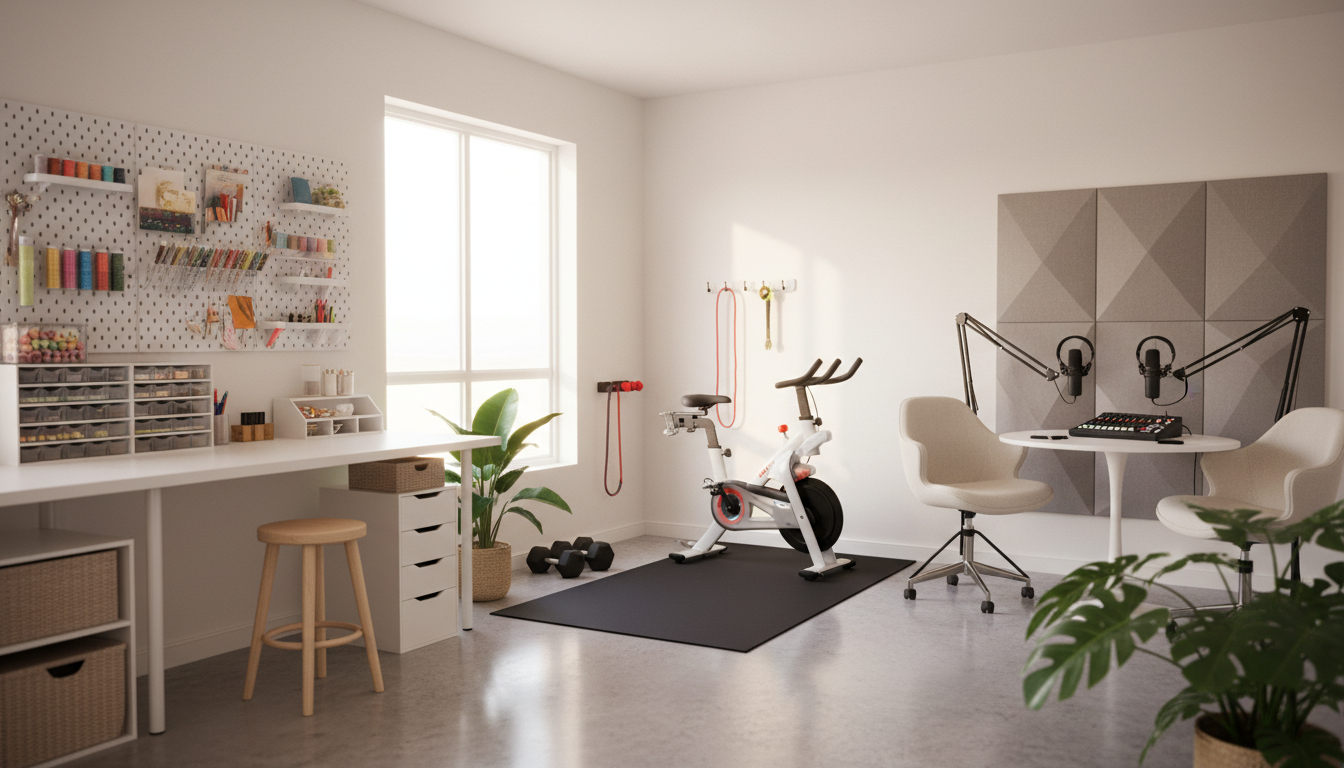
Hobby rooms are no longer an afterthought tucked into a spare corner. According to recent lifestyle trend data, homeowners are now dedicating entire rooms—with proper ventilation, lighting, and equipment—to their personal interests. The numbers tell a striking story.
Searches for dedicated craft rooms jumped 33% year over year. Home gym installations surged 59%. Sauna demand climbed 35%. And podcast studios? They’ve exploded by 90%.
This isn’t just about having more space at home. It’s about claiming ownership of it. People are moving past the idea that a hobby belongs in the living room corner or the garage shelf. They’re building rooms that say: this matters enough to deserve its own walls.
The Shift to Independent Home Culture
The trend reflects what industry analysts call “The Independent Home”—a deliberate move toward personalised living spaces. Instead of a generic home office for work-from-home setups, people are asking: what do I actually want to spend time doing?
A software engineer in Bangalore might convert a spare bedroom into a photography darkroom. A retired accountant in Mumbai might build a full home gym with proper flooring and mirrors. Someone in Pune could be setting up their first podcast studio.
The common thread isn’t the hobby itself. It’s the conviction that it deserves real estate.
This shift has real implications for home renovation contractors, interior designers, and equipment suppliers across India’s metros. Home improvement stores report requests for equipment they’d rarely stocked before. Electricians field more queries about studio-grade power supplies and grounding. Carpenters are fielding rush jobs for soundproofed walls.
Craft Rooms: The 33% Surge
The craft room boom feels especially significant in Indian households, where needlework, painting, jewellery-making, and textile arts have deep cultural roots.
A 33% year-on-year jump in craft room searches suggests people are finally giving these pursuits proper space. No more balancing a sewing machine on a dining table. No more storing embroidery threads in kitchen drawers.
Proper craft rooms mean dedicated storage. Climate control for materials like fabric and paper. Work surfaces at the right height. Shelving that doesn’t collapse under supplies.
For women especially—who dominate craft hobbies in most Indian households—this represents a quiet but meaningful shift. A room of one’s own, to borrow Virginia Woolf’s phrase, but specifically for creative work.
The investment pays dividends. Hobbyists report spending more time on their crafts when space is dedicated to it. They finish more projects. They experiment more freely.
Home Gyms: The 59% Explosion
The 59% jump in home gym installations reflects something deeper than pandemic-era fitness trends.
Yes, COVID accelerated gym conversions. But three years on, the numbers haven’t fallen back. Instead, they’ve kept climbing.
This suggests people have made a permanent decision: they prefer exercising at home.
The reasons are practical. No commute. No membership fees. Training on your schedule, not the gym’s. In Indian cities where commute times can easily consume two hours daily, that adds up.
Home gyms also sidestep another pain point: crowded facilities during peak hours. You don’t share equipment. You don’t wait. You don’t navigate social dynamics.
Most home gyms start modestly—a treadmill, some dumbbells, yoga mats. But dedicated gym rooms allow for expansion. Mirror walls. Proper flooring. Ventilation systems. Equipment racks.
The trend shows no signs of slowing. Gym equipment suppliers now market entire “room solutions” rather than individual machines.
The Sauna Surprise: 35% Growth
Saunas might seem like a luxury amenity for urban India. Yet searches have climbed 35% year over year.
Part of this is aspirational—people researching what’s possible, even if installation remains years away. But part is real adoption, especially among higher-income households in metros.
Saunas serve multiple purposes: recovery after workouts, stress relief, and straightforward luxury. They’re also a status marker—a room that says: we’ve invested in wellness seriously.
The barrier isn’t desire; it’s logistics. Saunas require proper electrical work, moisture management, and ventilation. They’re not a weekend DIY project. But for those who commit, the appeal is clear.
Podcast Studios: The 90% Shock
The 90% jump in podcast studio searches stands out.
India’s podcast ecosystem is still young compared to mature Western markets. Yet creators are already investing in dedicated spaces.
A podcast studio doesn’t need to be elaborate. Soundproofing matters more than size. You need acoustic panels, a decent microphone, and a small recording desk. Some creators work from walk-in closets lined with blankets.
But the 90% surge suggests people aren’t just dabbling. They’re serious about audio quality.
The Indian podcast space is fragmented but growing. True crime. Comedy. Business advice. Self-help. Cultural critique. Sports. News. Each category has audiences. And creators are now investing in spaces that reflect that commitment.
What This Means for Your Home
The broader shift is this: spare rooms are no longer spare.
Before, an extra bedroom might remain empty, or serve as a storage dumping ground, or accommodate the occasional guest. Now, homeowners are asking: could this be a craft studio? A gym? A podcast booth? A sauna?
This requires rethinking home layouts from the ground up. New construction now features “flex rooms” precisely for this reason—rooms that can serve multiple purposes depending on the owner’s needs.
For existing homes, it often means renovations. Better electrical infrastructure. Soundproofing. Climate control. Proper ventilation.
None of this is cheap. But the investment reflects a genuine shift in how people prioritise domestic space. The bedroom might shrink. The dining room gets less traffic. But the hobby room gets serious money and attention.
FAQ
Q: How much does it cost to convert a spare room into a hobby room?
A: Costs vary wildly depending on the hobby. A basic craft room might require just good storage and lighting—₹20,000–₹50,000. A home gym might run ₹50,000–₹2,00,000 depending on equipment. A dedicated podcast studio with proper soundproofing could cost ₹75,000–₹1,50,000. Saunas are the priciest, typically ₹2,00,000+.
Q: What’s the easiest hobby room to set up?
A: Craft rooms are usually most accessible. You need good natural or LED lighting, a sturdy work table, storage shelving, and organisation systems. Many people start with under ₹50,000.
Q: Do I need soundproofing for a home gym?
A: Not always. Basic acoustic panels help reduce noise transmission to other rooms. Full soundproofing is more important for podcast studios than gyms. Proper flooring (rubber mats) also dampens sound.
Q: Can a hobby room increase home resale value?
A: Potentially, yes. A well-designed hobby room demonstrates thoughtful home renovation. It appeals to buyers with similar interests. But resale value depends heavily on local market conditions and the overall quality of renovation.
Q: Should I hire a designer for a hobby room?
A: It helps, especially for complex builds like saunas or studios. But many hobbyists DIY basic rooms by researching online, visiting showrooms, and consulting equipment specialists. Start with your hobby’s specific needs first.
