
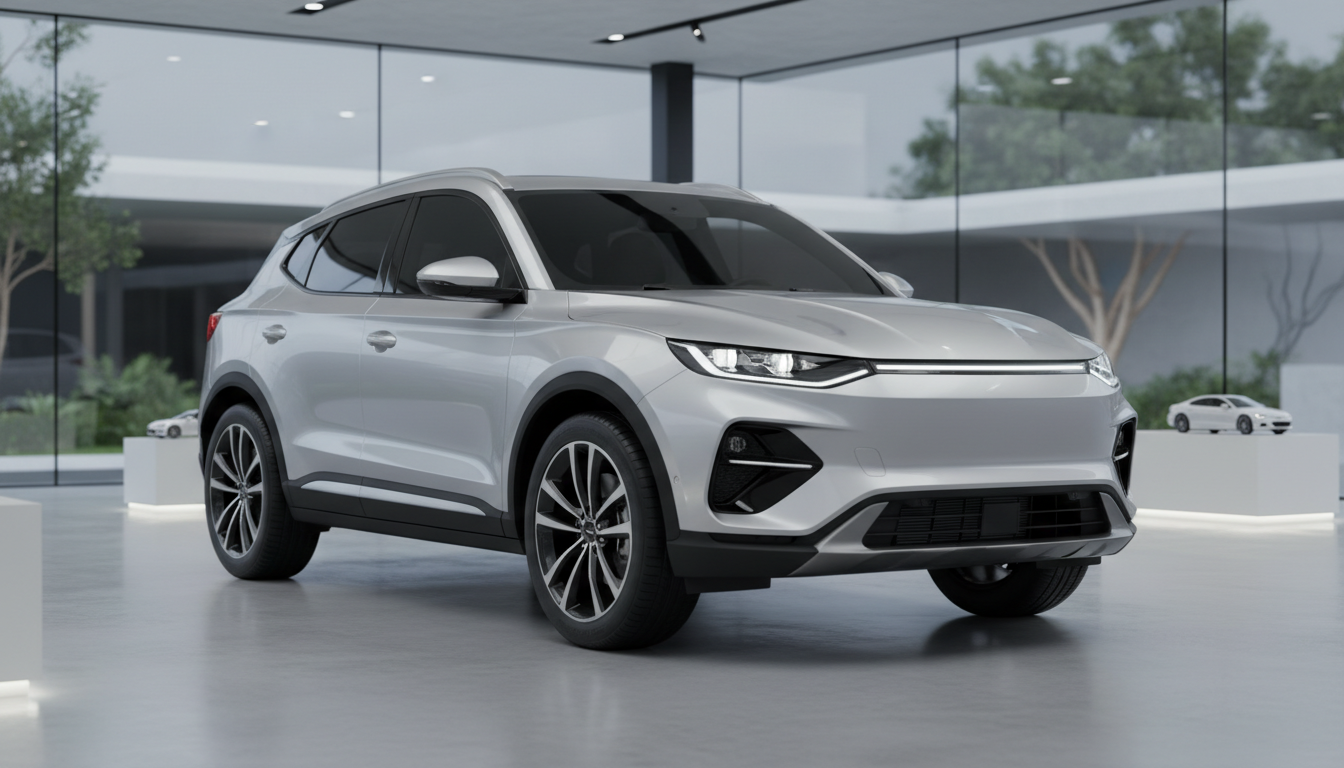
Hyundai Bayon India launch is officially happening on October 26, 2026, marking the Korean automaker’s entry into the fiercely competitive mid-size SUV segment. The new model arrives as Hyundai expands its line-up to capture buyers caught between its existing Venue and Creta offerings.
The Bayon’s positioning matters. The Venue already commands the sub-4-metre segment with a loyal customer base. The Creta dominates the Rs 10-16 lakh bracket. But there’s a gap—buyers wanting something roomier than a Venue yet not quite ready to step up to a Creta’s price tag. That’s where the Bayon slots in, according to CNBC-TV18.
The real talking point here is the technology. The Bayon will pack India’s first generative AI voice assistant built into a mass-market SUV. This isn’t just a gimmick. In a market where smartphone integration has become table stakes, a genuinely smart voice system that understands natural language could genuinely shift purchase decisions.
What makes the Hyundai Bayon India launch significant
Hyundai’s track record with SUVs in India is solid. The Creta prints money. The Venue has built a strong following. But the Bayon represents something different—a test of whether Hyundai can own the middle ground with technology as the differentiator.
The segment between compact and mid-size SUVs is crowded. Mahindra XUV300, Tata Nexon, and Maruti Brezza all have established beachheads. Yet none have positioned themselves explicitly as the tech-first choice in their class. That opening is what Hyundai appears to be targeting with the generative AI voice assistant.
What’s the actual advantage? Voice commands that understand context and natural speech patterns beat traditional button-based systems for in-car operation. They’re safer during driving. They’re also more intuitive for first-time SUV buyers who may not be tech-savvy but own smartphones.
Positioning between Venue and Creta
The Venue launched in 2019 and has sold consistently well. It’s compact, affordable, and practical for urban India. The Creta, meanwhile, is India’s best-selling SUV by a significant margin. It offers more space, more features, and more prestige.
The Bayon sits between them. Expect it to be slightly larger than the Venue but smaller than the Creta. Price-wise, it should land in the Rs 8-12 lakh range, roughly—enough daylight above the Venue to justify the step-up, but enough value to make the Creta look expensive for buyers who don’t need its extra space.
This is standard SUV pyramid strategy. Mahindra does it with the XUV300 and XUV400. Tata does it with Nexon and Harrier. But Hyundai’s use of generative AI as a differentiator is genuinely novel for this price point in India.
The generative AI voice assistant advantage
India’s first generative AI voice assistant in a mass-market SUV is a significant claim. Most existing systems are command-based—you say a specific phrase, they execute. Generative AI learns context and understands conversational input.
A driver might say, “It’s getting hot,” and the system could infer that the air conditioning should be adjusted. Or “I’m running late” could trigger navigation adjustments. These aren’t world-changing features, but they represent a leap in user experience over what competitors currently offer.
For a market where smartphone penetration is high but AI adoption in vehicles remains nascent, this positions the Bayon as forward-thinking without being gimmicky. It’s the kind of feature that generates word-of-mouth among early adopters—the people who influence purchase decisions among their social circles.
The timing works too. By October 2026, AI will no longer be novel in isolation. But an AI assistant built specifically for driving scenarios, integrated into an SUV priced under Rs 12 lakh, will still be noteworthy.
Engine and powertrain expectations
While specific engine options haven’t been detailed in available reports, industry sources indicate a petrol engine lineup. This is sensible for a sub-mid-size SUV aimed at first-time buyers and urban owners.
Expect a 1.2-litre petrol, possibly with turbocharging to balance efficiency and performance. Manual and automatic transmissions are likely. Diesel remains uncertain given the shifting buyer preferences in India, but Hyundai may include it depending on market demand.
Market context and competition
The Indian SUV market has matured rapidly. What was once a luxury category is now mainstream. Buyers increasingly expect connected features, safety systems, and digital integrations—particularly in the Rs 8-12 lakh band where first-time SUV buyers make decisions.
The Bayon arrives into a market where feature lists matter as much as power and practicality. That’s exactly where an AI voice assistant provides differentiation that’s difficult for competitors to match quickly.
Maruti’s entry into this space with updated compact SUVs will be the closest competitive threat. But Maruti’s traditional strength lies in cost efficiency, not technology leadership. The Bayon’s AI assistant gives Hyundai a positioning angle that’s harder to copy in the short term.
FAQ
When is the Hyundai Bayon India launch date?
The Hyundai Bayon will launch in India on October 26, 2026.
Where will the Bayon be positioned in Hyundai’s lineup?
The Bayon sits between the Venue and Creta, offering more space and features than the Venue but at a lower price than the Creta.
What is the key technology feature of the Bayon?
The Bayon will feature India’s first generative AI voice assistant in a mass-market SUV, enabling natural language commands and contextual understanding.
Will the Bayon have a diesel engine option?
Current information indicates a petrol engine lineup, though diesel availability hasn’t been officially confirmed.
What price range is expected for the Hyundai Bayon?
Based on its segment positioning, the Bayon is likely to be priced between Rs 8-12 lakh, though official pricing will be announced at launch.
