
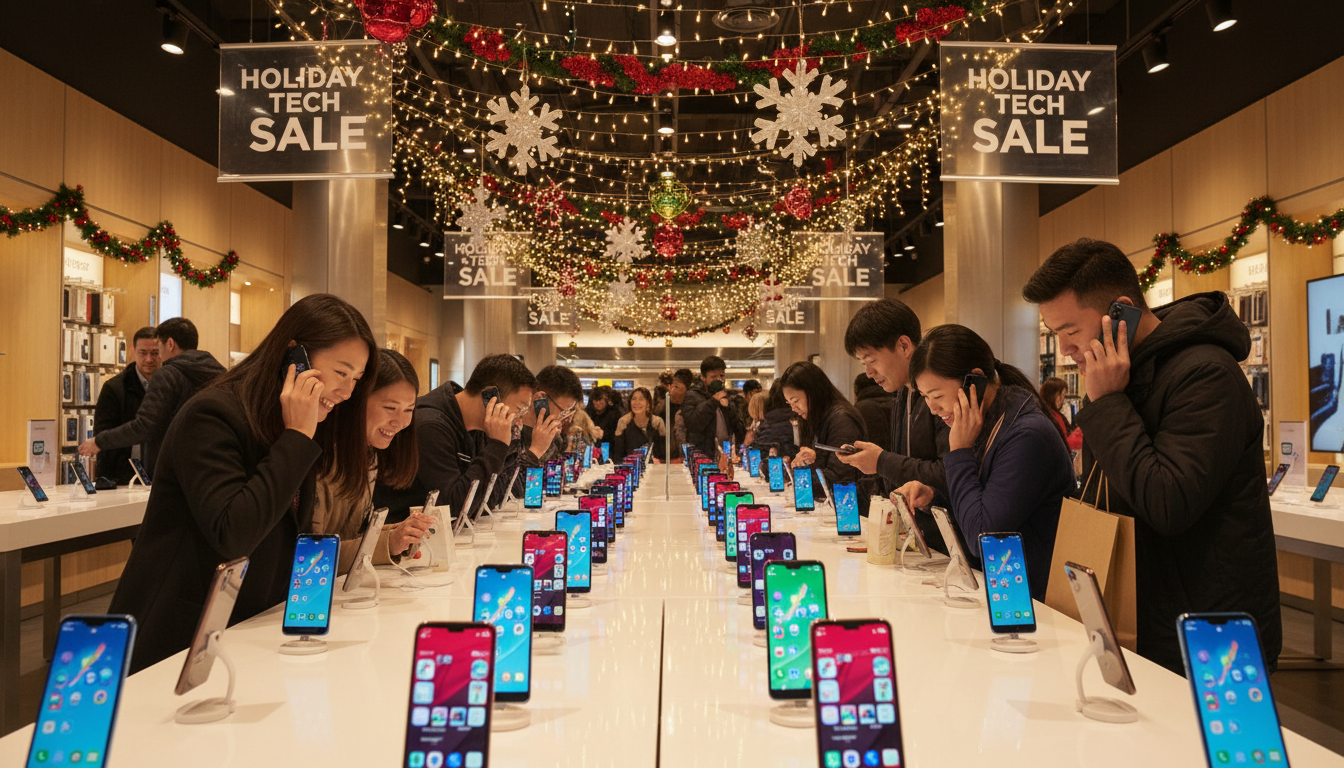
Mobile phones festive sales have exploded to the front of India’s e-commerce boom, accounting for roughly 38-40% of the ₹24,000 crore raked in during the first two days of the festive shopping season. The sheer scale—over 60-65 million shoppers participating—signals a shift in how Indians buy online and what they’re prioritizing during peak retail windows.
The numbers tell a sharp story. Mobiles weren’t just a bestseller category; they were the bestseller. While fashion and electronics also saw strong demand, neither came close to the handset haul. That ₹9,000 crore from phones alone in just 48 hours underscores how central smartphones remain to Indian consumer spending, even as the market matures.
What’s equally striking is who was buying. The participation of Tier 2 and rural shoppers marked a deliberate shift. These aren’t fringe players anymore—they’re now driving material portions of festive e-commerce volumes. First-time buyers swelled the ranks too. That matters because it shows the festive season isn’t just repeat customers hitting refresh on their usual habits. New money is flowing online.
Mobile phones festive sales: A breakdown of the two-day surge
The ₹24,000 crore haul breaks down roughly like this: mobiles captured between 38-40%, meaning the category pulled in approximately ₹9,000-9,600 crore on its own. Fashion and electronics rounded out the top three, but the gap between first and second place was substantial enough that analysts are calling this a “mobile-led” festive season.
Several factors explain the dominance. New phone launches timed for the festive window drew buyers. Trade-in schemes and no-cost EMI options—bread and butter for Indian e-commerce—made premium handsets more accessible. Bundled offers with telcos sweetened the deal further. Price points that had been sticky earlier in the year suddenly moved as retailers competed hard for market share.
The 60-65 million participating shoppers represented growth against prior years, though the sources don’t spell out the exact year-on-year bump. The emphasis on “notable increase in first-time buyers” and the Tier 2 and rural slice suggests platforms cast a wider net than usual—and that net actually caught shoppers. It wasn’t just marketing noise; conversion happened.
Why Tier 2 and rural participation matters for mobile sales
Rural and Tier 2 shoppers aren’t new to e-commerce, but their contribution to festive peaks has historically lagged metros. This year, that gap narrowed. Several reasons apply.
Smartphone penetration outside major cities has risen steadily. Last-mile logistics have improved. Payment infrastructure—UPI, in particular—has made online checkout feel safer and easier for first-time users in smaller towns. When a shopper in a Tier 2 city can pay via UPI without a credit card, friction drops. Conversion climbs.
Platforms also spent heavily on regional language support and localized campaigns. This paid off. A buyer in a town of 50,000 who sees an ad in their native language is likelier to click and convert than one staring at English-only copy.
For handset makers and e-commerce players, Tier 2 and rural growth isn’t a one-off. It’s a signal of where volume will come from over the next few years. Metro saturation is real. Growth lies outward.
Fashion and electronics: The supporting cast
While mobiles grabbed the headline, fashion and electronics held their own. The sources don’t quantify their exact slices, but describe participation as “strong.” In rupee terms, that likely meant each category pulled in ₹3,000-5,000 crore—significant, but overshadowed by phones.
Fashion’s performance wasn’t surprising. Indian festive seasons have always driven apparel and accessories demand. Electronics—laptops, tablets, smart home gear—rode coattails of smartphone momentum. A shopper buying a phone often browses complementary electronics.
The real story, though, is what didn’t happen. There was no fragmentation. No category cannibalized another. Instead, the festive season lifted all boats. That suggests buyer budgets were healthy enough to support multi-category shopping.
What the numbers mean for platforms and vendors
The ₹24,000 crore in two days annualizes to a roughly ₹4.4 trillion run rate—absurd on paper, but that’s not how e-commerce works. The festive window is compressed. Most of this revenue comes in a 5-10 day push. The same money spread across 12 months would be a different beast.
Still, for Amazon and Flipkart—the two platforms accounting for the bulk of this traffic—the scale is validating. According to Fortune India, opening orders were double year-on-year for one major platform’s festival. That suggests both volume and per-user basket size rose. Vendors benefited too. A phone seller moving ₹1 crore of inventory in a festive window versus ₹50 lakh across 12 months sees very different cash flow dynamics.
The first-time buyer angle matters for retention, though. If a rural shopper buys a phone online for the first time and the experience is smooth, repeat purchase probability climbs. That customer becomes a recurring revenue stream—not just during festive seasons, but year-round.
FAQ
Q: Which category led e-commerce festive sales in the first two days?
A: Mobile phones led decisively, accounting for 38-40% of the ₹24,000 crore total. That means approximately ₹9,000-9,600 crore came from handset sales alone. Fashion and electronics followed but with significantly smaller shares.
Q: How many shoppers participated in the festive e-commerce sales?
A: Over 60-65 million shoppers joined the festive rush. This included a notable increase in first-time buyers and shoppers from Tier 2 and rural areas, indicating broader participation than in prior years.
Q: Why did Tier 2 and rural shoppers drive such strong participation this year?
A: Better last-mile logistics, improved digital payment options (especially UPI), and regional language support on platforms reduced friction for these buyers. As smartphone penetration outside metros has risen, so has comfort with online shopping.
Q: What was the total e-commerce festive sales figure for the opening two days?
A: E-commerce platforms hit ₹24,000 crore in combined sales during the first two days of the festive season. Mobile phones accounted for the largest chunk of this revenue.
Q: Did first-time buyers contribute significantly to these numbers?
A: Yes. Sources highlight a “notable increase in first-time buyers” alongside strong Tier 2 and rural participation. This suggests platforms successfully converted new cohorts of online shoppers during the festive window.
