
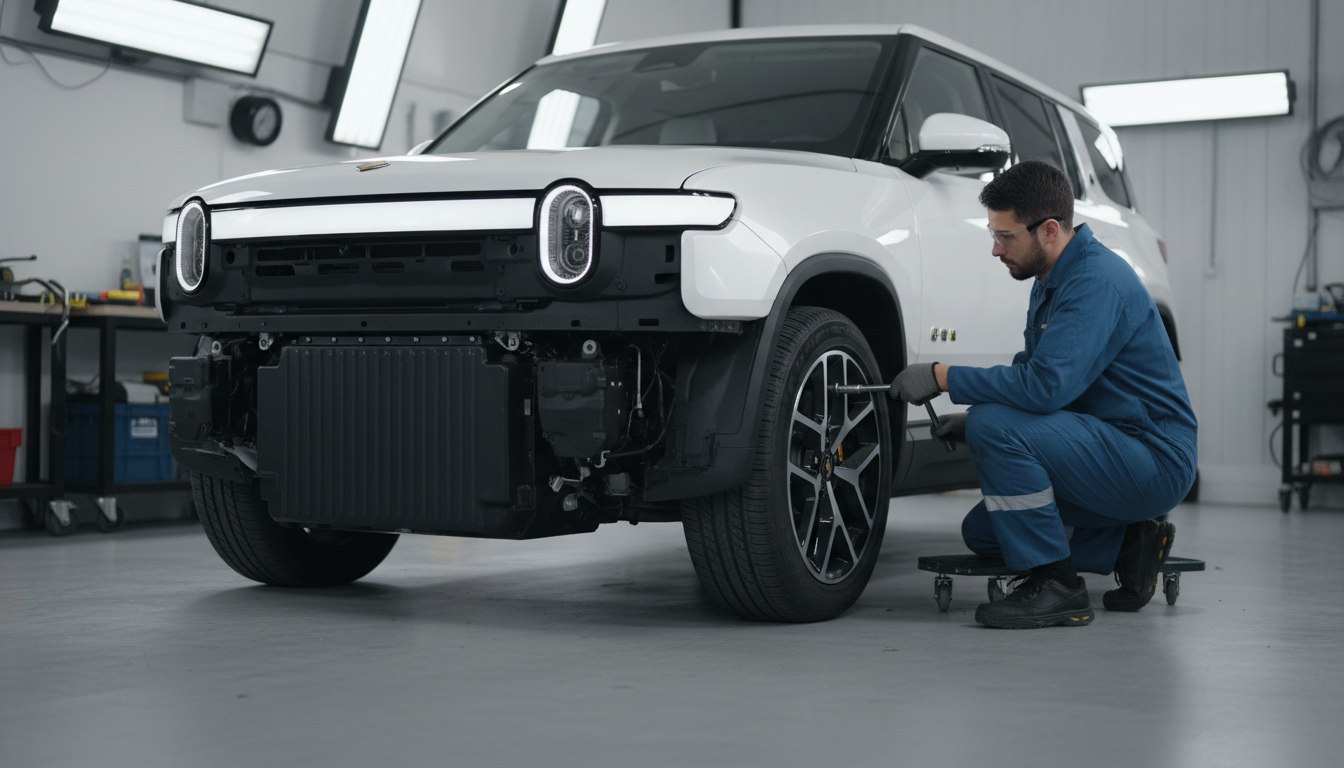
Rivian R2 battery recall affects a small batch of the company’s newest SUVs, with the automaker identifying a manufacturing defect in high-voltage battery pack fasteners that could leave drivers stranded.
The issue centres on fasteners that may not have been properly tightened during assembly. If left unchecked, loose fasteners could cause the battery pack to lose electrical contact. That means total power loss while driving—a serious safety hazard on highways or in traffic.
According to reports on the recall, Rivian estimates around 14 R2 vehicles are affected. The company has begun notifying owners and scheduling inspections at its service centres.
Understanding the Rivian R2 battery recall defect
The R2 is Rivian’s entry-level electric SUV, aimed at a broader market than the company’s pricier flagship models. Early deliveries began in late 2024. This recall marks one of the first significant safety issues for the model.
The defect itself is straightforward in nature but critical in consequence. High-voltage battery packs contain multiple fasteners that keep cells, cooling systems, and electrical connectors secured. If even one fastener comes loose, it can interrupt the flow of power from the battery to the vehicle’s motor and onboard systems.
Loose fasteners don’t typically fail gradually. Instead, they can cause sudden, complete power loss. That’s different from a battery running flat—the power is there, but the connection breaks.
How Rivian discovered the issue
Rivian likely caught this during quality control checks or early owner reports. Manufacturing defects in battery assembly are relatively rare among established EV makers, but they do happen. Tesla, Hyundai, and General Motors have all issued battery-related recalls in recent years.
For a company as young as Rivian, catching the defect early and addressing it decisively sends a message to buyers. The fact that only 14 vehicles are affected suggests the problem was isolated to a specific production batch or shift.
What owners need to do
If you own an R2, watch for a recall notice from Rivian. The company will contact you directly via email or phone with instructions.
Do not ignore the recall. A sudden loss of power while driving can cause accidents. Owners should schedule an inspection at an authorised Rivian service centre as soon as possible.
The repair is straightforward: technicians will inspect the battery pack fasteners and re-tighten any that are loose. The work takes a few hours at most. Rivian will not charge owners for this recall work.
If you’re considering buying an R2, this recall shouldn’t be a dealbreaker. Recalls are normal in the automotive industry. What matters is how quickly the manufacturer responds—and Rivian has done so.
Rivian R2 battery recall in context
Rivian entered the EV market late compared to Tesla. The company launched the R1T truck in 2022 and the R1S SUV shortly after. The R2 is meant to be more affordable, targeting the mass market rather than early adopters willing to pay premium prices.
That means production volumes are higher and quality control is even more critical. A recall affecting 14 units is statistically tiny. But it’s a reminder that even new manufacturers can face manufacturing challenges.
The broader EV industry has seen battery concerns before. Some recalls have involved thermal runaway risks (batteries catching fire), while others like this one address connection issues. This particular defect is less dramatic but no less dangerous if left unaddressed.
Why battery fasteners matter
Most car owners never think about battery fasteners. But in an EV, the high-voltage battery is the heart of everything.
The battery pack contains thousands of individual cells wired together. Those cells need to stay firmly connected. Fasteners hold the pack together mechanically and ensure all electrical connections remain stable.
In a petrol car, loose engine fasteners might cause a rattle. In an EV, loose battery fasteners can cause total failure. There’s no backup petrol engine to take over.
That’s why battery assembly is one of the most closely monitored stages of EV manufacturing.
Service centre readiness
Rivian operates service centres across major cities in India and globally. The company has confirmed that all affected R2 units will be inspected and repaired at these centres at no cost to owners.
If you live outside a metro area with a Rivian service centre, you may need to travel for the recall work. Check Rivian’s official website or call their customer service number to find your nearest centre and book an appointment.
Repair work for recalls is typically prioritised, so turnaround times should be quick—usually within a week of dropping the vehicle off.
FAQ
Q: Will this recall affect the resale value of my R2?
A: No. Recalls don’t impact resale value if they’re completed before sale. Buyers actually prefer vehicles with recalls already done. Always disclose that the recall was completed, and you’ll have no issues.
Q: Can I drive my R2 while waiting for the recall appointment?
A: If you’ve received a recall notice, your vehicle is one of the 14 affected units. The risk of power loss exists but is not guaranteed to happen immediately. Avoid long highway trips and book your service appointment urgently rather than waiting weeks.
Q: How long does the battery pack inspection take?
A: Usually 2–4 hours. Technicians will remove the battery pack (or access it without removal if possible), inspect all fasteners, and re-tighten them. You’ll likely need to leave the vehicle at the service centre for a few hours.
Q: Is the R2 battery pack safe after this recall is fixed?
A: Yes. Once fasteners are re-tightened, the battery pack is fully safe. The defect was purely a manufacturing issue—the battery cells themselves and the pack design are sound.
Q: Will Rivian issue a warranty extension for recalled R2 units?
A: Rivian has not announced an extended warranty related to this recall. The standard battery warranty (typically 8 years or 160,000 km) applies to all R2 units, recalled or not.
