
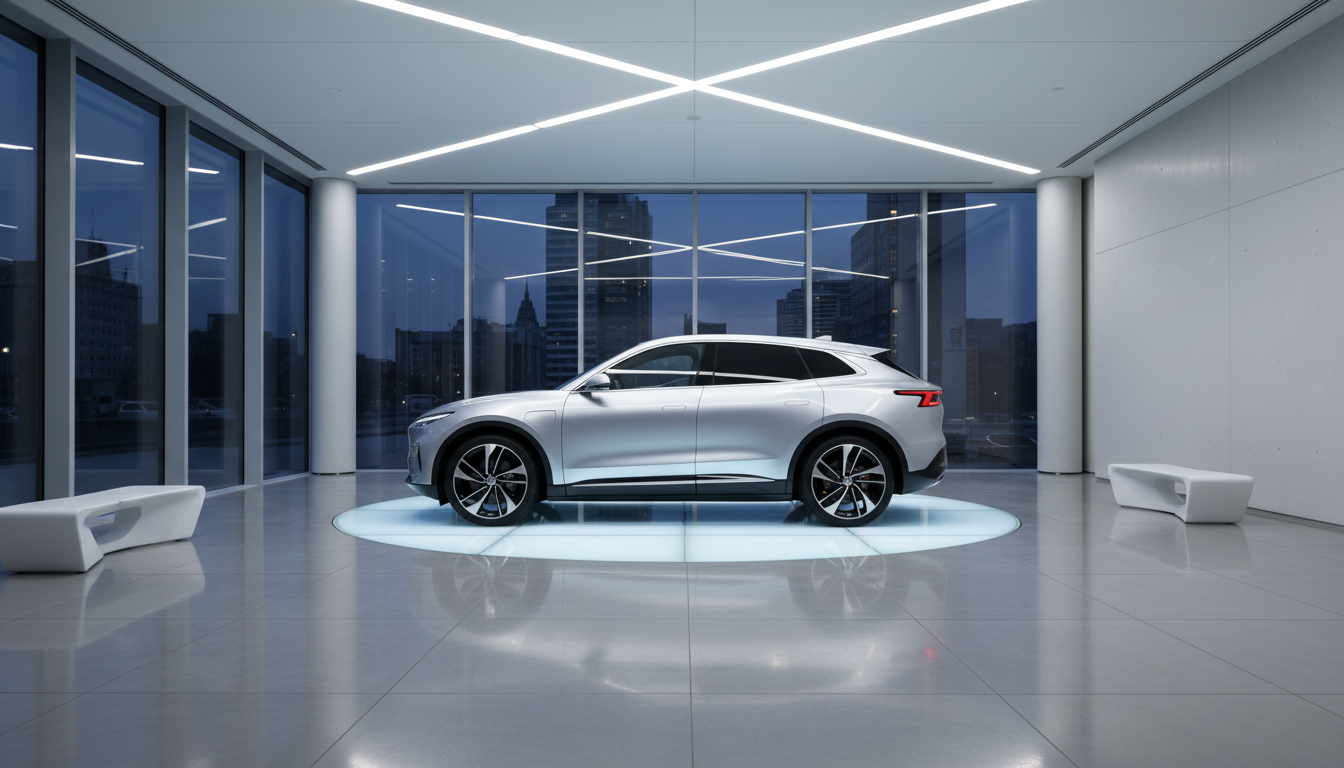
Li Auto has launched the i9 electric SUV, a new flagship six-seater designed to compete in China’s premium EV segment with substantial battery range and performance credentials. The large all-electric vehicle measures over 5.2 metres long and comes equipped with a 101 kWh battery pack that delivers a CLTC-rated range of 705 kilometres on a single charge.
The electric SUV launch marks Li Auto’s push deeper into the all-electric market after years of focusing on extended-range hybrids. According to Electric Cars Report, the i9 combines range capability with performance that rivals established luxury SUVs.
Powertrain and Performance
The i9 uses a dual-motor all-wheel drive system with a combined output of 400 kilowatts. This setup enables acceleration from zero to 100 km/h in 4.9 seconds—competitive with traditional petrol-powered luxury SUVs at a similar price point.
The real appeal lies in range and charging speed. The 705 km CLTC rating gives owners confidence for long trips across China’s major cities and highways without range anxiety defining every journey. For comparison, many rival electric SUVs in this segment deliver between 500 and 650 km under the same testing standard.
The vehicle supports 5C fast charging. This technology adds up to 500 kilometres of range in just 10 minutes. That speed-charging capability addresses one of the lingering concerns with long-distance EV ownership: the time spent waiting at charging stations during highway trips.
Size and Seating
At over 5.2 metres, the i9 belongs to the large SUV category. Inside, it accommodates six passengers across three rows. This seating arrangement matters in the Chinese market, where family-oriented buyers still prefer more seats than compact or midsize electric vehicles provide.
The six-seat layout differs from many competitors that offer five seats standard. Li Auto is betting that families making the leap to electric vehicles want the flexibility of additional passenger capacity without stepping up to a full-size people mover.
Market Context
China’s electric SUV market has intensified rapidly. Competitors range from established brands like BYD and Tesla to newer entrants such as Nio and XPeng. Each release pushes the baseline for range, charging speed, and technology integration.
Li Auto’s pivot toward all-electric models represents a strategic shift. The company built its reputation on extended-range hybrids—vehicles that combine petrol engines with batteries to extend driving range. The i9 signals that Li Auto sees the pure-electric future as inevitable and is now competing on that terrain directly.
The i9 enters a market where 700-kilometre ranges no longer guarantee a stand-out position, but they remain meaningful for buyers planning mixed urban and highway driving. Price positioning remains crucial; Chinese buyers increasingly compare total cost of ownership across brands rather than badge loyalty alone.
Charging Infrastructure Implications
The fast-charging capability only works where infrastructure exists. China has rolled out extensive public charging networks in major cities and along highways, but rural areas lag significantly. The 10-minute charge window makes the i9 practical for highway travel between major metros.
Home charging remains the baseline for most daily use. An owner in Bangalore or Mumbai would face different charging realities than one in Shanghai or Beijing—a consideration absent from the i9’s China-focused launch but relevant for any eventual export strategy.
Battery and Efficiency
The 101 kWh battery represents a substantial energy store. At 705 km range, the i9 achieves approximately 143 watt-hours per kilometre under CLTC conditions. Real-world efficiency typically runs lower, particularly in highway driving or cold weather, but that ratio places the vehicle in line with established electric SUVs globally.
Battery degradation over time affects long-term ownership economics. Li Auto hasn’t yet announced specific warranty terms for the battery pack, which usually ranges from eight to ten years for premium Chinese EV makers.
Dual-Motor AWD Advantages
The 400 kW dual-motor system distributes power between front and rear wheels, improving traction and handling stability. AWD adds weight and reduces efficiency compared to front-wheel drive, but offers benefits in wet conditions, snow, and aggressive acceleration.
Buyers in northern Chinese regions experience winter driving that genuinely benefits from all-wheel drive. The dual-motor architecture also enables sophisticated traction control algorithms that manage power delivery wheel-by-wheel.
FAQ
What is the real-world driving range of the Li Auto i9 electric SUV?
The i9 delivers 705 kilometres under CLTC testing. Real-world range typically runs 10–20 per cent lower, particularly in highway driving, cold weather, or aggressive acceleration. Expect 550–650 km in mixed use.
How long does a full charge take with standard home charging?
Li Auto has not specified home charging times. Standard AC charging on a 7 kW home wallbox would typically require 12–15 hours for a full charge with a 101 kWh battery, though actual times depend on charger specifications and starting battery state.
Can the i9 compete with Tesla’s electric SUVs in China?
The i9 targets a different market segment than Tesla’s Model Y. It seats six passengers, offers comparable range, and delivers similar acceleration. Pricing, brand perception, and autonomous driving capabilities will determine competitive positioning.
Is the i9 available outside China?
Li Auto has not announced international availability. The launch targets the Chinese market specifically, where regulatory support for EVs and charging infrastructure are most developed.
What warranty does Li Auto offer on the battery pack?
Li Auto has not disclosed battery warranty details for the i9. Competitors typically offer 8–10 year warranties covering 70–80 per cent capacity retention.
