
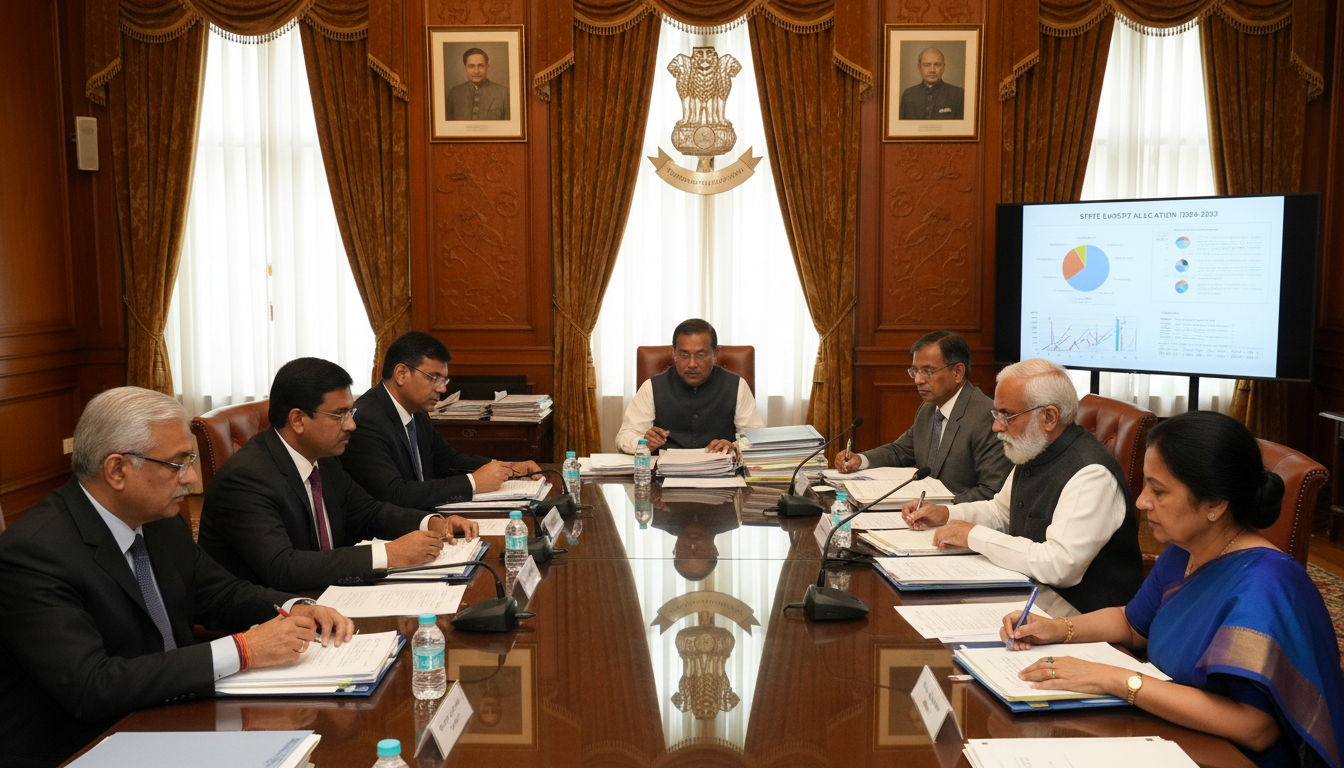
The Uttarakhand supplementary budget of Rs 7,412 crore has been cleared by the state cabinet, signalling a substantial fiscal push ahead of the assembly session where it will be tabled for approval. The budget announcement came alongside a significant policy shift in education: the state has lowered passing marks for students with specified disabilities in board examinations from 33% to 28%.
The cabinet’s dual action reflects two distinct priorities—fiscal management and educational inclusivity. Yet the supplementary budget figure dwarfs the immediate attention, representing a substantial allocation for state finances in the current fiscal year. According to Times of India, the budget will now move to the assembly for formal tabling and approval.
Uttarakhand Supplementary Budget: What It Means
A supplementary budget in any Indian state typically addresses gaps or new demands that emerge after the main budget has been tabled. The Rs 7,412 crore figure is substantial enough to suggest either significant new expenditure commitments or reallocation of funds within the fiscal year. The cabinet’s clearance is the first formal step; assembly approval remains pending.
For Uttarakhand, a state with competing demands across infrastructure, healthcare, and social welfare, such an addition requires careful calibration. The timing—with the assembly now slated to receive it—will determine how quickly these funds flow into implementation.
Board Exam Marks Relaxation for Students with Disabilities
The cabinet’s second major decision targets educational equity. Students with intellectual disabilities, mental illness, autism spectrum disorder, cerebral palsy, and specific learning disabilities will now need to score 28% instead of 33% to pass board examinations in Uttarakhand.
This five-percentage-point reduction applies across these five categories of disability. The policy acknowledges that standardised passing thresholds can impose undue barriers on students whose learning needs differ from their peers. Other Indian states have implemented similar concessions; Uttarakhand’s move aligns with broader recognition that disability-inclusive education requires flexible assessment criteria.
The change affects students who have sought examination accommodations under existing disability provisions. It does not alter the examination structure or reduce content requirements. Rather, it recalibrates the threshold at which demonstrated learning is deemed sufficient for progression.
Tourism Push: Adventure Tourism Corporation
The cabinet also approved formation of the Uttarakhand Adventure Tourism Corporation Limited. This move reflects state ambitions to formalise and expand adventure tourism—a sector where Uttarakhand has natural advantages but fragmented operational structure.
Adventure tourism in Uttarakhand spans rock climbing, paragliding, river rafting, and trekking. A dedicated corporation can streamline licensing, safety standards, and marketing. It may also create pathways for private operators to participate in a more regulated ecosystem.
Timeline and Next Steps
The supplementary budget requires assembly tabling before it becomes law. The government has not announced a specific date, but the cabinet clearance suggests this will occur within weeks rather than months.
For the disability-related changes to board exams, implementation timelines depend on the examination authority and the board. Given that the cabinet has already approved the policy, integration into the next examination cycle is likely unless administrative bottlenecks emerge.
Broader Context for Uttarakhand
Budget additions of this scale typically signal either cyclical revenue shortfalls or intentional stimulus. Uttarakhand’s revenue streams—largely dependent on GST devolution, state excise, and property taxes—can be volatile. Whether this supplementary budget reflects revenue shortfall or new spending priorities remains to be detailed in assembly proceedings.
The education policy change arrives amid broader national focus on inclusive education. India’s Rights of Persons with Disabilities Act (2016) mandates reasonable accommodations in examinations. State boards have latitude in setting passing marks for students with recognised disabilities, provided they maintain academic rigour.
FAQ
Q: When will the Uttarakhand supplementary budget be approved?
A: The cabinet has cleared it; it now goes to the assembly for tabling and formal approval. No specific date has been announced, but this typically occurs within weeks of cabinet clearance.
Q: Do the new 28% passing marks apply to all subjects?
A: The policy applies to board examinations for students with the five specified disability categories. Subject-specific variations, if any, would be determined by the examination board in implementation.
Q: Which students benefit from the lowered passing marks?
A: Students with intellectual disabilities, mental illness, autism spectrum disorder, cerebral palsy, and specific learning disabilities—provided they have been formally recognised and accommodated in examinations.
Q: Will the Adventure Tourism Corporation replace existing private operators?
A: No. The corporation formalises state involvement in adventure tourism regulation and promotion. Private operators will likely continue, but within a more structured regulatory framework.
Q: Is Rs 7,412 crore a large supplementary budget for Uttarakhand?
A: Context depends on the state’s total annual budget, which typically ranges between Rs 35,000–40,000 crore. A supplementary addition of this scale represents roughly 18–20% of the main budget—substantial but not unprecedented in Indian states.
