
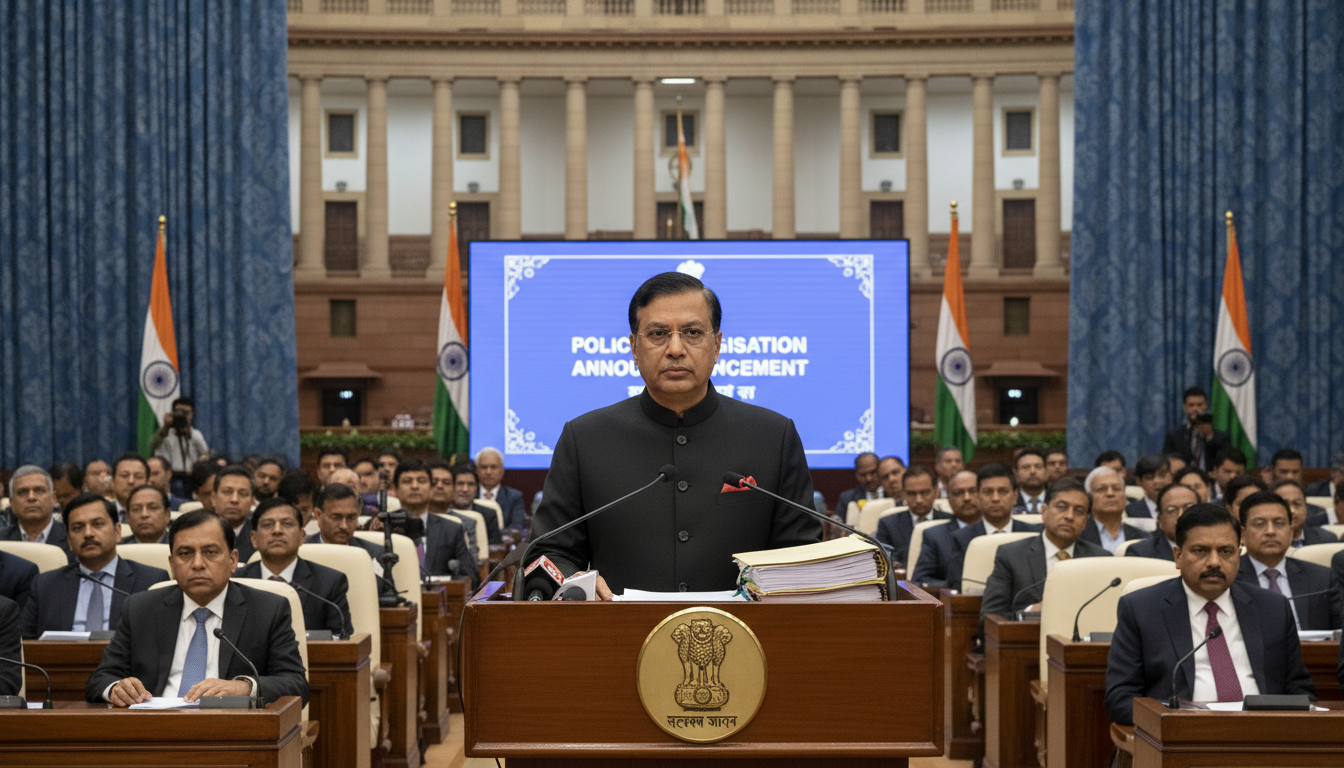
The uniform civil code implementation deadline set by Union Home Minister Amit Shah aims to have all 21 BJP-NDA-ruled states adopt the measure before the 2029 Lok Sabha elections. The announcement marks a significant escalation in the party’s long-standing push to replace personal laws with a uniform legal framework across the country.
Shah’s timeline suggests a coordinated, state-by-state strategy rather than a sudden national rollout. Four BJP-governed states have already moved ahead: Uttarakhand brought its code into force in January 2025, while Gujarat, Assam, and Madhya Pradesh have passed bills awaiting implementation. The remaining states now face pressure to follow suit within the five-year window.
What is the Uniform Civil Code?
The uniform civil code refers to a single set of laws governing personal matters—marriage, divorce, inheritance, and succession—that would apply uniformly to all citizens regardless of religion. Currently, India’s system allows religious communities to follow their own personal laws. Hindus, Muslims, Christians, and Sikhs each operate under different legal frameworks for family matters.
Proponents argue a UCC would ensure gender equality and secular governance. Critics worry it could override minority religious practices and dilute constitutional protections for religious freedom. The question has remained contentious since India’s independence, with multiple commissions and committees studying the matter over decades.
The State-First Strategy
Rather than pursuing a national uniform civil code through Parliament directly, the BJP is adopting a federalist approach. According to Outlook India, this method is being used as a precursor to a potential national code. The logic is straightforward: demonstrate feasibility and acceptance at state level. Build political momentum. Then move nationally.
This strategy sidesteps some parliamentary obstacles. It also tests implementation on the ground. States with BJP governments face fewer political barriers to passage. They can experiment with different formulations before any national template emerges.
The five-year deadline is no accident. The next general election is scheduled for 2029. By then, Shah wants all BJP-ruled states to have passed their own UCC bills. This would provide the party with a nationwide narrative heading into the campaign—proof of commitment to a core ideological goal.
Four States Already Moving Forward
Uttarakhand’s uniform civil code became operational on January 1, 2025, making it the first state to actually implement the law. The state had passed the bill in the previous legislative session. Implementation included setting up administrative machinery and training officials to handle matters under the new code.
Gujarat, Assam, and Madhya Pradesh have cleared bills in their legislatures but have not yet moved to implementation. Their codes remain on paper pending formal notification or phased rollout schedules. Each state’s version reflects local political and social contexts, though all broadly follow the template of replacing religion-based personal laws with uniform provisions.
The existence of four different state codes already raises a question: What would a national uniform civil code actually unify? If each state writes its own version, uniformity itself becomes fragmented. This tension sits at the heart of the state-first strategy. Some legal experts argue state codes will eventually need harmonization or superseding by national legislation. Others see value in letting states pilot the concept.
Political Calculations and Resistance
The 2029 deadline creates pressure but not inevitability. States with coalition governments or thin majorities may struggle to pass UCC bills, particularly if regional parties or opposition groups mobilize against it. The BJP rules 21 states, but not all have identical political configurations. Some coalitions include partners with different positions on the UCC.
On the ground, civil society organizations and religious groups remain divided. Muslim organizations have historically opposed the UCC, fearing erosion of Islamic personal law. Hindu nationalist groups push for it. Women’s rights advocates are split—some see it as essential for equality, others worry it could restrict women’s inheritance or marriage rights if poorly drafted.
Public opinion polling data on the UCC remains limited and contested. Urban, educated populations show higher support. Rural areas show more skepticism. Regional variations are significant. What plays well in Uttarakhand may face resistance in states with large Muslim populations or strong regional identities tied to personal law traditions.
National Implementation Remains Separate
It bears noting that state uniform civil codes do not automatically create a national code. Article 44 of the Indian Constitution mandates that the state shall “endeavour to provide for its citizens a uniform civil code throughout the territory of India.” This language is aspirational, not binding. Parliament would need to pass separate national legislation to supersede state laws and create a truly uniform framework.
The state-by-state approach is strategic but incomplete. A national UCC would require either constitutional amendment or ordinary legislation with implications for federal-state relations. Such a move would face opposition in Parliament if non-BJP parties hold significant numbers. The current Lok Sabha composition favors the BJP-NDA, but that could change by 2029.
Shah’s 2029 target is thus better understood as a political milestone than a legal one. Twenty-one states passing UCC bills by then would create facts on the ground. It would demonstrate implementation across diverse contexts. It would shift the political terrain. Whether it translates into a national code depends on multiple factors beyond state legislation.
FAQ
Q: Has any Indian state actually implemented the Uniform Civil Code?
A: Yes. Uttarakhand’s UCC came into effect on January 1, 2025, making it the first state to operationalize the law. Gujarat, Assam, and Madhya Pradesh have passed bills but have not yet implemented them.
Q: What does the Uniform Civil Code cover?
A: The UCC governs personal law matters including marriage, divorce, succession, inheritance, and guardianship. It aims to apply the same rules to all citizens regardless of religion, replacing religion-based personal law codes.
Q: Is the state-level UCC the same as a national Uniform Civil Code?
A: No. State codes are separate laws applying only within those states. A national UCC would require Parliament to pass legislation applicable across the entire country. State laws do not automatically create a national code.
Q: Why is the 2029 deadline significant?
A: The 2029 date coincides with the next scheduled Lok Sabha elections. Amit Shah’s target is for all 21 BJP-NDA-ruled states to pass UCC bills by then, creating political momentum and a campaign narrative for the elections.
Q: Which states have already passed Uniform Civil Code bills?
A: Uttarakhand (implemented), Gujarat, Assam, and Madhya Pradesh have all passed UCC bills. Seventeen other BJP-ruled states remain without legislation as of now.
