
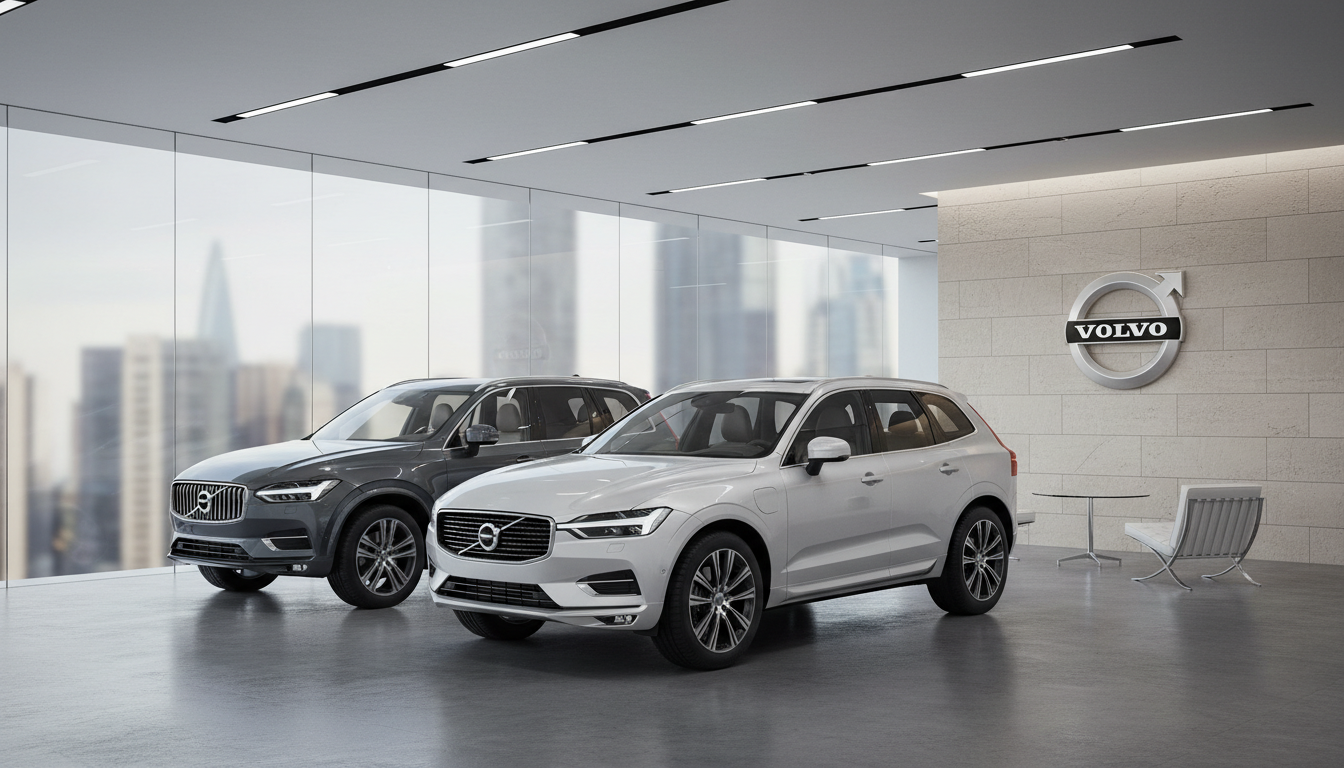
Volvo’s new long-range plug-in hybrid SUVs have set a new benchmark for electric driving range in America. The Swedish automaker has unveiled upgraded versions of its XC60 and XC90 models that outpace competitors in the plug-in hybrid space.
The XC60 now delivers up to 78 miles of all-electric range. The XC90 offers up to 73 miles. Both numbers represent the longest range available from any plug-in hybrid SUV currently sold in the United States market.
This isn’t merely a marketing edge. For many Indian professionals and families considering premium SUVs—who may work within city limits or have predictable daily commutes—this electric range covers most ordinary driving without burning a drop of petrol or diesel.
What’s Changed in Volvo’s Long-Range Plug-in Hybrid SUVs
The improvements stem from hardware upgrades. Both the XC60 and XC90 T8 models now pack a larger battery underneath. They also feature a more powerful electric motor than previous generations.
A larger battery means more stored energy. A stronger motor means that energy can be deployed more efficiently. Together, these changes push both vehicles closer to true electric-only operation for daily use.
For buyers accustomed to traditional hybrids—which typically manage only 20 to 30 miles on battery alone—this leap is substantial. It transforms the driving experience in urban and suburban settings where frequent stop-and-start traffic drains fuel economy.
Why This Matters for American Buyers
Plug-in hybrid SUVs occupy a middle ground. They appeal to drivers who want electric efficiency but aren’t ready to commit to full battery-electric vehicles. Range anxiety remains a real concern in countries with sparse charging infrastructure. America’s plug-in hybrid market reflects this hesitation.
Volvo’s new numbers address one half of that equation: the vehicle’s capability. A buyer who charges overnight can cover 78 miles purely on electricity the next day. For school runs, office commutes, and weekend errands, many drivers never touch the petrol engine at all.
The XC90, Volvo’s flagship three-row SUV, carries particular weight here. It’s a vehicle designed for families and long-distance travel. Offering 73 miles of silent, zero-emission driving on a single charge positions it as a serious alternative to traditional SUVs in that segment.
When These Models Arrive
Customer deliveries for the XC60 and XC90 T8 AWD Long Range Plug-in Hybrids are expected to begin in early 2027. That timeline gives Volvo roughly two years to ramp production and manage orders.
Early 2027 also places these vehicles squarely in the middle of a broader market shift. Battery prices continue declining. Charging infrastructure continues expanding. By the time these Volvos hit showrooms, the appeal of long-range plug-in hybrids may feel even more compelling than it does today.
The Technical Edge
The larger battery and stronger motor combination does more than extend range. It also improves acceleration and responsiveness in electric-only driving mode. Cold-weather performance—a perpetual challenge for battery-electric vehicles in northern regions—benefits from the hybrid architecture’s built-in redundancy.
When the battery depletes, the internal combustion engine takes over seamlessly. There’s no stranding, no drama. This is the practical appeal that keeps plug-in hybrids popular despite pushback from pure-EV advocates.
Volvo’s focus on the American market is deliberate. The United States remains the world’s largest market for premium SUVs. It’s also a market where charging infrastructure, though improving, still lags behind Europe and parts of Asia.
Positioning Against Competitors
Most competing plug-in hybrid SUVs in America offer between 40 and 60 miles of electric range. The BMW X5 xDrive50e, for instance, delivers around 50 miles. The Range Rover Sport PHEV manages roughly 48 miles.
Volvo’s XC60 pulling 78 miles represents a 30 percent advantage over those rivals in this critical specification. It’s not merely incremental. It’s the sort of gap that shifts purchasing decisions among informed buyers who track efficiency metrics closely.
The Broader Context
Electric vehicles are reshaping the luxury SUV segment globally. In India, the penetration of plug-in hybrids remains limited compared to pure electric models or conventional hybrids. However, for export markets and premium segments, PHEVs occupy an increasingly important niche.
Volvo’s investment in longer-range plug-in hybrids reflects confidence that this technology will remain relevant through the 2020s, even as full electrification accelerates. It’s a hedge against infrastructure delays and charging availability constraints that persist across many developed markets.
The company isn’t abandoning its all-electric ambitions. But it’s clearly betting that plug-in hybrids will capture a meaningful share of premium SUV sales for years to come.
FAQ
Q: How much electric range does the new Volvo XC60 plug-in hybrid offer?
A: The new XC60 T8 AWD Long Range Plug-in Hybrid offers up to 78 miles of all-electric driving on a single charge. This is the longest range available from any plug-in hybrid SUV sold in America.
Q: When will the new Volvo XC60 and XC90 plug-in hybrids become available?
A: Customer deliveries are expected to begin in early 2027. The vehicles are currently in pre-production.
Q: What improvements enable the longer electric range?
A: The new models feature a larger battery and a more powerful electric motor than previous generations. These upgrades combine to extend driving range and improve efficiency in electric-only mode.
Q: How does 78 miles of plug-in hybrid range compare to competitors?
A: Most competing luxury plug-in hybrid SUVs offer between 40 and 60 miles of range. The BMW X5 xDrive50e and Range Rover Sport PHEV both deliver roughly 48 to 50 miles, making Volvo’s new XC60 significantly ahead of the segment average.
Q: Are these long-range plug-in hybrid SUVs available in India?
A: No. These models are designed specifically for the American market. Volvo’s India strategy focuses on different vehicle segments and powertrains suited to local conditions and regulations.
