
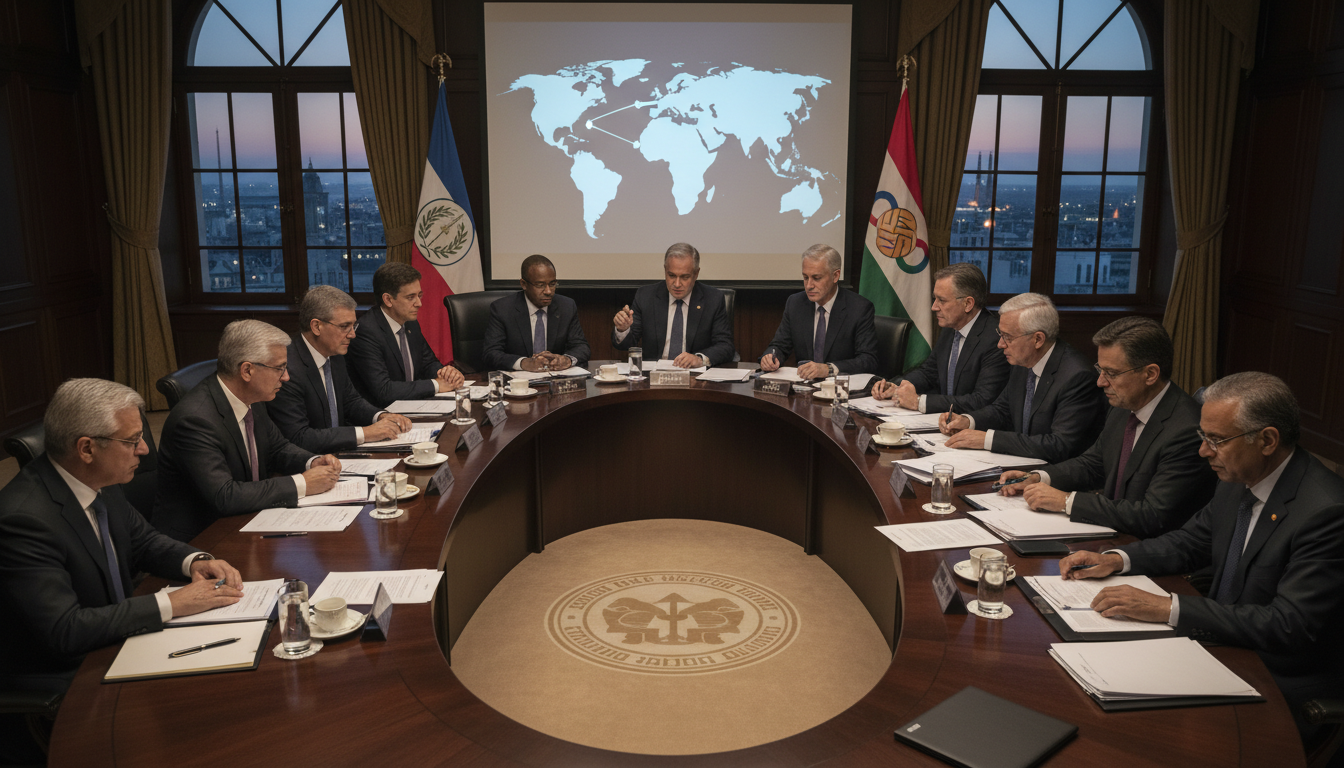
INDIA bloc strategy sessions have intensified as Opposition leaders huddle to prepare for upcoming elections, with discussions spanning party unity, the potential prime ministerial post, and a planned legal assault on the current Election Commission framework.
The alliance convened to hash out both immediate tactics and longer-term positioning. Rahul Gandhi pressed the need for trust and cohesion among constituent parties, according to reports on the political pulse. Without it, he argued, the bloc would struggle to mount an effective counter to the BJP’s electoral machinery.
Mamata Banerjee, the West Bengal chief minister, steered the conversation toward expansion. She called for reaching out to non-NDA parties currently outside the alliance. She also raised the question of the prime ministerial post, hinting that Congress could hold the position if the bloc succeeded in bringing everyone under one umbrella.
The PM post question has long been a friction point for Opposition groupings. Naming a leader before elections proved difficult. Yet the alliance appears willing to revisit the question as a potential sweetener for reluctant partners.
INDIA bloc strategy targets Election Commission
The alliance plans a joint legal challenge to the Chief Election Commissioner and Other Election Commissioners (Appointment, Conditions of Service and Term of Office) Act, 2023. They will move the Supreme Court, seeking to overturn or modify the legislation.
Why? INDIA bloc members believe the 2023 Act has tilted the playing field. They allege irregularities in elections and point to the functioning of key institutions—the Election Commission, the CBI, and the ED—as evidence of institutional drift.
The challenge itself marks a significant escalation. Rather than griping from the sidelines, the alliance is pursuing a constitutional remedy. Success would require the Court to find the Act unconstitutional or defective in some material way. Failure could set back Opposition morale.
The bloc has also raised concerns about alleged poll irregularities. Specific incidents have not been detailed in public statements, but the thrust is clear: the Opposition views the Election Commission’s conduct as compromised.
Building unity among Opposition parties
Rahul Gandhi’s emphasis on trust reflects a reality: INDIA bloc parties do not always move in sync. Regional parties have regional agendas. Smaller allies worry about being marginalized. Congress’s national profile invites resentment from some quarters.
Yet the bloc has held together through recent polls. That suggests the fear of a BJP victory—or a fractured Opposition—binds them more than internal friction tears them apart.
Mamata’s overture to non-NDA parties widens the aperture further. How many such parties exist? Several. Some are regional heavyweights; others punch below their weight. Bringing them in would swell the alliance’s numbers. It would also dilute Congress’s relative weight, which some allies prefer.
The PM post carrot addresses this trade-off directly. If Congress is willing to cede the top job to someone else—or hold it only conditionally—fence-sitters might join.
Institutional challenges loom
The Election Commission Act challenge is not INDIA bloc strategy in isolation. It sits within a broader Opposition narrative about institutional autonomy. The same parties have raised questions about the CBI’s independence and the ED’s targeting of Opposition figures.
These complaints predate the 2023 Act. But the Act crystallized them. By tying the EC chief’s term and conditions to executive discretion, the law handed the government a tool to pressure the Commission, critics argue.
A Supreme Court intervention could reshape the balance. Or it could fail, leaving the status quo intact. The outcome is far from certain.
The election calendar and timing
No election date has been announced yet. But the alliance cannot afford to dawdle. Campaign machinery takes time to build. Alliances must be formalized. Seat-sharing accords must be hammered out. Candidates must be selected.
The sooner these tasks are done, the sooner the bloc can take its message to voters. Delays risk splits or defections.
Mamata’s push to bring in more parties suggests urgency. The larger the coalition, the more time needed to stitch it together. Yet waiting costs political capital as well.
Challenges within the alliance
Internal harmony remains elusive. Congress’s national footprint clashes with regional parties’ local dominance. Smaller allies fear being steamrolled. Personal rivalries between leaders—some going back decades—simmer beneath the surface.
The PM post discussion hints at these tensions. By floating the idea that Congress might relinquish it, Mamata signals that the leadership question remains open. For some parties, that is a relief. For Congress, it is a concession.
Yet if Congress gives too much ground, its own cadre may feel betrayed. Balancing these pulls is the real work of Opposition politics.
What the Election Commission challenge means
The Supreme Court petition is not mere theatre. It signals that the alliance intends to fight on multiple fronts: electoral, political, and legal.
If the Court agrees to hear the case, it will examine whether the 2023 Act violates constitutional principles of institutional independence. The proceedings could stretch over months or years. That itself would keep the issue alive in public discourse.
Even if the challenge fails, it shores up the Opposition’s credibility with voters who worry about democratic backsliding. It shows the alliance is willing to act, not just complain.
FAQ
What is the INDIA bloc?
The INDIA bloc is a coalition of Opposition parties united to counter the BJP. It includes Congress, Trinamool Congress, DMK, and others. Its name is an acronym: Indian National Developmental Inclusive Alliance.
Why did Mamata Banerjee mention the PM post?
Mamata suggested Congress could hold the prime ministerial position if the alliance succeeded in broadening its base. She was signaling that the top job could be incentive for other parties to join.
What is the Election Commission Act challenge about?
The bloc plans to challenge the 2023 Act in the Supreme Court, arguing it compromises the Election Commission’s independence by giving the government discretion over the EC chief’s tenure and conditions.
Which non-NDA parties might join the alliance?
Mamata called for reaching out to parties outside the NDA but not yet in the INDIA bloc. Specific names were not announced, but regional players exist that could be courted.
When will the alliance formally expand?
No timeline was given. The bloc appears to be in talks with potential new members, but formal announcements depend on negotiations over seat-sharing, leadership roles, and other terms.
