
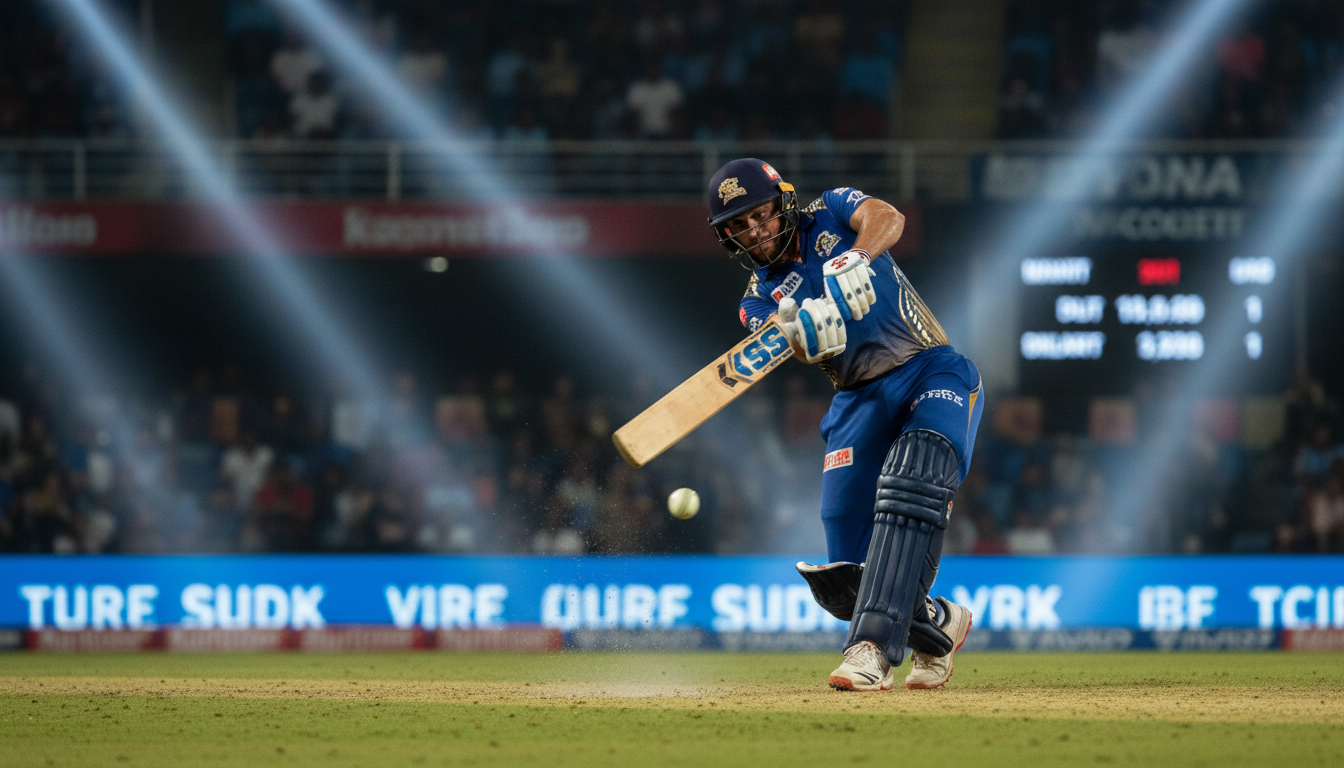
Shubman Gill has scored the fastest ODI double century in international cricket history, powering India to a stunning chase of 406 runs against the West Indies with 39 balls remaining.
The right-hander’s unbeaten 223 came off just 133 deliveries, obliterating the previous record for the quickest double century in One Day Internationals. Gill’s assault didn’t just break a record—it secured India’s series win, handing them an unassailable 2-0 lead in the three-match ODI series, according to Times of India.
India’s successful pursuit of 406 was their highest successful ODI chase on record. That alone would be headline news. But Gill’s individual brilliance—the manner in which he orchestrated the innings—makes this a watershed moment for Indian batting.
The Fastest ODI Double Century: Numbers That Speak Volumes
What makes Gill’s 223 truly extraordinary is the strike rate. One hundred and thirty-three balls for a double century means he averaged 167.7 runs per 100 balls faced. That’s not just aggressive batting. That’s a rewriting of how double centuries can be constructed in ODI cricket.
The previous record holder had taken considerably longer. Gill didn’t merely nudge past the mark—he left no room for argument. His unbeaten status meant he carried the momentum right through to India’s winning runs. There were no collapses, no nervous final overs. He finished the job himself.
In the context of Indian cricket, this ranks among the most explosive individual performances in recent memory. India has produced great chasing innings before. They’ve seen memorable hundreds before. But rarely has a single batter taken the game by the scruff of the neck with such velocity and clarity.
India’s Record Chase: 406 and Counting
The West Indies posted 406. That’s a challenging total in ODI cricket, especially in the format’s modern era. Most teams would consider chasing such a score a bonus; achieving it is often treated as a victory in itself.
India didn’t just chase it. They chased it with 39 balls to spare. That margin tells a story of complete control. It suggests that Gill’s innings, while explosive, was part of a broader batting display. Others contributed. But when one batter scores an unbeaten 223, he’s clearly the dominant force.
This chase also represents India’s highest successful ODI chase ever. That record—previously held at a lower mark—now belongs to this match. Gill’s aggressive approach set the tempo that allowed India to hunt down the target without the usual panic that late-stage chases can generate.
Implications for the Series and Beyond
With an unassailable 2-0 lead secured, India can approach the final ODI with a different frame of mind. There’s no desperation. The series is won. That often opens space for experimentation or for resting key players ahead of other commitments.
For Gill personally, this performance elevates his standing among India’s batting elite. He’s always shown promise. Now he’s shown the ability to deliver at the grandest stage in ODI cricket. Double centuries are rare. The fastest double century is rarer still. Gill now owns both distinctions simultaneously.
The psychological impact on the West Indies should not be underestimated. They’d put a competitive total on the board. They’d set a target that, by conventional wisdom, should’ve taken until the final overs to chase. Instead, they watched it dismantled with overs to spare.
What This Means for Cricket Predictions
For analysts and tipsters, Gill’s performance adds a new dimension to India’s batting lineup. When team compositions are debated, when chasing scenarios are modeled, this innings becomes a reference point. India has shown they can chase 400-plus totals. More specifically, they have a batter capable of single-handedly steered such chases.
Going forward, expect bookmakers and prediction platforms to factor in India’s chasing prowess more heavily. Gill’s record-breaking innings won’t be a one-off anomaly. It establishes a new standard for what Indian batters can achieve under pressure.
The West Indies, conversely, have a task ahead. They need to either post bigger totals or find ways to restrict India’s scoring. Given that they just conceded 406 and lost the series, both options seem daunting at present.
FAQ
Q: What was Shubman Gill’s exact score and how many balls did he face?
A: Gill scored an unbeaten 223 off 133 balls, setting the record for the fastest ODI double century.
Q: What was the target India was chasing, and by how many balls did they finish?
A: India successfully chased 406 runs with 39 balls to spare, marking their highest successful ODI chase.
Q: What does this victory mean for the series?
A: The win gave India an unassailable 2-0 lead in the three-match ODI series against the West Indies, securing the series with one match remaining.
Q: Has India chased 400-plus targets before?
A: This chase of 406 is India’s highest successful ODI chase, meaning they had not previously achieved a chase of this magnitude.
Q: How does Gill’s fastest ODI double century compare historically?
A: Gill’s 223 off 133 balls is the fastest double century ever recorded in ODI cricket history, surpassing all previous records for speed.
