
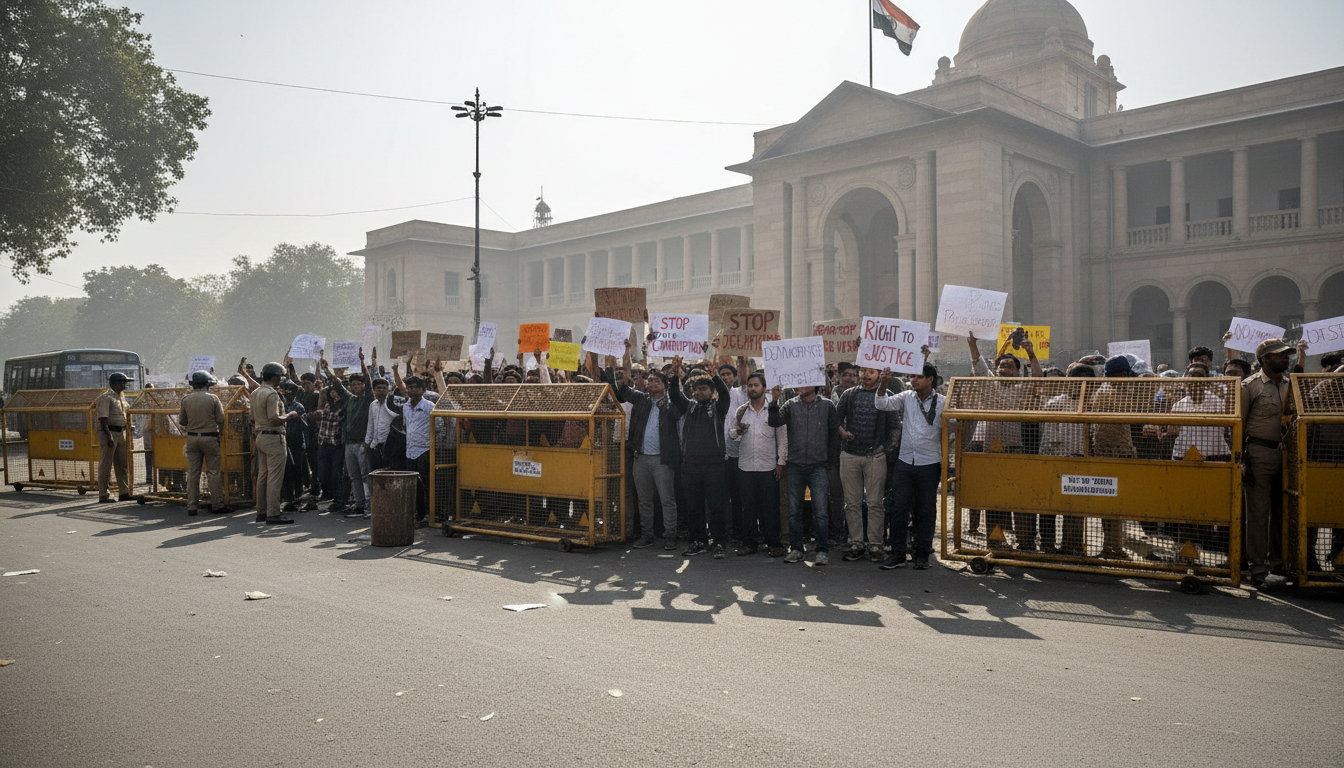
Opposition parties have escalated their standoff with the Election Commission of India for a second consecutive day, with CEC Gyanesh Kumar protest demonstrations drawing Congress leaders Rahul Gandhi and Priyanka Gandhi Vadra into police custody once again.
The INDIA bloc alliance, which comprises multiple opposition parties, has zeroed in on what it calls systematic bias in the Special Intensive Revision (SIR) of electoral rolls. The bloc’s leaders allege the process has been weaponised to inflate voter rolls in constituencies where the BJP holds sway, effectively engineering electoral advantage through administrative means rather than winning voters’ confidence.
On the second day of protests, police detained both Gandhi siblings as they participated in a demonstration demanding Chief Election Commissioner Gyanesh Kumar step down. The detentions occurred after opposition leaders crossed into sensitive territory—literally. According to reports, opposition leaders were booked for trespassing after entering Akashvani Bhawan during a protest march.
The Electoral Roll Revision Row
The Special Intensive Revision process is not new to Indian electoral administration. The ECI conducts periodic revisions to update voter lists, remove deceased voters, and add newly eligible citizens. These exercises are routine and technically necessary.
What has sparked fury this time is the scale and distribution of changes. Opposition parties contend that SIR operations have disproportionately swelled rolls in BJP-leaning areas while doing little in regions where opposition parties dominate. If true, such manipulation would tilt the electoral playing field before votes are even cast.
The INDIA bloc’s core charge: this is not administrative housekeeping but “vote theft” dressed in procedural language. They argue that inflated rolls in sympathetic constituencies boost the ruling party’s prospects through sheer demographic advantage, even if actual turnout doesn’t match the expanded electorate.
Pressure Mounts on CEC Gyanesh Kumar
The CEC Gyanesh Kumar protest has placed the Election Commission’s top official under unprecedented scrutiny from within Indian politics. Opposition parties have moved beyond routine criticism into organised, sustained pressure for his removal.
Rahul Gandhi and Priyanka Gandhi Vadra, who anchored the second day’s demonstrations, represent the Congress party’s front-line offensive. Their detention signals Delhi police’s readiness to enforce restrictions on protest activity, a move that itself has become part of the opposition’s grievance. The Gandhi siblings’ consistent presence at these events gives the protests a high-profile, media-grabbing edge that diffuses messaging across television and social platforms.
Police have cited trespassing charges to justify detentions. The opposition, however, frames these actions as retaliation for speaking truth to power—an attempt to silence dissent through harassment rather than reasoned engagement with the substantive allegations about electoral roll bias.
What Happened at Akashvani Bhawan
The decision to march toward Akashvani Bhawan (the headquarters of All India Radio, a government institution) marked an escalation in protest tactics. Rather than confining demonstrations to designated protest grounds, opposition leaders moved their march toward a seat of state power, signalling intent to disrupt routine governance.
Police intervened. Detentions followed. The second day of arrests and bookings suggests neither side is retreating. The opposition appears committed to sustained pressure; law enforcement appears determined to enforce restrictions on where and how protests can occur.
This dynamic mirrors broader tensions in Indian democracy. When opposition parties perceive electoral processes as compromised, they face a choice: work through institutional channels (petitions to courts, complaints to election officials) or take to the streets. The INDIA bloc has chosen both, but the street action generates headlines and puts pressure on the ECI in ways bureaucratic appeals cannot.
The Electoral Commission’s Position
The ECI has not publicly responded to the CEC Gyanesh Kumar protest movement with detailed rebuttals or data releases that might counter the opposition’s charges. Silence is itself a communication strategy—often one employed when an institution believes its legitimacy rests partly on perceived neutrality and impartiality.
Releasing defensive statements or detailed justifications of SIR operations might, from the ECI’s perspective, lend credence to the premise that such processes are open to political interpretation. The commission may prefer to let institutional procedures speak for themselves while local law enforcement manages physical disruption.
Yet this silence creates a vacuum. Without the ECI providing transparent, detailed data about how electoral rolls have changed across constituencies and regions, the opposition’s allegations remain unrefuted. Transparency is the natural antidote to suspicions of bias. Its absence fuels them.
What Comes Next
Sustained protests risk becoming a war of attrition. Opposition parties will continue mobilising cadres and leaders. Police will continue enforcing restrictions. Courts may become the next arena—opposition parties could file petitions challenging the SIR process, the CEC’s conduct, or the arrests themselves.
If the allegations of systematic bias hold weight, India’s electoral architecture faces a credibility crisis. If they don’t, the opposition risks delegitimising legitimate concerns about election administration through overreach and politicisation.
For now, the immediate contest is over whether CEC Gyanesh Kumar remains in office and whether the SIR process continues unchanged.
FAQ
Q: What is the Special Intensive Revision of electoral rolls?
A: The SIR is a periodic administrative process conducted by the Election Commission to update voter lists. It adds newly eligible voters, removes deceased persons, and corrects errors. The process is routine but has triggered opposition allegations that it has inflated rolls in BJP-friendly constituencies.
Q: Why were Rahul Gandhi and Priyanka Gandhi detained?
A: Police booked the two Congress leaders for allegedly trespassing after they entered Akashvani Bhawan during a protest march against CEC Gyanesh Kumar. They were detained on the second consecutive day of opposition demonstrations.
Q: What does the opposition mean by “vote theft”?
A: The INDIA bloc alleges that the SIR process has artificially inflated voter rolls in constituencies where the BJP holds strength, thereby engineering demographic advantage. Opposition parties frame this as systematic bias that compromises electoral fairness.
Q: Has the Election Commission responded to these allegations?
A: The ECI has not released detailed public rebuttals or data to counter the opposition’s charges regarding electoral roll bias. The commission’s silence has fueled opposition suspicions.
Q: What are the opposition’s demands?
A: The primary demand is the resignation of Chief Election Commissioner Gyanesh Kumar. Opposition parties also seek a halt or review of the SIR process and investigations into alleged bias benefiting the BJP.
