
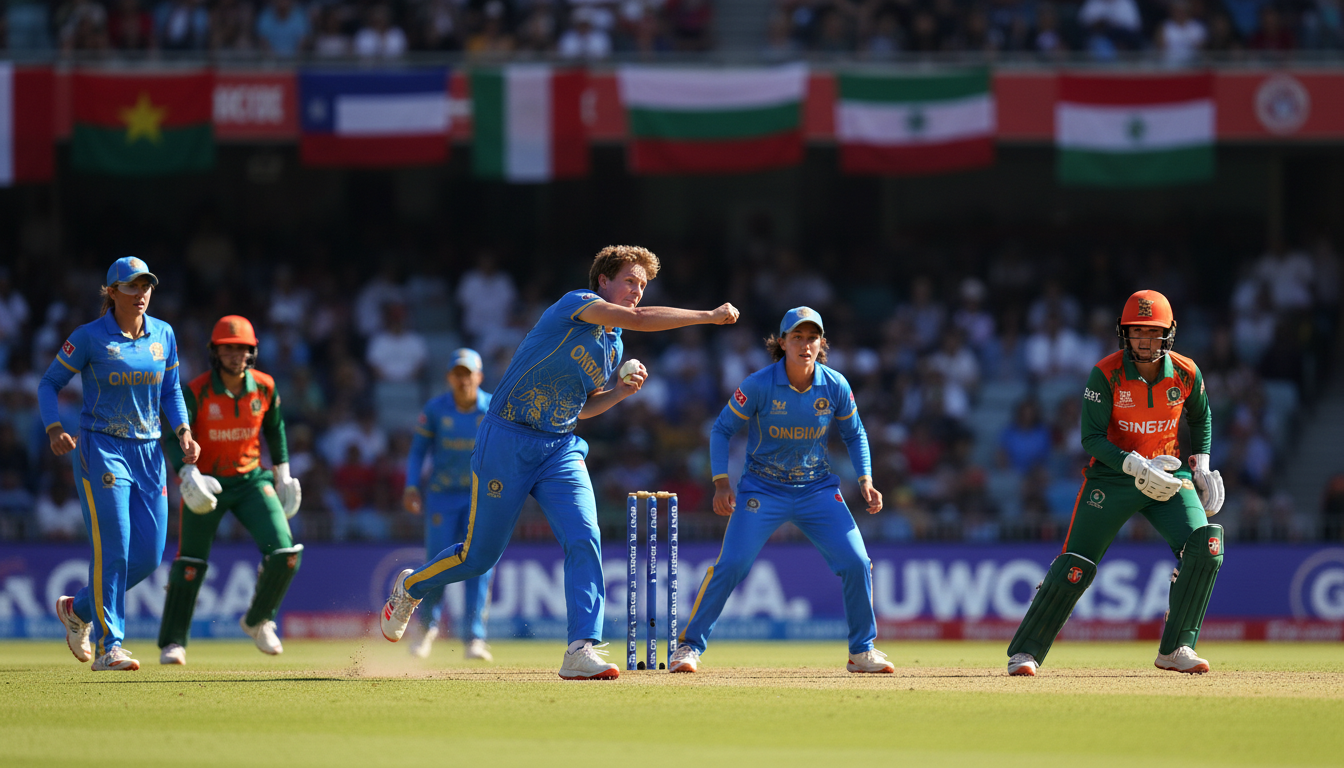
The Asian Games women’s cricket final will pit two unbeaten sides against each other in a gold medal clash that has the makings of a classic encounter between Asia’s cricket superpowers.
India and Sri Lanka arrive at this showdown with identical records—no losses, only victories stacked against some of the continent’s toughest opposition. This is not a mismatch on paper. This is a collision between two teams playing at their peak.
The defending champions from India have rolled through the tournament on the back of firepower with the bat and precision with the ball. Their batting lineup has dismantled attacks. Their bowling unit has suffocated batsmen. Shafali Verma, in particular, has been a force at the top of the order. Alongside her, Shree Charani has provided the kind of middle-order stability that wins tournaments.
Sri Lanka’s path to the final mirrors India’s in one crucial respect: consistency. Captain Chamari Athapaththu has been the glue holding the batting together while also chipping in with the ball. Her all-round performance has kept Sri Lanka ticking through tight matches. Against weaker opposition, she has been dominant. Against stronger teams, she has shown the temperament needed to manufacture runs under pressure.
The Asian Games women’s cricket final: A rematch with history
India and Sri Lanka have faced each other in high-stakes matches before. These are not strangers meeting for the first time. The rivalry is recent enough to feel sharp, old enough to carry weight. Each side knows what the other brings.
India enters as defending champions. That tag matters. It means experience in this exact scenario—playing for gold, with the entire subcontinent watching. Sri Lanka, however, has no reason to feel like an underdog. An unbeaten run to a final is not the record of a team that arrived by accident or benefited from a weak draw.
The final will be decided by which team handles the pressure better, which captain makes smarter decisions under duress, and which middle order capitalizes when momentum swings.
Shafali Verma and India’s batting firepower
India’s batting has been the story of their campaign. Shafali Verma’s role in this cannot be overstated. She sets the tone. When she gets going, she puts opposition bowlers on the back foot immediately.
Shree Charani has been equally vital lower down the order. The combination of aggression early and stability in the middle has allowed India to either chase down targets comfortably or post totals that are difficult to overhaul.
Against Sri Lanka, India will expect Verma to come out swinging. Sri Lankan bowling is solid but not exceptional. If India’s top order fires, Sri Lanka will struggle to keep the scoring rate down.
Chamari Athapaththu: Sri Lanka’s all-round insurance
Athapaththu is the player Sri Lanka cannot afford to lose form. She bats, she bowls, she captains. When one skill falters, her other abilities often compensate.
She has shepherded Sri Lanka through this tournament with a quiet competence that does not always grab headlines but shows up in match results. Against India, she will need to be at her best in both disciplines.
If Athapaththu can score runs and break India’s batting rhythm with a spell of tight bowling, Sri Lanka’s chances improve dramatically. If she struggles, Sri Lanka will lack a Plan B with enough firepower to compensate.
Bowling unit: Where tournaments are won and lost
India’s bowling has been the tournament’s standout feature. They have taken wickets at crucial junctures. They have defended modest totals. They have strangled opposition in the powerplay and the death overs.
Sri Lanka’s bowling is competent. It is not, however, at the level of India’s attack. That gap could prove decisive in a final where one over—one spell—can shift the entire trajectory of the match.
For Sri Lanka to win, their bowlers must find a way to disrupt India’s batting early. They cannot afford a start where Shafali Verma and her opening partner dominate the first six overs. Athapaththu’s captaincy will be tested here. She must set fields that invite mistakes without being so defensive that she concedes easy runs.
Head-to-head record and momentum
Recent high-stakes encounters between these nations have gone both ways. Neither side has a decisive psychological edge. That neutrality is important. It means the final will be decided on the day, not by ghosts of matches past.
India’s status as defending champions gives them something Sri Lanka does not have: the experience of winning this exact tournament before. They know what it takes. They know how to handle the pressure. Sri Lanka, by contrast, will be hunting a first gold medal in women’s cricket at the Asian Games.
That hunger can be a weapon. Hunger keeps you sharp. It also, sometimes, makes you tight when you need to be loose.
What to watch in the final
Shafali Verma’s strike rate in the first powerplay will set the tone for the entire match. If she scores quickly, India gains control. If Sri Lanka’s bowlers can keep her quiet, the momentum reverses.
Chamari Athapaththu’s performance with both bat and ball will determine Sri Lanka’s ceiling. She is the ceiling. If she plays well, Sri Lanka wins. If she plays poorly, they lose.
The toss could matter. Chasing in Asian Games women’s cricket finals has historically been harder than setting targets. Whichever captain wins the toss and elects to bat first may have already made the most important decision of the match.
FAQ
Q: What is the current head-to-head record between India and Sri Lanka in this tournament?
Both teams are unbeaten, meaning they have not faced each other yet in the Asian Games 2026. Their head-to-head record refers to recent high-stakes matches outside this tournament, with no clear edge to either side.
Q: Why is Shafali Verma crucial to India’s chances?
Shafali Verma opens the batting and sets the aggressive tone for India’s innings. Her strike rate and ability to dominate early overs puts pressure on opposition bowlers and builds scoring momentum that is difficult for opponents to rein in.
Q: What makes Chamari Athapaththu so important for Sri Lanka?
Athapaththu is Sri Lanka’s captain, leading all-rounder, and their most consistent performer with both bat and ball. She contributes across multiple disciplines, meaning her form directly impacts Sri Lanka’s chances in every facet of the match.
Q: Has India won the Asian Games women’s cricket gold before?
Yes, India are the defending champions, having won gold at the previous Asian Games. That experience playing in high-pressure finals gives them an edge in understanding the mental demands of this stage.
Q: When and where will the final be played?
The specific date and venue are part of the Asian Games 2026 schedule. Fans should check official Asian Games or cricket board announcements for exact timing and location details.
