
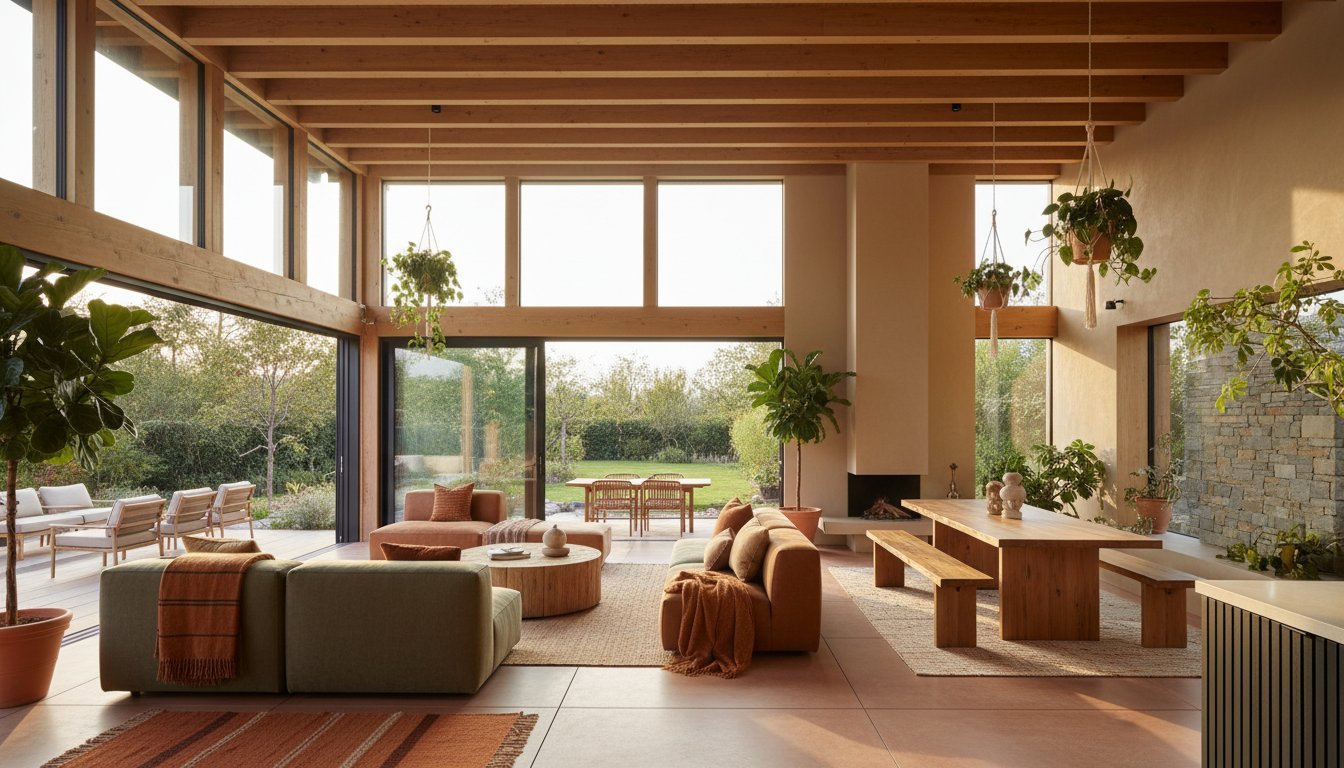
Home design trends for 2026 are moving decisively away from stark minimalism and cold greys towards spaces that blur the boundary between indoors and outdoors, prioritise multiple functions in a single room, and wrap inhabitants in warmth. The National Association of Home Builders’ awards have identified these shifts as the dominant directions shaping residential design across North America—and increasingly, the preferences influencing Indian home buyers and renovators too.
The awards reveal three interlocking trends: abundant natural light and indoor-outdoor connectivity; flexible spaces that shift between work zones, wellness areas, and entertainment zones; and a deliberate embrace of dimensional architectural features paired with earth-tone colour palettes. Together, they reflect how the pandemic’s work-from-home shift, the rise of home-based wellness, and a renewed appetite for entertaining guests have rewired what homeowners want from their spaces.
Background
The shift began subtly. Over the past three years, as remote work normalised and people spent more time at home, the demands on residential spaces intensified. A single room had to serve as office, yoga studio, and guest bedroom. The kitchen became as much a gathering point as a place to cook. And the desire to feel connected to nature—trees, light, sky—grew stronger, especially among urban dwellers.
According to research into the hosting effect, 58 per cent of Americans say having guests over has made them reconsider what they want in their homes. That figure signals a broader rethinking. Homeowners are no longer satisfied with rooms that serve a single purpose. They want spaces that adapt. They want to feel the outdoors from indoors. And they want their homes to feel inviting, warm, and lived-in—not showroom-like.
The NAHB Awards capture this mood shift in concrete design language: arched doorways, ceiling beams, skylights, and sliding glass walls that erase the boundary between rooms and garden or terrace. Colour palettes have shifted from cool greys and whites to ochres, warm beiges, terracottas, and soft browns—the warmth interior design trend that design publications are now documenting as a reaction to years of austerity minimalism.
Understanding the Key Home Design Trends for 2026
Nature and Light
Natural light is no longer a luxury. It’s a design requirement. Large windows, skylights, and glass doors bring daylight deep into homes. The goal is to reduce artificial lighting and create a psychological connection to outdoors. For Indian homes, this translates into rethinking window placement, using clerestory windows (high windows that let in light without compromising privacy), and designing covered verandahs and courtyards that pull the outside in—an approach that has deep roots in Indian architectural tradition.
Flexible, Multipurpose Spaces
The traditional separate room for work no longer makes sense for most households. Instead, designers are creating zones within open-plan or semi-open layouts. A corner with a desk during the day becomes a meditation nook by evening. A dining table doubles as a workspace. Storage is built in to define zones without walls. This flexibility is especially relevant for Indian urban homes, where square footage is expensive. One room must do the work of two or three.
Dimensional Features and Warm Tones
Arched doorways, exposed ceiling beams, and recessed lighting add visual depth and shadow play. These aren’t just aesthetic choices—they make spaces feel more generous and dynamic than flat, plain walls do. When paired with warm, earthy colours—terracotta, soft ochre, warm beige, deep cream—they create an environment that feels both modern and rooted. For Indian homes, this echoes traditional jali work, arched niches, and the warmth of stone and wood that characterise older Indian architecture.
What This Means for Indian Homeowners
Indian homes face distinct constraints: space is limited, climate is hot and humid in many regions, and many families still use homes for entertaining and multi-generational living. The 2026 trends actually align well with these realities.
For flat and apartment dwellers, the emphasis on flexible spaces means rethinking how to divide one room into zones using lightweight partitions, sliding doors, or even tall plants and shelving units. This is cheaper and more reversible than permanent walls. As we reported earlier on modular small-space living, this approach is already taking hold in urban India.
For climate, the focus on natural light and ventilation is practical. In hot climates, skylights with thermal control, deep verandahs, and indoor courtyards reduce reliance on air conditioning. Warm earth tones are also practical—they show dust and wear less obviously than white or pale grey, a real concern in India’s urban and semi-urban environments.
For entertaining, the trend toward gathering-focused design suits Indian living, where home entertaining remains central to social life. Larger dining areas, open-plan living rooms, and covered outdoor spaces can be adapted to accommodate the extended family gatherings and dinner parties that are common.
Practical Steps for Your Home
Start with colour. Paint one wall or the entire room in a warm earth tone—burnt sienna, warm ochre, or deep cream. This costs ₹500–₹2,000 per room and instantly shifts the mood. Pair it with natural wood or jute accents.
Increase natural light. Add a skylight (₹15,000–₹40,000 for a small one), install a high window, or use large mirrors to bounce natural light. These changes are permanent but worth the investment.
Create flexible zones. Use a tall bookshelf, a sliding door, or a fabric screen to divide one room into work and leisure zones. Cost: ₹10,000–₹50,000 depending on material and size.
Add architectural detail. If renovation is underway, ask your architect about arched doorways (minimal additional cost if structural walls aren’t involved) or exposed ceiling beams. These add visual drama without major expense.
Invest in multipurpose furniture. A storage bench that opens into a bed, a desk that folds away, or a dining table with extendable leaves. Cost: ₹20,000–₹1,00,000 depending on quality.
As we noted on DIY home decor, many of these trends can be implemented gradually through your own efforts, especially soft furnishings and colour changes.
Key Takeaways
- Home design trends 2026 prioritise natural light, indoor-outdoor flow, and warm earth-tone colour schemes over cold minimalism.
- Flexible, multipurpose spaces are in high demand, reflecting the need for homes to serve work, wellness, and entertainment simultaneously.
- Dimensional architectural features—arched doorways, ceiling beams, skylights—add visual depth and make spaces feel larger.
- The shift suits Indian homes well, aligning with traditional architecture and the practical need to maximise functionality in limited space.
- Changes can be implemented gradually, starting with colour and lighting, then moving to larger renovations if budget allows.
FAQ
Q: What are the main home design trends for 2026?
A: The NAHB Awards highlight three key trends: abundant natural light and indoor-outdoor connectivity, flexible multipurpose spaces, and warm earth tones paired with dimensional architectural features like arched doorways and exposed beams.
Q: How do I add natural light to my home without major renovation?
A: Use mirrors to reflect light, install skylights (₹15,000–₹40,000), add a high clerestory window, or remove heavy curtains and replace with sheer fabrics. Paint walls in light, warm tones to enhance the effect of natural light.
Q: What colours are trending in 2026 home design?
A: Warm earth tones are replacing cool greys and whites. Ochre, terracotta, warm beige, soft browns, and deep cream are the dominant palettes. These colours pair well with natural wood and jute accents.
Q: How can I create flexible spaces in a small apartment?
A: Use sliding doors, tall bookshelves, or fabric screens to divide rooms into zones. Invest in multipurpose furniture like storage benches that double as seating or beds. Avoid permanent walls to keep options open.
Q: Are these trends practical for India’s climate?
A: Yes. The emphasis on natural light and ventilation reduces air conditioning needs in hot climates. Deep verandahs and indoor courtyards are traditional in India and fit these modern trends perfectly. Warm earth tones also hide dust and wear better than pale colours in India’s environment.
