
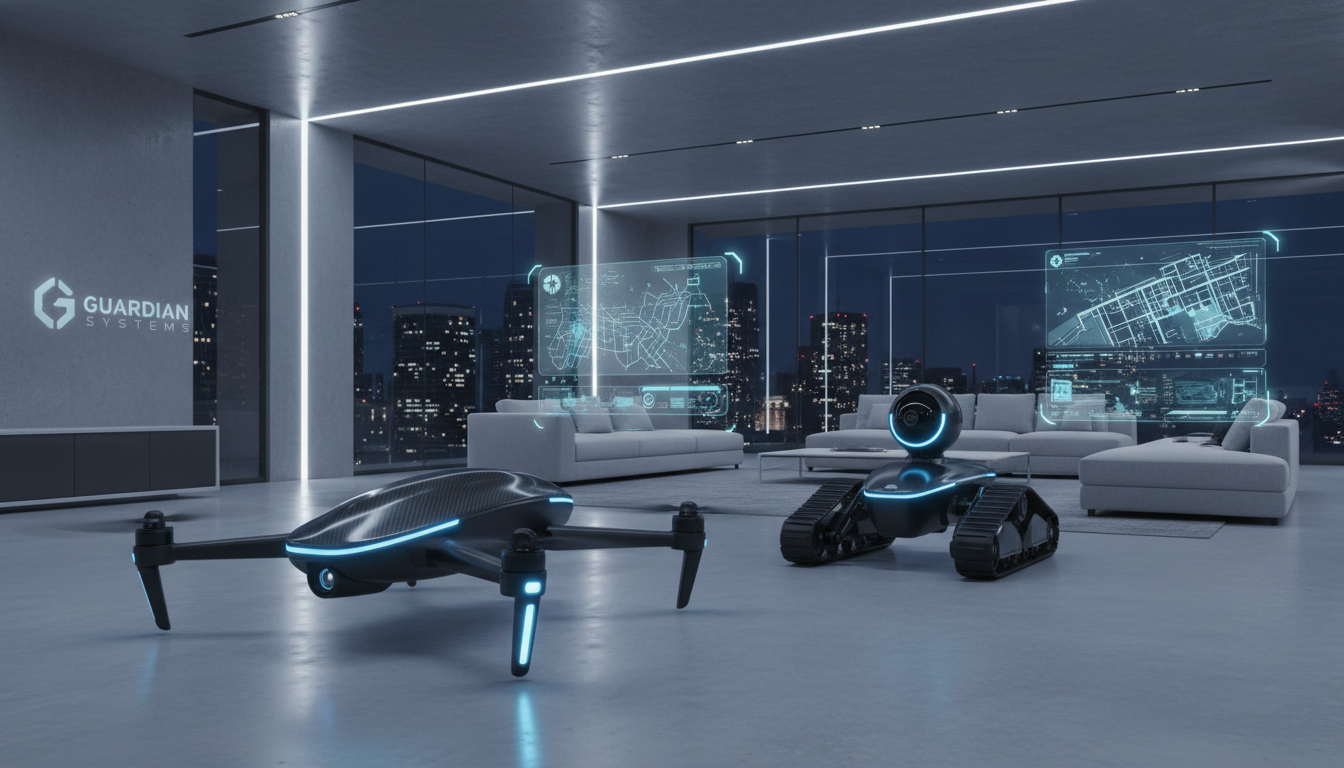
Autonomous home security robots are reshaping how homeowners protect their properties. Amazon’s Ring division has just unveiled two new devices that represent a significant leap forward in the category: the Ring Drone Cam, a flying surveillance unit priced at $250, and the Ring Rover Cam, a ground-based robot patrol system costing $1,000.
The two devices reflect a broader industry push toward active security systems that don’t simply record footage passively. Instead, these robots move through homes and spaces on their own, gathering real-time intelligence when triggered by alarms or human command. According to CNBC, the Ring Drone Cam can be deployed automatically or manually by users to patrol indoors and record video during suspicious activity.
How the Ring Drone Cam Works
The Ring Drone Cam operates exclusively indoors due to Federal Aviation Administration (FAA) regulations that restrict commercial drone flights in residential airspace. Users can launch the drone manually through the Ring app or set it to deploy automatically when the security system is triggered by motion or door sensors.
The drone records video during its patrol and stores the footage in Ring’s cloud service. It returns to its charging dock when the patrol is complete or when the battery runs low. The device carries LED indicators that light up when recording is active, a privacy feature meant to alert anyone in the home that surveillance is occurring.
Shipping begins in the United States on January 27, 2027, pending approval from the Federal Communications Commission (FCC).
The Ring Rover Cam and Ground-Based Patrols
The Ring Rover Cam takes a different approach entirely. Priced at $1,000, this device repurposes Amazon’s existing Astro robot platform for security purposes. Rather than flying through rooms, the Rover moves along floors on wheels, navigating around obstacles and furniture to conduct visual patrols.
The Rover Cam is designed primarily for businesses and larger properties, though Ring has not explicitly restricted it to commercial use. It begins shipping on December 16, 2026. Like the drone, it features recording indicators and is designed to move autonomously or on demand.
Privacy Concerns and Safeguards
The introduction of autonomous security robots raises immediate questions about privacy, particularly in multi-occupant homes. A drone or robot moving through bedrooms and bathrooms without explicit consent could capture sensitive moments, even if the homeowner intends the devices for legitimate security.
Ring addresses this concern partly through the LED indicators. When either device records, lights activate to signal that surveillance is happening. The company has not disclosed whether recordings can be disabled in certain rooms or at certain times, or how users can prevent the devices from entering specific areas.
Privacy advocates have long scrutinised Ring’s approach to home surveillance. The company has faced criticism over its partnerships with police departments and its handling of doorbell camera footage. The addition of autonomous robots—particularly the flying drone—extends that scrutiny into interior spaces.
For homeowners considering these devices, questions remain unanswered. Can family members disable recordings in their bedrooms? Will the devices respect geofences around sensitive areas? How long is footage retained, and who has access to it?
Autonomous Home Security Robots in Practice
The appeal is clear for certain use cases. A drone that automatically patrols a home during an alarm event could deter burglars or capture evidence of a break-in. The Rover Cam might monitor a business property overnight or patrol warehouses and backyards.
However, effectiveness depends on factors Ring hasn’t detailed. How accurate is the drone’s obstacle avoidance indoors? Does it get stuck on low-hanging lights or ceiling fans? Can the Rover navigate stairs and uneven terrain? These practical questions will matter more to buyers than specifications.
The $250 price point for the drone makes it accessible to middle-class homeowners, particularly in markets like urban India where apartment security remains a priority. The $1,000 Rover, by contrast, targets commercial users and affluent residential customers with large properties.
The Broader Market
Ring is not the first company to experiment with autonomous security robots. Various startups have developed similar products, though adoption remains limited. Amazon’s scale, distribution network, and existing Ring ecosystem give it an advantage in making these devices mainstream.
The launch also reflects Amazon’s ambitions beyond e-commerce. The company has invested heavily in robotics through its acquisition of Kiva Systems and development of Astro. Repurposing Astro for security is a logical extension that justifies the investment.
What’s Coming Next
Both devices require regulatory approval before they ship. The FCC approval timeline for the drone is uncertain. Once devices reach consumers, real-world usage will reveal whether autonomous home security robots are practical additions to a security system or gimmicks that create more problems than they solve.
The larger question is whether homeowners will feel more secure with robots patrolling their homes, or more unsettled by constant surveillance even they control.
FAQ
Q: Can the Ring Drone Cam work outdoors?
A: No. The drone is restricted to indoor use due to FAA regulations governing commercial drone flights in residential areas.
Q: When will the Ring Drone Cam be available?
A: The Ring Drone Cam is scheduled to ship in the United States on January 27, 2027, pending FCC approval.
Q: What is the Ring Rover Cam designed for?
A: The Ring Rover Cam is primarily intended for business and larger property security patrols. It repurposes Amazon’s Astro robot platform and costs $1,000.
Q: How do I know when the devices are recording?
A: Both the Ring Drone Cam and Ring Rover Cam feature LED lights that activate when recording is active, signalling to anyone in the home that surveillance is occurring.
Q: Can I use these devices in multi-occupant homes?
A: Ring has not specified restrictions or privacy protections for multi-occupant homes. Users should clarify with Ring how to manage consent and privacy in shared living spaces before purchase.
