
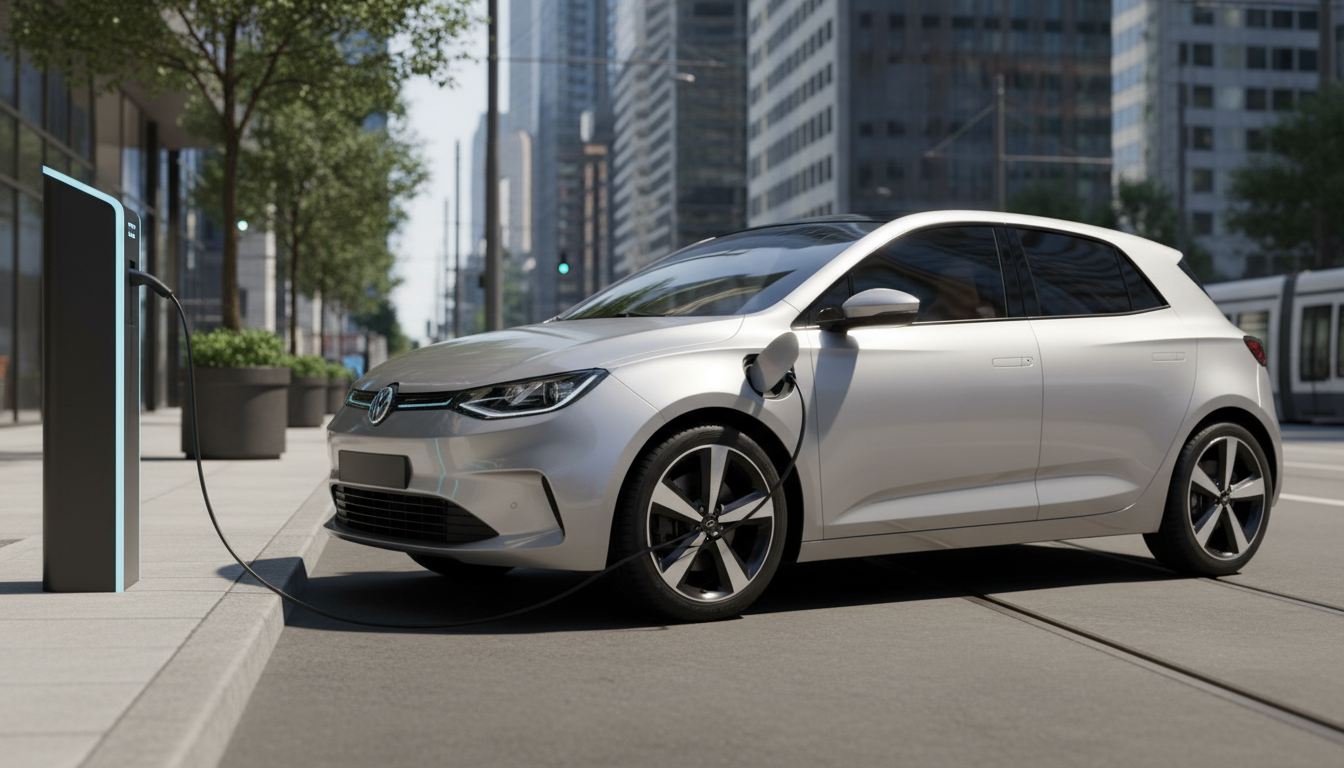
BYD has launched an affordable electric vehicle called the Seagull second generation in China, starting at just $9,800 USD. The move marks another aggressive price point from the Chinese automaker in its push to dominate the mass-market EV segment globally.
According to Handl Consulting, the new Seagull is larger than its predecessor and seats five. It pairs that roomier interior with practical battery options and charging speeds that challenge the economics of traditional petrol cars in emerging markets.
What makes the second-generation Seagull an affordable electric vehicle
The second-generation design widens the Seagull’s appeal beyond city dwellers. It retains the compact-car footprint but expands interior space with a five-seat layout. This is crucial for markets where a car must serve multiple roles: daily commute, family trips, weekend getaways.
The battery lineup keeps costs competitive. Buyers choose between 320 km or 420 km of range using BYD’s second-generation Blade Battery technology. That covers most daily driving needs without pushing the price into premium territory. At under $10,000, the Seagull competes directly with entry-level petrol hatchbacks, not other electric vehicles.
Flash-charging is the headline feature here. It addresses the anxiety that stops buyers from switching to electric cars in developing markets. Topping up the battery during a coffee break, rather than waiting hours at a charger, makes ownership practical for people without dedicated home charging.
Optional LiDAR and driving assistance
BYD offers an optional LiDAR-based driving assistance system. This lifts the Seagull’s tech profile above typical budget cars. LiDAR sensors provide 3D environmental mapping, enabling features like adaptive cruise control and collision avoidance.
The inclusion at this price point is noteworthy. Traditionally, autonomous or semi-autonomous features appear on vehicles costing three or four times more. Trickle-down of such technology to affordable electric vehicles signals a shift in how manufacturers allocate development resources.
It’s an optional extra, so buyers can skip it if they’re chasing the lowest entry price. That flexibility matters in price-sensitive markets.
Why this launch matters for emerging markets
India’s electric vehicle market remains nascent compared to China’s. Average buyer budgets are tighter. Affordability, range, and charging speed determine adoption rates far more than brand prestige or interior trim options.
The Seagull Gen 2’s pricing and capability set a new benchmark. It demonstrates that sub-$10,000 electric vehicles need not be stripped-down penalty boxes. They can offer genuine utility and modern tech.
Chinese automakers have already begun exporting to India. BYD itself sells the Atto 3 (Yuan Plus) in India, targeting affluent buyers. A budget electric vehicle with mass-market appeal would disrupt India’s EV landscape, particularly if distribution and after-sales support reach smaller cities.
However, import tariffs and homologation requirements in India remain barriers. The Seagull may not land here immediately in its Chinese form. But its existence forces Indian manufacturers and foreign competitors to reckon with the possibility of a truly affordable, feature-rich electric vehicle.
Battery technology and range
The second-generation Blade Battery improves on earlier iterations. BYD has refined cell chemistry and pack engineering to deliver higher energy density without explosive cost increases. The 320 km and 420 km range options sit at the sweet spot for urban and peri-urban use cases.
Real-world range depends on driving conditions, temperature, and driving style. Chinese automotive media tests typically report figures close to manufacturer claims for BYD vehicles. Winter performance in northern China will be a real-world test of the battery’s robustness.
The flash-charging capability pairs well with shorter ranges. If you can add 200 km of range in 15 minutes, the psychological barrier of “running out of battery” shrinks considerably. That changes consumer behaviour in ways traditional range increases don’t.
Pricing strategy and market positioning
At $9,800, the Seagull Gen 2 undercuts most fossil-fuel hatchbacks in China’s second and third-tier cities. It’s positioned as a rational economic choice, not a premium environmental statement. That framing is essential for mass adoption.
BYD’s vertical integration helps hit this price. The company manufactures batteries, motors, and semiconductors in-house. It controls the supply chain in ways Western or Indian competitors struggle to replicate. This structural advantage compounds at lower price points, where margin pressures are tightest.
The optional LiDAR system suggests BYD is segmenting buyers within the affordable electric vehicle category itself. Base buyers get functionality. Those willing to spend more get semi-autonomous features. This tiering maximizes total revenue while keeping the entry price psychological acceptable.
FAQ
What is the starting price of the BYD Seagull second generation?
The starting price is $9,800 USD, making it one of the most affordable electric vehicles available globally.
How far can the Seagull Gen 2 travel on a single charge?
The vehicle offers two battery options: 320 km or 420 km of range with BYD’s second-generation Blade Battery.
Does the Seagull Gen 2 support fast charging?
Yes, the vehicle features flash-charging capabilities, allowing rapid battery top-ups. Exact charging times depend on charger specifications and battery size selected.
Is LiDAR included in the base model?
No, the LiDAR-based driving assistance system is optional. Buyers can skip it to keep the purchase price at the $9,800 starting point.
How many seats does the new Seagull have?
The second-generation Seagull is a five-seat vehicle, larger than its predecessor while maintaining a compact footprint.
