
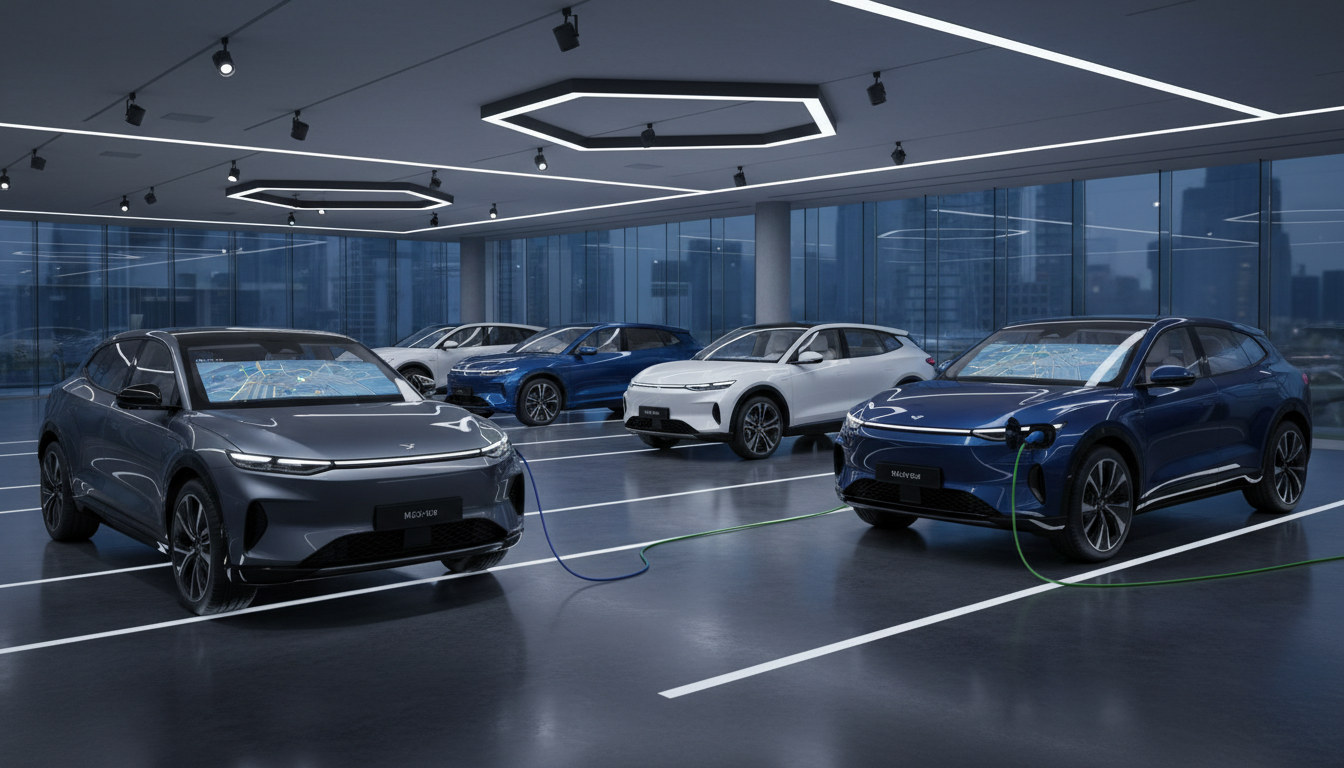
Electric and hybrid SUVs are arriving in global markets with substantially longer driving ranges, faster charging speeds, and increasingly sophisticated driver assistance systems. The past few weeks have brought announcements from major automakers signalling a decisive push into electrified SUV segments across Asia, with particular momentum in China and Southeast Asia.
The standout launch comes from Geely, whose Galaxy Battleship 700 delivers a tri-motor hybrid system producing up to 1,113 horsepower and over 1,770 km of combined driving range. Priced from roughly 26,800 USD equivalent, this electrified off-road SUV represents a significant step forward for Chinese automakers competing in the premium hybrid segment. The vehicle combines conventional and electric power in a tri-motor configuration, allowing it to function as both a high-performance machine and an efficiency-focused family hauler.
Porsche has moved more decisively into the pure electric space with the all-new Cayenne Electric unveiled in the Philippines. This model offers up to 642 km of WLTP-rated driving range and 400kW DC fast charging capability. The Porsche offering targets affluent buyers seeking a premium, zero-emission SUV experience without the range anxiety that plagued earlier electric vehicles.
Chinese Market Momentum
China remains the epicenter for electric and hybrid SUV innovation. FAW-Volkswagen’s Jetta brand launched its M6 sedan, a battery-electric car that racked up over 10,000 orders immediately. The brand simultaneously introduced the ID. UNYX 09 electric fastback sedan, signalling Volkswagen’s intent to compete across multiple electrified segments rather than concentrate on a single model line.
Fawcar took a different approach by creating an entirely new energy vehicle brand called Joyee, which debuted in the Philippines with three distinct models. The S04 is positioned as a compact SUV, while the S08 offers plug-in hybrid capability in a larger SUV form factor. A four-door coupe, the N09, rounds out the initial lineup. This multi-model strategy suggests Fawcar believes there’s sufficient demand to support several electrified offerings simultaneously.
## Advanced Features in New Electric and Hybrid SUVs
General Motors signalled longer-term ambitions by announcing hands-free Super Cruise technology on high-volume truck and SUV trims by model year 2027. The automaker plans to follow this with an eyes-off Level 3 autonomous system in 2028. These advancements represent a significant jump beyond current driver assistance technology.
Super Cruise allows drivers to remove their hands from the steering wheel on compatible highways for extended periods. The system uses camera and radar inputs to maintain lane position and adjust speed. An eyes-off Level 3 system would remove the requirement that drivers monitor the road continuously, marking a genuine transition toward semi-autonomous driving.
For practical purposes, this means buyers shopping for new truck and SUV models from GM will soon encounter genuinely hands-free driving on long highway stretches—a capability that transforms the ownership experience on familiar, high-traffic routes.
Range and Charging: The Real Differentiators
The electric and hybrid SUV segment’s rapid maturation hinges on two metrics: driving range and charging speed. The Geely Galaxy Battleship 700’s 1,770 km combined range addresses range anxiety directly. That figure encompasses both electric-only and hybrid operation, allowing real-world drivers to plan long journeys without constant battery management.
The Porsche Cayenne Electric’s 642 km WLTP range sits comfortably within the practical demands of most daily driving. More crucially, its 400kW DC fast charging capability means 20 minutes at a compatible charger delivers meaningful additional range. Compare this to earlier electric SUVs that required 45 minutes to an hour for equivalent charging speeds.
Faster charging becomes increasingly relevant as public infrastructure expands. Indian drivers accustomed to careful fuel station planning will recognize the parallel: as charging networks densify, the anxiety surrounding battery depletion diminishes proportionally.
Market Segmentation Strategy
What stands out across these launches is deliberate market segmentation. Geely targets adventure-oriented buyers willing to spend mid-premium money. Porsche captures ultra-premium buyers seeking brand prestige alongside electrification. Fawcar’s Joyee brand attempts to establish a foothold in mass-market segments with multiple price points.
This diversity suggests the electric and hybrid SUV market has matured beyond early-adopter phases. Manufacturers now compete on specifics: tri-motor powertrains, DC fast charging speeds, autonomous driving capabilities, and niche positioning rather than simply offering “an electric SUV.”
FAQ
What’s the range difference between electric and hybrid SUVs?
The Geely Galaxy Battleship 700 hybrid achieves over 1,770 km combined range by switching between electric motors and conventional engines. The Porsche Cayenne Electric, pure battery-powered, delivers 642 km on a single charge. Combined range hybrids stretch considerably further because they never fully depend on battery capacity alone.
How fast do these new SUVs charge?
The Porsche Cayenne Electric supports 400kW DC fast charging, which tops current market offerings. Most conventional electric vehicles use 50-150kW chargers. At 400kW, meaningful range recovery happens in roughly 20 minutes at compatible infrastructure.
Will GM’s Super Cruise work on Indian roads?
Super Cruise requires highly detailed road mapping and marked highway lanes to function safely. Indian road infrastructure varies significantly by region. GM’s technology deployment remains focused on North American highways for now, though Level 3 systems in 2028 may prove more adaptable to varied global road conditions.
Why are automakers launching multiple electric and hybrid models simultaneously?
Market research suggests no single electrified SUV concept dominates buyer preferences. Some want pure-electric zero emissions. Others prefer hybrid flexibility. Price-sensitive buyers need affordable options while premium buyers seek status and technology. Multiple models capture different segments.
Are these vehicles arriving in India soon?
Porsche and GM have confirmed availability in select Asian markets. Geely, Fawcar, and other Chinese brands have limited Indian presence currently. Demand signals from Philippines and China launches may influence decisions about Indian market entry over the next 18-24 months.
