
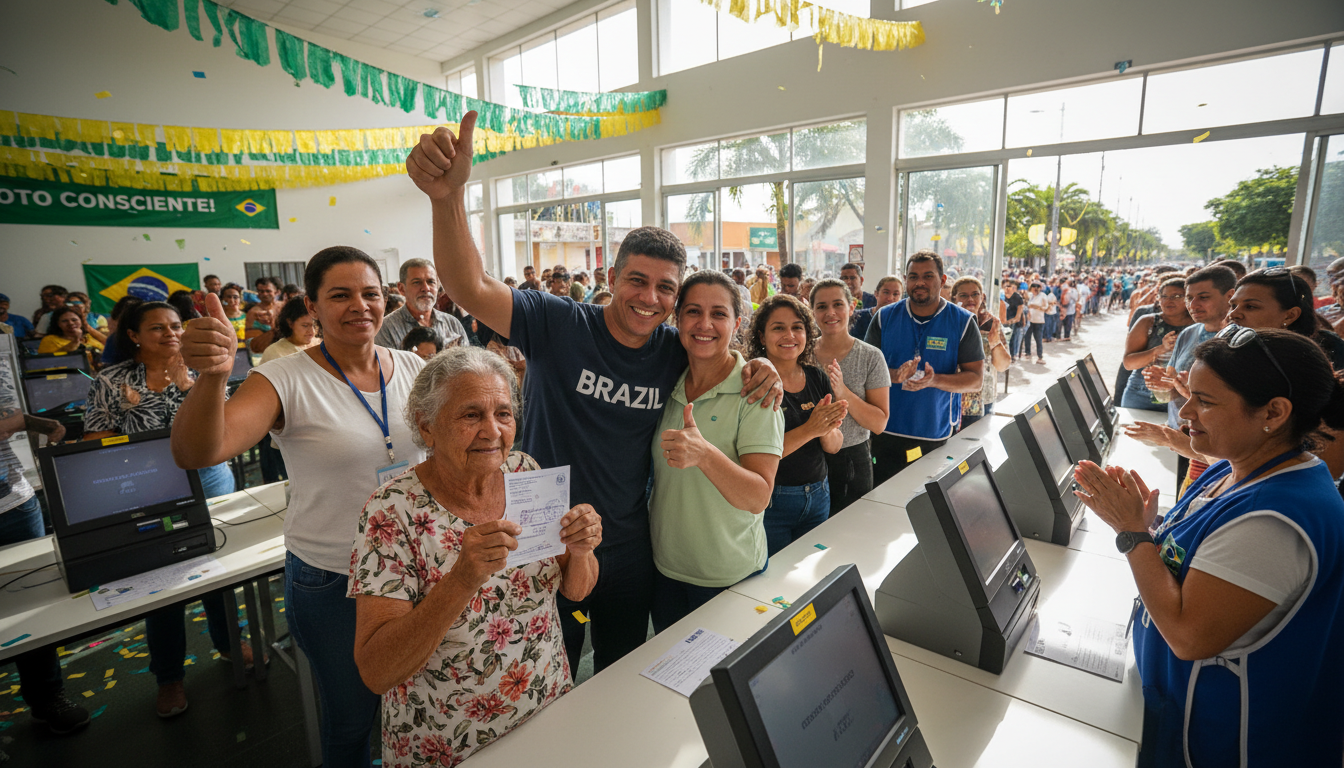
Luiz Inácio Lula da Silva has won Brazil’s presidential runoff, securing an unprecedented fourth nonconsecutive term and reversing the far-right momentum that swept through Latin America over the past decade. The leftist former metalworker defeated Flávio Bolsonaro, the far-right senator and son of imprisoned ex-president Jair Bolsonaro, with 51.79% of the vote to Bolsonaro’s 48.21%—a margin of 4.4 million votes cast on October 27.
The result stands as a remarkable political resurrection. Lula had narrowly lost the first-round vote on October 4, making him the first runner-up in Brazil’s post-1985 democratic history to reverse that result in a runoff election. The comeback defies regional trends that have shifted numerous Latin American governments rightward over recent years.
Lula wins Brazil election despite contested circumstances
The victory came amid electoral drama. Bolsonaro refused to concede, instead calling for the results to be annulled. His camp cited voting extensions of two hours, which were implemented due to transportation disruptions and heavy rains affecting turnout logistics. The contested conclusion mirrors broader tensions surrounding Brazil’s democratic institutions that have simmered since Jair Bolsonaro’s 2022 election loss and subsequent legal troubles.
For Brazil, the world’s largest economy in the Southern Hemisphere and Latin America’s most populous nation, the outcome carries continental significance. Lula’s win blocks a potential alignment between Brasília and Washington under a Bolsonaro administration. According to reports on the election, Flávio Bolsonaro had pledged to join Donald Trump’s proposed “Shield of the Americas” initiative—a policy framework aimed at coordinating conservative governments across the hemisphere. Lula’s victory avoids such realignment.
What the runoff result means for Latin American politics
Brazil’s electorate, numbering over 150 million eligible voters, sent a signal that resists the rightward wave dominating the region. Since the mid-2010s, conservative and far-right candidates have won presidential elections across Chile, Argentina, Peru, and Ecuador. Yet Brazilians chose differently, returning Lula despite inflation pressures, economic headwinds, and Bolsonaro family supporters’ sustained campaign efforts.
The margin—4.4 million votes—proved decisive but not overwhelming. In a nation where presidential elections often turn on turnout and regional voting patterns, the result reflects deep polarisation. Brazil remains split almost evenly between left and right political blocs, a division that will likely shape Lula’s second innings as president.
Lula previously served three consecutive terms from 2003 to 2010, making him one of Brazil’s longest-serving elected presidents. His first two presidencies coincided with a commodity boom that lifted millions into the middle class. A subsequent conviction on corruption charges—later annulled—barred him from running in 2018, allowing Jair Bolsonaro to win that race. Following Bolsonaro’s controversial presidency, marked by clashes with democratic institutions and pandemic mismanagement, voters opted to return Lula.
The role of Flávio Bolsonaro in the runoff
Flávio Bolsonaro emerged as the far-right’s standard-bearer after his father faced legal restrictions. The senator, who represents Rio de Janeiro, has faced his own corruption allegations, though he denies wrongdoing. Running as the heir to his father’s political project, he mobilised Bolsonaro’s base but ultimately fell short by a substantial margin in the two-horse race.
Flávio’s refusal to concede and his demands to annul results follow a playbook familiar to global observers. His claims about voting irregularities, tied to the two-hour extension, lack independent verification. Electoral authorities in Brazil conducted the runoff under international observation and have stood by the results’ legitimacy.
FAQ
Q: Why did Lula lose the first round but win the runoff?
A: Lula came second on October 4, triggering a runoff between the top two candidates under Brazil’s electoral system. In the October 27 runoff, he secured 51.79% compared to Bolsonaro’s 48.21%, reversing his earlier loss. This marks the first time since democracy returned to Brazil in 1985 that the first-round runner-up won the runoff.
Q: How many times has Lula been president of Brazil?
A: This fourth term is unprecedented for nonconsecutive service. Lula served three consecutive terms from 2003 to 2010. A corruption conviction barred him from 2018, but that conviction was later annulled. His 2026 victory gives him a fourth overall term, though not consecutive.
Q: What is the “Shield of the Americas” and why does it matter?
A: The “Shield of the Americas” is a proposed policy initiative associated with Donald Trump’s political allies, aimed at coordinating conservative governments across the Western Hemisphere. Flávio Bolsonaro had pledged to join it. Lula’s victory avoids a potential Brazilian alignment with Trump’s preferred regional partners.
Q: What were the election controversies?
A: Voting was extended by two hours on October 27 due to transportation problems and heavy rains. Flávio Bolsonaro claimed this warranted annulling results. Electoral authorities rejected these claims, and international observers monitored the process.
Q: Does Lula’s win reverse Latin America’s rightward shift?
A: Partially. Most major Latin American nations have elected conservative or far-right leaders in recent years. Brazil’s choice of Lula, however, represents a significant exception. Whether it signals a regional reversal or remains an isolated case depends on upcoming elections in other countries.
