
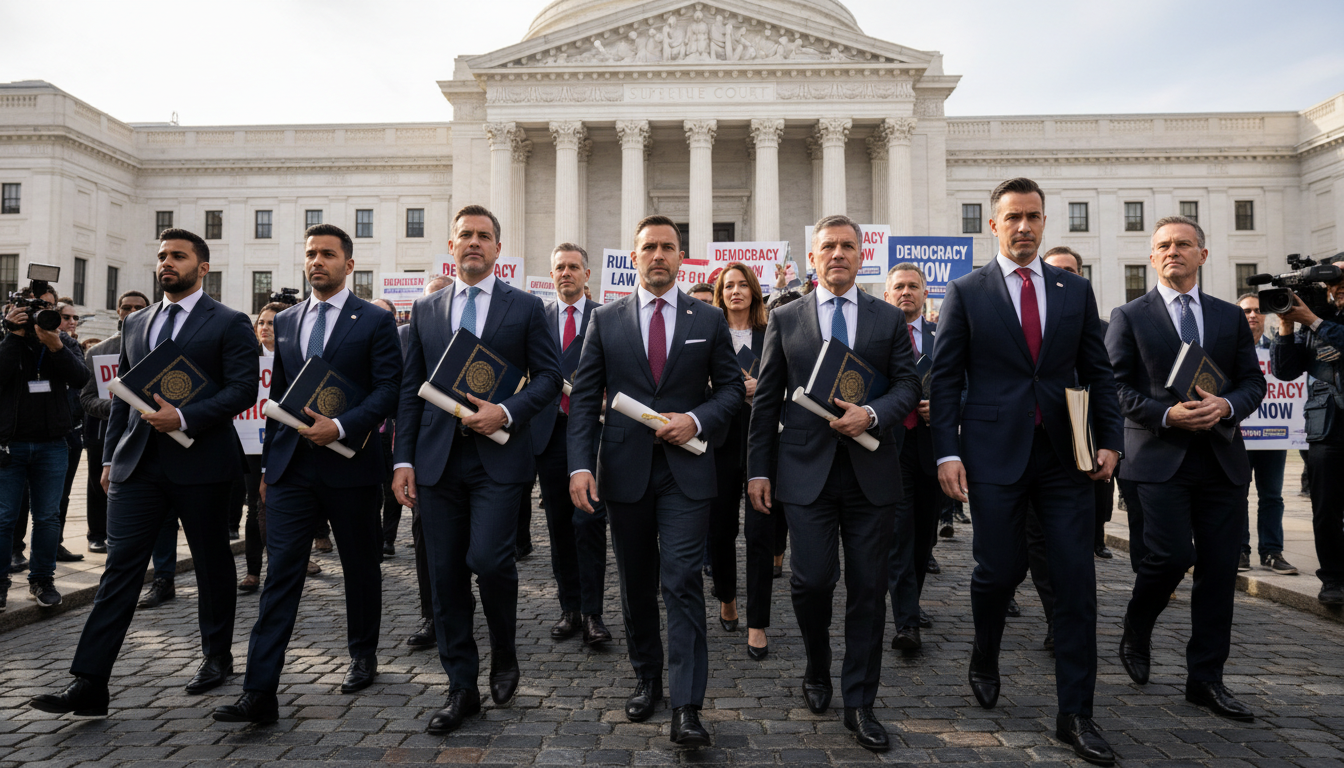
Opposition leaders have escalated their campaign against electoral roll irregularities, launching coordinated protests and vowing legal consequences for those accused of undermining democratic processes. The Congress-led India bloc held strategy meetings in Delhi following a march to the Supreme Court, signalling an intensified push against what opposition figures characterise as systematic tampering with voter lists ahead of key electoral contests.
Rahul Gandhi has emerged as the public face of the movement. According to reports, he vowed to bring those responsible for what he termed “destruction of the Constitution” to justice. The framing reflects a broader opposition narrative: that electoral roll irregularities represent not mere administrative error but a deliberate assault on constitutional governance itself.
The opposition’s formal challenge has reached the Supreme Court. Voter deletion petitions filed by opposition leaders allege systematic removal of eligible voters from electoral rolls. The scale of alleged irregularities and their geographic spread suggest a coordinated operation, the opposition argues, rather than isolated administrative lapses across states.
The Scale of Electoral Roll Irregularities
Numbers matter in electoral politics. Opposition figures claim that thousands of voters—particularly from opposition-leaning constituencies—have been mysteriously deleted from voter lists. While exact figures remain contested, the sheer volume of complaints has forced the Election Commission into a defensive posture.
Election officials maintain that deletions follow standard procedures: migration, death, and duplicate entries account for most removals. Opposition parties counter that the timing is suspicious. Deletions spiked notably in constituencies where anti-government sentiment ran high. Whether coincidence or conspiracy, the optics favour the opposition narrative.
The alleged pattern extends across multiple states. This geographic spread distinguishes current claims from isolated irregularities in past elections. Opposition strategists argue it demonstrates systematic intent rather than local oversights by poll workers.
Opposition Strategy and the Delhi Meeting
Following their march to the Supreme Court, opposition leaders convened to chart next steps. The meeting brought together Congress leadership, regional opposition parties, and India bloc constituents. Strategy documents reportedly outlined escalating protest phases.
Phase one involved public mobilisation and media narrative-building. Check. Phase two targets legal forums—hence the Supreme Court petitions and planned interventions in ongoing cases. Phase three would intensify street protests if judicial channels prove unsatisfactory. Opposition sources indicate all three phases remain active.
The Delhi meeting also served to rebuild fractured opposition unity. Regional parties, sometimes reluctant Congress allies, have joined the cause. The electoral roll issue provides a neutral ground: no regional party wishes voter deletions, regardless of partisan calculations. This unusual consensus strengthens opposition hand considerably.
Constitutional Destruction Claims
Opposition rhetoric has hardened considerably. Voter deletion is no longer framed as electoral misconduct. It is presented as constitutional sabotage. This framing shifts the battle from technical electoral disputes into fundamental governance territory.
Rahul Gandhi’s vow to prosecute constitutional violators carries weight in Indian politics. It signals that opposition sees this as a threshold moment. If electoral rolls can be manipulated with impunity, opposition argues, then elections themselves become theatre rather than democratic instruments. Democracy requires accurate voter rolls. Tamper with them, and the constitutional order itself fractures.
This argument resonates beyond hardcore opposition supporters. Civil society organisations, election observers, and constitutional scholars have raised concerns independently. Their concerns lend legitimacy to opposition claims and complicate government dismissals of allegations as partisan theatrics.
Planned Continuation of Protests
Demonstrations will persist, opposition sources confirm. Street mobilisations are scheduled across major cities. Coordination with regional opposition governments ensures state-level amplification. Press conferences, memoranda to the Chief Election Commissioner, and media campaigns will continue unabated.
The opposition calculates that sustained public pressure achieves what quiet diplomacy cannot. The Election Commission must respond to public outcry. Judges read newspapers. Electoral roll irregularities dominating headlines force institutional accountability in ways backroom meetings never could.
Whether this strategy succeeds depends partly on media coverage persistence. Initial coverage has been substantial. Sustaining momentum requires fresh developments, dramatic moments, or new revelations. Opposition appears aware of this. Hence the staged march to the Supreme Court, the coordinated statements, the carefully timed demonstrations.
Government and Election Commission Response
Officials have largely deflected opposition accusations. The Election Commission maintains that procedures are sound and deletions lawful. Government spokesmen argue the opposition seeks to delegitimise elections rather than solve genuine problems. If irregularities existed, they contend, opposition-governed states would have identical issues—yet complaints cluster in non-opposition states. This proves the real motive, government argues: opposition is simply sore about electoral outcomes.
These counter-arguments hold force in certain circles. They underperform, however, when confronted with constituent complaints of missing voter names on rolls. Affected voters—regardless of party preference—provide opposition with powerful testimonial evidence. A voter denied the franchise cares little about procedural defences or partisan attribution.
FAQ
What exactly are electoral roll irregularities?
Electoral roll irregularities refer to errors or deliberate alterations in voter lists maintained by election authorities. These include duplicate entries, deletion of eligible voters, and incorrect voter information. Opposition alleges systematic deletions from constituencies likely to oppose the government.
Why does Rahul Gandhi connect this to constitutional destruction?
Opposition leaders argue that voter deletion undermines the constitutional right to vote. If electoral rolls—the foundation of democratic elections—can be tampered with, then the constitutional order enabling elections becomes compromised. Hence the language of constitutional violation.
Has the Supreme Court accepted the opposition petition?
Reports indicate the Supreme Court received voter deletion petitions from opposition leaders. Judicial proceedings on these matters remain ongoing. No final orders have been announced as of current reports.
What penalties could those accused face if wrongdoing is proved?
Criminal charges under electoral law provisions could apply. These carry penalties ranging from imprisonment to fines. Officials found complicit in systematic voter deletion could face removal from office alongside criminal prosecution.
Will these protests affect upcoming elections?
Opposition aims for exactly that. By highlighting electoral roll irregularities now, they seek to force corrections before elections occur. The timing of protests—before elections rather than after—reflects this preventive strategy.
