
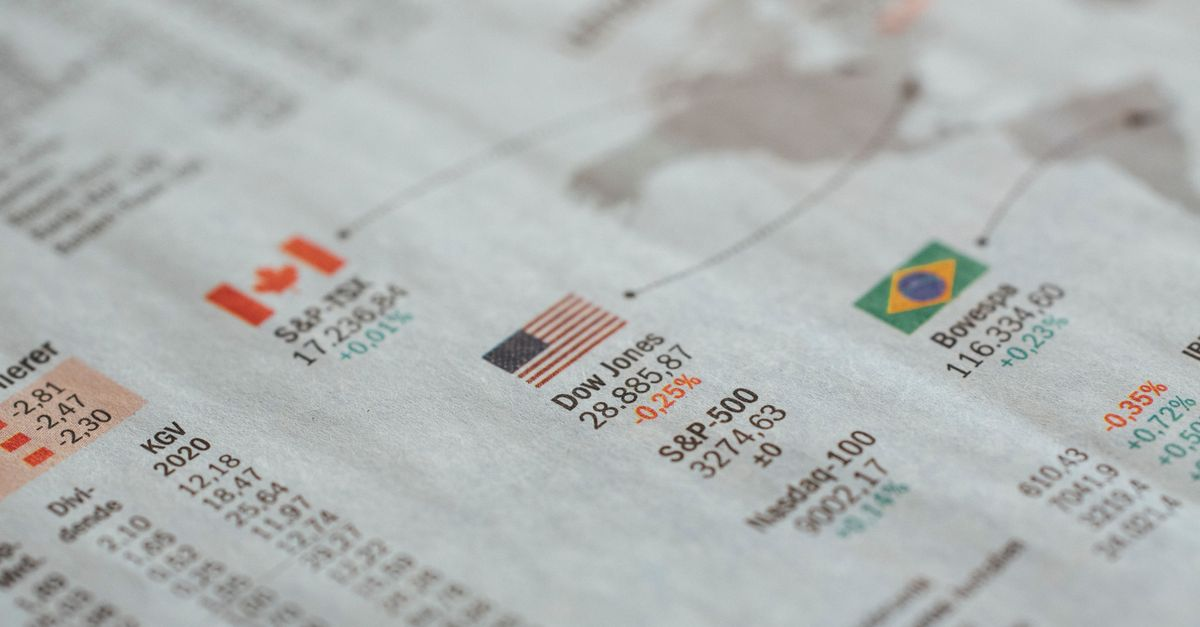
Oil prices and market volatility are pushing global equity markets into sharp retreat, with investors scrambling to reassess their portfolios as crude surges and geopolitical risks multiply.
Brent crude has breached the $105-per-barrel mark, driven by fears of supply disruptions stemming from escalating attacks on shipping in the Strait of Hormuz and the spectre of potential US military action against Iran. West Texas Intermediate (WTI) has climbed in tandem. The spike is rippling through financial markets worldwide. The S&P 500, Nasdaq, and major European and Asian indices are all posting notable losses, according to Reuters market data.
The sell-off reflects a cocktail of anxieties. Inflation concerns top the list. Oil price surges feed directly into broader price pressures across economies. US Treasury yields have rocketed to multi-year highs. This signals that markets expect the Federal Reserve may need to hold interest rates higher for longer, or even hike further. For equity investors, that’s a double blow: rising rates make bonds more attractive relative to stocks, while elevated oil costs threaten corporate profit margins.
Oil Prices Market Volatility: What’s Driving the Surge?
The immediate catalyst is the Middle East. Attacks on commercial vessels transiting the Strait of Hormuz—a critical chokepoint through which roughly one-fifth of global oil passes—have spooked traders. The risk that conflict could escalate, potentially blocking the strait altogether, has sent risk premiums spiking into crude valuations.
Compounding this, according to NBC News reporting on energy markets, the prospect of renewed US military involvement in Iran has added another layer of uncertainty. Investors are pricing in the possibility of further supply shocks. Even though some recovery in oil exports from the Gulf region has been observed, the underlying anxiety persists. One disruption could trigger panic buying.
The geopolitical premium embedded in today’s oil price is substantial. Traders are not just pricing in current supply; they’re hedging against downside scenarios. That’s why prices remain elevated despite signs of export recovery.
Stock Market Declines Across Major Indices
The ripple effects are unmistakable. Major US equity benchmarks have retreated. The Nasdaq, heavily weighted toward technology and growth stocks, is particularly vulnerable to rising yields—those companies’ future earnings are discounted more steeply in a higher-rate environment.
Asian markets have also tumbled. European exchanges are nursing losses. According to AFP reporting on the broader selloff, the synchronised decline reflects a genuine flight to caution. Investors are rotating out of equities into perceived safe havens, though the yield surge on government bonds has made that trade less attractive than usual.
For Indian investors with exposure to global equities or oil-importing sectors, the message is clear: volatility is elevated, and hedging strategies matter. India’s own equity markets, while somewhat insulated, are not immune to global contagion, especially given Indian corporates’ exposure to oil prices and US interest rates.
Why Treasury Yields Matter to Your Portfolio
When US Treasury yields spike to multi-year highs, it affects valuations across asset classes globally. A 10-year yield at elevated levels means investors can lock in attractive returns in bonds. This reduces the relative appeal of equities, which require higher growth expectations to justify their valuations.
The Federal Reserve’s response to inflation is the underlying issue. If the central bank is forced to hold rates higher—or hike again—to contain price pressures fuelled by oil spikes, then equity multiples compress. Companies’ earnings may also be squeezed by higher input costs and weaker consumer spending. It’s a bearish feedback loop.
Indian borrowers and exporters should note: a stronger US dollar (typically accompanying rising yields) makes imports costlier and affects competitiveness on global markets. The energy sector, in particular, faces headwinds if oil prices remain elevated for an extended period.
The Middle East Conflict and Supply Worries
The shipping attacks in the Strait of Hormuz are not new, but their frequency and coordination have investors convinced this is a deliberate campaign to disrupt trade. According to Al Jazeera’s analysis of the conflict’s market impact, the prospect of outright military escalation between the US and Iran remains a tail risk that markets cannot ignore.
The reality: even a brief blockade of the strait would be catastrophic for global oil supply. Prices could spike far higher. Downstream inflation would accelerate. Central banks would face even harder policy choices.
What This Means for Investors
Volatility tends to create opportunity for disciplined investors. Market dislocations often produce mispricings. However, the current environment rewards caution. Position sizing matters. Diversification—both geographic and sectoral—becomes critical when geopolitical risk is elevated.
For equity investors, exposure to defensive sectors (utilities, consumer staples) may outperform cyclical plays. For fixed-income investors, shorter duration bonds may be preferable while yields are in flux. Oil and energy stocks, counterintuitively, may struggle if a recession looms—demand destruction would weigh on prices despite supply constraints.
FAQ
Q: Why do oil price increases cause stock market declines?
A: Oil spikes feed inflation, prompting central banks to keep interest rates higher. Higher rates make bonds more attractive and reduce the valuation multiples applied to equities. Additionally, oil is a major cost input for many industries, which pressures profit margins.
Q: How does the Strait of Hormuz closure risk affect global markets?
A: The strait handles roughly 20% of global oil supply. A closure would trigger a supply shock, spiking prices and inflation. Markets are pricing in this tail risk, which is why geopolitical tensions in the region immediately move crude and equities.
Q: Are US Treasury yields rising because of the Federal Reserve?
A: Not directly. The Fed controls short-term rates. Long-term Treasury yields are set by market expectations of future Fed policy, inflation, and growth. If markets believe the Fed must hold rates higher to combat inflation, long-term yields rise accordingly.
Q: What happens to Indian markets when global oil prices spike?
A: India is a net oil importer. Rising prices increase the country’s import bill, widen the current account deficit, and pressure inflation. Indian equity markets typically sell off in sympathy with global declines, though the domestic rupee often weakens, which can help exporters.
Q: Should I avoid stocks entirely in this environment?
A: No. Volatility is not synonymous with collapse. Disciplined buying during sell-offs has historically rewarded long-term investors. However, position sizing, diversification, and a realistic time horizon are essential. Short-term traders face significant risks.
