
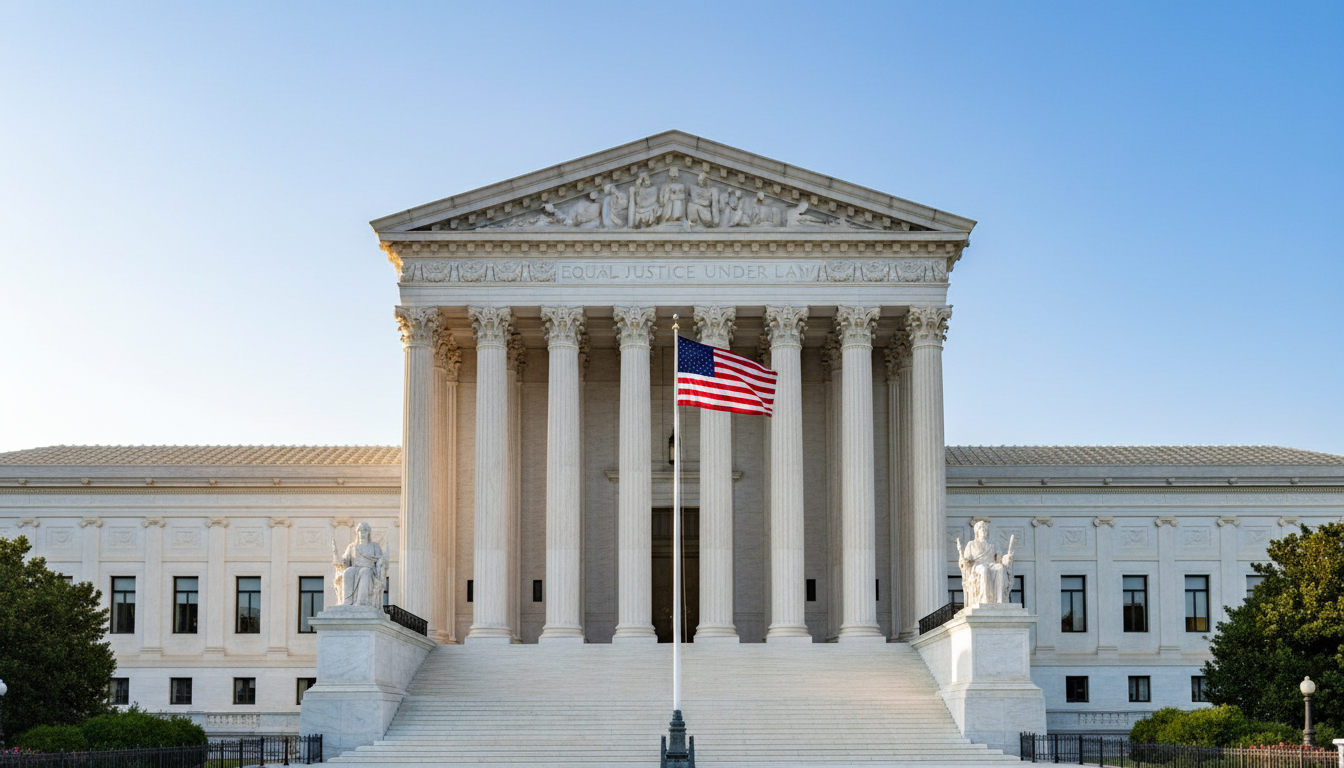
The Supreme Court mail-in voting ruling has delivered a significant blow to efforts by former President Donald Trump to curtail postal ballot access before November’s midterm elections.
According to Reuters, the nation’s highest court declined to permit the Postal Service to enforce a rule that would have targeted mail-in ballots. The decision removes a potential obstacle to voting by mail as Americans prepare to head to polls to determine which party controls Congress.
The Postal Service rule in question would have allowed stricter handling of mail ballots. Trump’s team had backed the measure. They argued it would strengthen election security. Critics countered that it would suppress voter turnout, particularly among those who prefer casting ballots remotely.
The Supreme Court’s refusal to intervene means the rule will not take effect before the midterms. This preserves access to mail-in voting for millions of Americans who have grown reliant on this method, especially since the 2020 presidential election normalised postal voting on a massive scale.
Trump’s push to restrict mail voting
Trump has long questioned the safety of mail-in ballots. His campaign filed multiple lawsuits after losing the 2020 election, alleging widespread fraud connected to postal votes. Courts across the country rejected these claims. No evidence of large-scale mail ballot fraud has ever materialised.
Nevertheless, Trump’s allies have continued pressing for restrictions. This latest Postal Service rule represented one such avenue. By allowing tighter management of mail ballots, supporters believed they could reduce participation through remote voting.
The Supreme Court’s decision to block enforcement suggests the justices saw insufficient legal grounds to proceed. They may have been concerned about the rule’s impact on voter access. Or they may have deemed it premature to intervene without fuller briefing.
Either way, the outcome frustrated those who backed the measure. It also underscores the contentious nature of voting by mail in contemporary American politics.
What the ruling means for November’s midterms
The midterm elections on 8 November will reshape Congress. Voters will elect all 435 House members and roughly one-third of the Senate. Control of both chambers remains uncertain as the election approaches.
Mail-in voting is expected to play a significant role. In 2020, roughly 46 per cent of all ballots cast were postal votes. Many states have since expanded access to mail voting. Others have tightened rules.
With the Supreme Court declining to uphold the Postal Service rule, states that permit mail ballots will continue operating those programmes unimpeded. Election officials in these jurisdictions can proceed with their normal procedures.
For voters themselves, the ruling provides certainty. Those planning to vote by mail can do so without worrying about new federal restrictions. They can mail their ballots or deposit them in secure drop boxes as their states allow.
The broader context of voting restrictions
America has witnessed fierce debate over voting access in recent years. Republicans generally favour stricter rules, citing fraud concerns. Democrats typically oppose restrictions, arguing they discourage legitimate voters.
Trump’s efforts sit squarely within this partisan divide. His push to limit mail voting reflects Republican arguments that remote ballots pose risks. Yet election officials—both Republican and Democratic—have consistently maintained that mail voting is secure.
The Supreme Court’s unwillingness to support the Postal Service rule suggests at least some judicial caution about voting restrictions, even with a conservative majority on the bench. The court has been divided on voting rights cases. Some justices have shown openness to restrictions. Others have worried about unintended consequences for voter access.
This particular ruling does not definitively settle broader questions about mail voting’s future. Future courts could revisit restrictions. Congress could pass national legislation either protecting or limiting mail ballots.
But for now, the Supreme Court’s action preserves the status quo. Mail voting will remain available in states that offer it through November’s midterms.
How this compares to other voting disputes
The Supreme Court has faced numerous voting-related cases in recent years. In 2013, it gutted key provisions of the Voting Rights Act, a landmark civil rights law. That decision allowed states greater latitude to change election rules.
More recently, courts have battled over redistricting, voter ID requirements, and ballot access for third parties. The ideological composition of courts has heavily influenced outcomes.
The mail-in voting ruling fits this pattern. It represents judicial reluctance—at least for now—to impose new restrictions on voting methods that millions rely upon.
FAQ
What exactly did the Supreme Court decide?
The Supreme Court declined to let the Postal Service enforce a rule that would have tightened restrictions on mail-in ballots. By refusing to intervene, the court blocked the rule from taking effect.
Why did Trump’s team support the Postal Service rule?
Trump’s allies argued that restricting mail voting would enhance election security. They believed postal ballots are more vulnerable to fraud, though courts have found no evidence supporting large-scale mail ballot fraud.
Does this ruling mean mail-in voting is now fully protected?
No. The ruling only blocks this specific Postal Service rule. Future restrictions on mail voting could still be imposed by states or upheld by courts in other cases.
When are the midterm elections?
The midterms are scheduled for 8 November 2022. Voters will elect all House members and about one-third of senators.
How many Americans typically vote by mail?
In 2020, approximately 46 per cent of all ballots cast were mail-in votes. The percentage varies significantly by state and election.
