
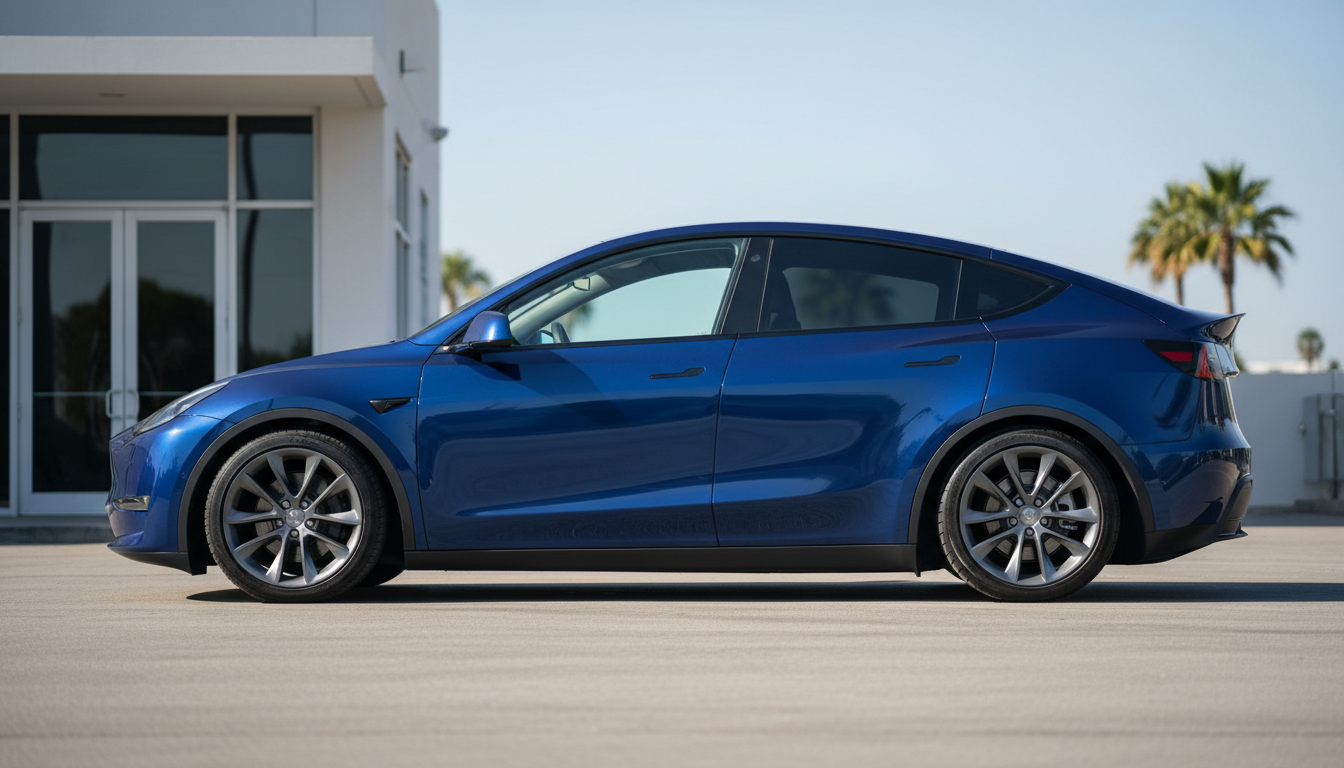
Tesla has quietly revised the owner’s manual for its Model Y L vehicles without explicitly acknowledging a widespread suspension problem, according to reports from Star News Korea. The move has triggered frustration among owners who say the company is sidestepping the root cause of Model Y suspension sagging that has plagued vehicles produced at its Shanghai manufacturing facility.
The issue affects Model Y L units built in Shanghai. Owners began reporting rear suspension sagging between 9,000 km and 30,000 km of use. The sag isn’t cosmetic—it affects ride height, handling, and potentially warranty coverage if not addressed. Tesla’s response has been twofold: offer free replacement springs to warranty customers, and adjust the owner’s manual specifications for vehicle height without explaining why the change was necessary.
That opacity has owners questioning whether Tesla is treating a symptom rather than solving the disease.
The Model Y Suspension Sagging Spreads
Reports of the problem started appearing in online forums and owner communities. Vehicles manufactured at Tesla’s Shanghai plant showed a pattern. The suspension dropped noticeably after several thousand kilometres of normal driving. Some owners took their vehicles to service centres; others documented the sag with photographs.
Tesla’s service response was swift in one respect. The company began offering free replacements using a new spring part number: 2188477-00-B. For warranty-eligible owners, the repair cost them nothing. The company didn’t issue a public recall. No technical service bulletin was released. The fix rolled out quietly through service appointments.
But the problem didn’t stay fixed for everyone.
Owners Report Recurring Issues After Replacement
Some owners claim their suspensions sagged again shortly after receiving the replacement springs. The timeline varies—weeks or months after service. When they returned to service centres, some encountered resistance or were told the new sag fell within acceptable parameters.
This pattern has led owners to believe the replacement spring is itself a temporary or incomplete fix. Whether this reflects a design flaw, a material defect, or an assembly issue remains unclear. Tesla hasn’t publicly commented on why the original springs failed or whether the replacement addresses the underlying cause.
The lack of transparency has amplified frustration. Owners are paying for vehicles priced at a premium in markets where Tesla sells the Model Y. In India, where imported luxury electric vehicles command attention among affluent buyers, such issues carry reputational weight. Problems that recur after “fixes” raise questions about long-term reliability.
The Manual Update: Change Without Explanation
Tesla’s recent update to the owner’s manual adjusted vehicle height specifications. The revisions changed what owners should expect their Model Y L to look like when parked or at rest. By redefining the baseline, Tesla essentially changed the definition of “normal.”
Owners interpret this move as tacit acknowledgment of the suspension problem. Instead of fixing it properly, the thinking goes, Tesla redefined the problem out of existence on paper. If the manual now specifies a lower ride height than before, then a sagging suspension is no longer technically a defect—it’s within spec.
This strategy, whether intentional or not, leaves owners feeling misled. They purchased vehicles to a certain standard. That standard has now been quietly adjusted downward. And they have no clear explanation from Tesla about why.
What This Means for Model Y Owners
For owners currently driving Model Y L vehicles from Shanghai, the situation is murky. If your vehicle shows signs of sagging before 9,000 km, contact Tesla service immediately. Warranty claims filed early have a clearer path. If you’re beyond that range but still within the warranty period, document the sag with photographs and request service.
For prospective buyers, the issue raises questions about which production batches or timeframes are affected. Tesla hasn’t confirmed whether the problem affects only certain VINs or production weeks. Some owners report the issue; others with similar vehicles report no problems.
The company’s silence on specifics makes it hard for buyers to assess risk. Is the issue isolated? Did Tesla fix it at the manufacturing level? Or is the replacement spring a Band-Aid on a deeper problem?
Why This Matters Beyond Shanghai
Tesla’s approach here—quiet manual revisions, no public explanation, offering repairs without acknowledging a systemic issue—sets a precedent. It signals that the company can redefine product standards without formal announcement or customer consent.
For a brand built partly on direct-to-consumer transparency and owner enthusiasm, this approach feels at odds with the Tesla mystique. The company has cultivated a reputation for owning problems and moving fast to fix them. This suspension saga shows a different playbook: delay acknowledgment, revise expectations, and hope the issue fades.
Owners invested significantly in their vehicles. They expect honesty about problems and realistic timelines for solutions. A replacement spring that fails again isn’t a solution. A manual revision that redefines away the problem isn’t transparency.
FAQ
Q: How many Model Y vehicles are affected by the rear suspension sagging issue?
A: Tesla hasn’t disclosed the exact number. Reports centre on Model Y L vehicles produced at the Shanghai Gigafactory. The problem appears between 9,000 km and 30,000 km, but not all vehicles in that production window report issues.
Q: What is Tesla’s replacement spring part number?
A: The new replacement part number is 2188477-00-B. Tesla offers this replacement for free to warranty-eligible owners. Whether this part eliminates the problem long-term remains contested among owners.
Q: Has Tesla issued a recall for the Model Y suspension sagging problem?
A: No formal recall has been issued. The company has offered free replacements through service centres, but this is not classified as a recall. The lack of an official recall notice means the issue isn’t formally catalogued as a safety defect.
Q: When did Tesla update the Model Y owner’s manual regarding suspension height?
A: The exact date isn’t specified in available reports, but the revision appears recent and coincides with growing owner complaints. The update adjusted vehicle height specifications without explaining the reason for the change.
Q: What should I do if my Model Y L shows suspension sagging?
A: Contact Tesla service immediately. If your vehicle is within the warranty period, request the suspension replacement. Document any recurring sag with photographs and dates. File complaints with Tesla and, if applicable, consumer protection agencies in your jurisdiction.
