
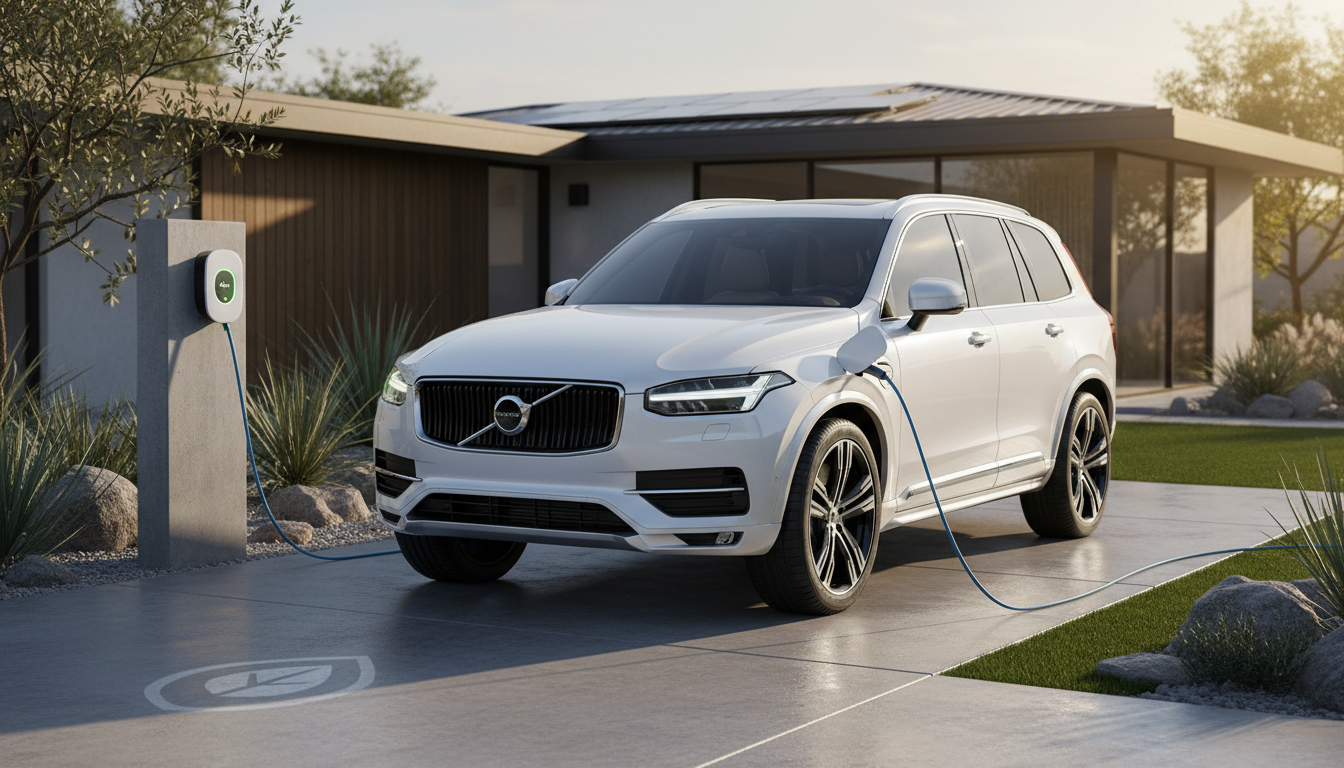
Volvo’s new plug-in hybrid electric range capabilities are about to reshape expectations for mid-size and large SUVs. The Swedish automaker has unveiled redesigned XC60 and XC90 models with battery capacity and electric-only driving distance that more than doubles previous generations.
The XC60, Volvo’s volume seller in many markets, will offer up to 78 miles of pure electric driving on a single charge. The larger XC90 reaches 73 miles. Neither figure is accidental marketing speak—these are the longest electric ranges available in plug-in hybrids sold in America, according to Volvo’s own announcement.
For context: the outgoing XC60 plug-in hybrid managed around 31 miles. The old XC90 delivered roughly 35 miles. The new generation nearly triples the older models’ capability.
What’s Changed Under the Floor
The step forward hinges on two mechanical upgrades. Volvo has integrated a larger-capacity battery pack directly into the vehicle’s floor structure. This placement allows engineers to squeeze more cells without compromising interior space or boot room—a common trade-off in earlier plug-in hybrids.
The electric motor is also more powerful than before. Precisely how much more powerful Volvo hasn’t detailed yet. But increased motor output paired with higher battery capacity explains the dramatic range jump.
Owners won’t need to completely rethink charging habits. Both vehicles will still accept conventional 240-volt home chargers and public AC charging networks. The battery size means charging times will stretch slightly compared to smaller packs, though exact figures remain unannounced.
Plug-in Hybrid Electric Range as a Bridge Strategy
Volvo isn’t positioning these PHEVs as the company’s future. Instead, they’re explicitly described as a stepping stone toward full electrification. Volvo has committed to selling only battery-electric cars by 2030, at least in Europe. The plug-in hybrids serve customers who aren’t ready for pure EVs—those who drive long distances, distrust charging infrastructure, or live in regions where grid capacity remains limited.
In India, this messaging may resonate differently. EV adoption remains concentrated in metro areas. Charging infrastructure outside cities is sparse. A plug-in hybrid offering 78 miles of emission-free city driving, paired with a petrol engine for highway stretches, addresses real consumer concerns about range anxiety and service availability.
Timeline and Availability
Production starts in autumn 2026. Customer deliveries begin in early 2027. Volvo hasn’t confirmed Indian launch timing, though the company sells both XC60 and XC90 models locally. Pricing for the new plug-in variants will likely inch upward compared to current hybrid versions, though final figures depend on local import duties and exchange rates.
The timing puts these vehicles ahead of several competitors still working on second-generation plug-in hybrids. BMW’s X5 plug-in hybrid, for instance, maxes out around 50 miles of electric range. Mercedes’ GLE plug-in sits in similar territory. Porsche’s Cayenne E-Hybrid offers roughly 45 miles. Volvo’s newcomers will occupy genuine technical ground.
The Wider Context
According to Volvo’s official announcement, these PHEVs represent the company’s commitment to sustainable mobility without forcing customers into an all-or-nothing EV switch. The company frames the move as listening to customer feedback about real-world driving needs.
For fleet operators and corporate buyers—a significant segment in India—the math becomes interesting. A company car that covers daily commutes and city errands on electricity, then switches to a petrol engine for occasional long trips, reduces fuel spend and emissions without requiring destination charging infrastructure.
Range anxiety becomes a non-issue when you carry a petrol tank. That’s the genuine appeal of plug-in hybrids, and Volvo’s new models amplify it by letting drivers stretch those electric-only journeys from roughly 30 miles to 78.
FAQ
Q: How much faster will the new XC60 and XC90 plug-in hybrids charge compared to older models?
Volvo hasn’t released charging time specifications for the 2027 models yet. The larger battery capacity will require more time to fill than smaller packs, but improved charger hardware and higher voltage support may partially offset this. Final times should be available closer to launch.
Q: Can I charge these vehicles with a regular Indian household electrical socket?
No. Both vehicles require a dedicated 240-volt charging setup. Standard Indian 15-amp household circuits are insufficient. Home installation or use of public charging stations designed for EVs and plug-in hybrids is necessary.
Q: Will the increased battery size and weight impact fuel economy when running on petrol alone?
Heavier vehicles typically consume more fuel. Volvo hasn’t released combined or petrol-only fuel economy figures for the 2027 models. The larger battery will add weight, but improved engine efficiency and aerodynamics may offset some penalty.
Q: What’s the difference between the XC60 and XC90 for Indian buyers?
The XC60 is the mid-size option, more affordable and easier to park in dense urban areas. The XC90 is the larger, three-row variant suited to families needing extra seating and boot space. Electric range differs by just 5 miles—XC60 at 78, XC90 at 73—so the choice depends on size needs rather than electric capability.
Q: When can Indian customers order these vehicles?
Volvo hasn’t announced an India-specific launch date. Production begins globally in autumn 2026, with deliveries starting early 2027. Indian availability typically follows European and American launches by several months, but official confirmation is pending.
