
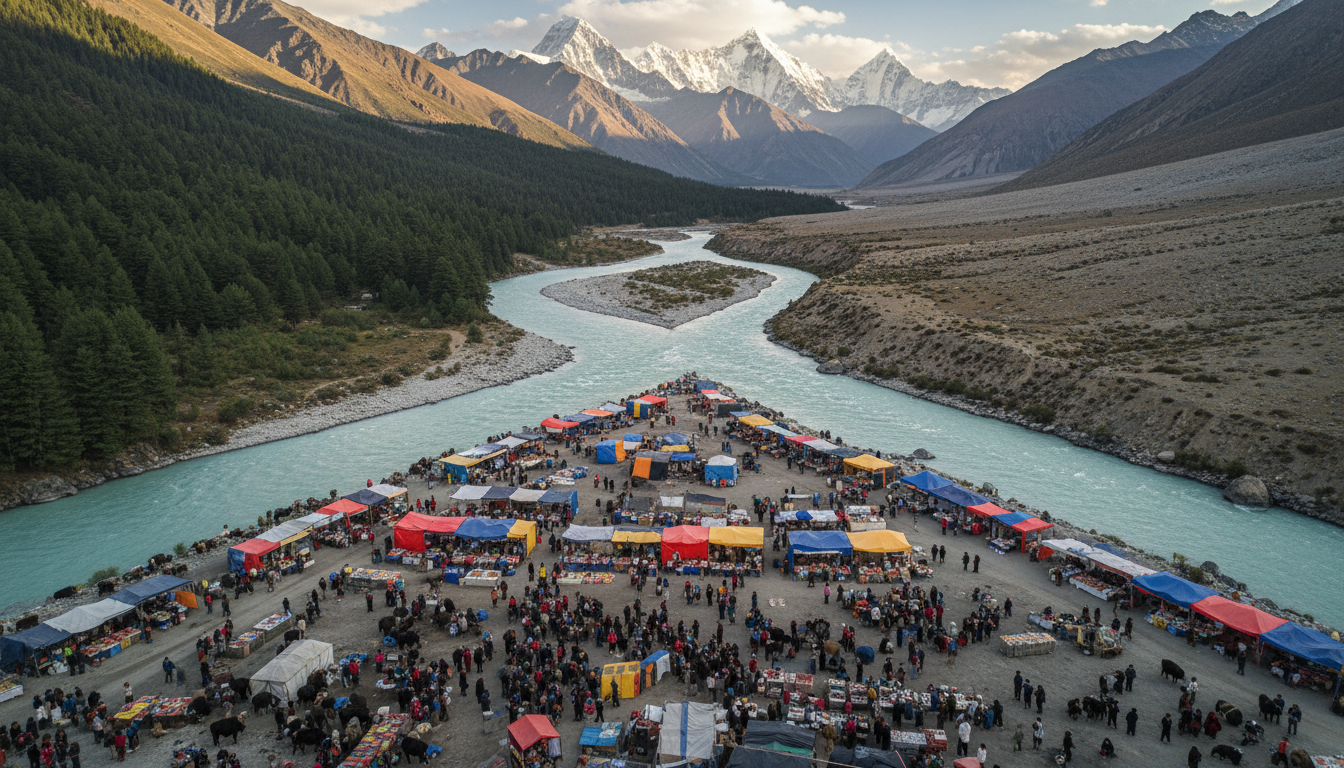
Chief Minister Pushkar Singh Dhami has inaugurated the historic Jauljibi Fair at the confluence of the Kali and Gori rivers in Pithoragarh district. The event marks a significant moment for the region, one of Uttarakhand’s most important trade and cultural gatherings.
The fair has drawn traders from India and Nepal for generations. It sits at a unique position—right where two rivers meet, at the border itself. This geography alone makes it economically and politically significant. For Pithoragarh, it represents both livelihood and identity.
Alongside the fair’s inauguration, the Chief Minister unveiled a substantial development package. The state announced 25 development projects valued at ₹102.72 crore for Pithoragarh district. The projects span multiple sectors critical to border area growth.
What the Development Projects Include
The ₹102.72 crore investment will touch several areas. A new Circuit House tops the list. Drinking water schemes will expand across the district. Flood protection works address a recurring vulnerability for communities along the rivers.
These aren’t random selections. Border districts face specific challenges. They need better connectivity to state capitals and major towns. Healthcare reaches fewer people in remote pockets. Schools often lack basic infrastructure. Tourism potential sits underutilized. The Uttarakhand government has made clear that fixing these gaps is a priority.
According to Drishti IAS coverage, the government is focusing development on connectivity, water, education, healthcare, and tourism in border areas.
Jauljibi Fair and India-Nepal Relations
The fair itself deserves closer attention. It isn’t merely a commercial event. For decades, it has functioned as a cultural bridge between India and Nepal. Traders cross the border seasonally. Goods flow both ways. People meet, negotiate, exchange goods, and reinforce ties.
Border fairs like Jauljibi exist in a few places across India. They’re rare. Most international boundaries are rigid. Trade happens through formal checkpoints with bureaucratic layers. But at Jauljibi, the relationship feels different. The fair carries history. It predates modern borders in many ways.
The Kali and Gori rivers form natural boundaries. Yet they also connect communities on both sides. The fair celebrates that connection. Inaugurating it signals Uttarakhand’s commitment to maintaining this tradition.
Why Border Development Matters Now
Pithoragarh sits on India’s north-eastern frontier. It touches Nepal directly. The district has historically received less investment than central or southern districts. Roads are narrower. Schools and hospitals are fewer. Power supply was irregular until recent years.
Border areas occupy a peculiar position in India’s development priorities. They need security attention. They also need economic growth. If communities feel neglected, migration to cities accelerates. Young people leave. The border regions thin out. That creates its own security challenges.
The ₹102.72 crore package attempts to reverse this trend. A new Circuit House improves administrative capacity and tourism infrastructure simultaneously. Better drinking water schemes reduce health burdens. Flood protection works prevent seasonal disasters that destroy crops and livestock.
Connectivity matters especially. If roads improve, Pithoragarh becomes less isolated. Markets open up. Traders find it easier to move goods. Tourism could grow—the district has natural beauty that remains underexploited.
The Fair’s Economic Role
Jauljibi Fair isn’t just cultural. It generates income for thousands of people. Traders set up stalls. Transporters move goods. Hotels and restaurants serve crowds. Local artisans sell handicrafts. Agricultural traders bring produce from both sides of the border.
The fair typically runs for several days. Families plan around it. Schools sometimes close. Markets close. The entire district rhythm shifts during the fair season. For many traders, it’s the year’s biggest commercial opportunity.
Revitalizing the fair through CM’s inauguration sends a signal. The state recognizes its importance. Development projects in the district should make it easier for traders to participate. Better roads mean safer travel. Electricity in fair grounds means stalls can operate longer hours. Water schemes ensure sanitation—critical for any gathering.
Border Tourism and Beyond
Pithoragarh holds untapped tourism potential. The district sits near the Kali River gorge, a scenic area. Trekking routes exist. But infrastructure remains minimal. A new Circuit House creates accommodation for tourists and officials. It’s not massive investment, but it’s a foundation.
Border tourism exists in other parts of India. Darjeeling has long drawn tourists interested in the Himalayan frontier. Ladakh has exploded as a destination in recent years. Pithoragarh could follow a similar trajectory if basic infrastructure improves.
The government’s stated emphasis on tourism development in border areas suggests this thinking. It’s not purely economic. Tourism generates employment. It also builds cross-border understanding. Visitors from Indian cities who come to Pithoragarh learn about the Nepal border. Indians and Nepalis who meet at the fair and in towns develop personal ties. Over time, these connections stabilize bilateral relations.
What Happens Next
The announcement of 25 projects doesn’t mean they’re all funded and starting tomorrow. Government projects move through stages. Land acquisition, tenders, environmental clearances, contractor selection—each step takes time. Some projects may start within months. Others could take years.
The real test comes in implementation. Uttarakhand has a mixed track record on border development. Some projects succeed. Others stall or face cost overruns. The district will watch to see which projects move fastest and deliver real change.
For the Jauljibi Fair itself, the CM’s presence and the development announcement together send a message: this fair matters to the state government. That recognition alone may encourage more participation next year. Word spreads quickly in border communities. When a Chief Minister inaugurates your fair and announces major investment nearby, you notice.
FAQ
Q: When is the Jauljibi Fair held each year?
A: The article does not specify exact dates. Jauljibi Fair is a historic trading gathering held at the confluence of the Kali and Gori rivers in Pithoragarh, typically drawing traders from India and Nepal seasonally.
Q: What is included in the ₹102.72 crore development package?
A: The 25 projects include a new Circuit House, drinking water schemes, and flood protection works. The broader focus covers connectivity, water supply, education, healthcare, and tourism infrastructure across Pithoragarh district.
Q: Why is Jauljibi Fair significant for India-Nepal relations?
A: The fair has historically served as a cultural and trade bridge between India and Nepal. Traders from both countries participate, strengthening shared heritage and bilateral ties through regular economic and social exchange.
Q: How does the fair support local economies?
A: The fair generates income for traders, transporters, hotel and restaurant owners, and local artisans. It’s typically the year’s largest commercial opportunity for many communities in Pithoragarh.
Q: What are the main development priorities for Pithoragarh district?
A: According to the government’s emphasis, the priorities are connectivity (roads), water supply, education, healthcare, and tourism—all sectors critical for sustainable border area growth.
