
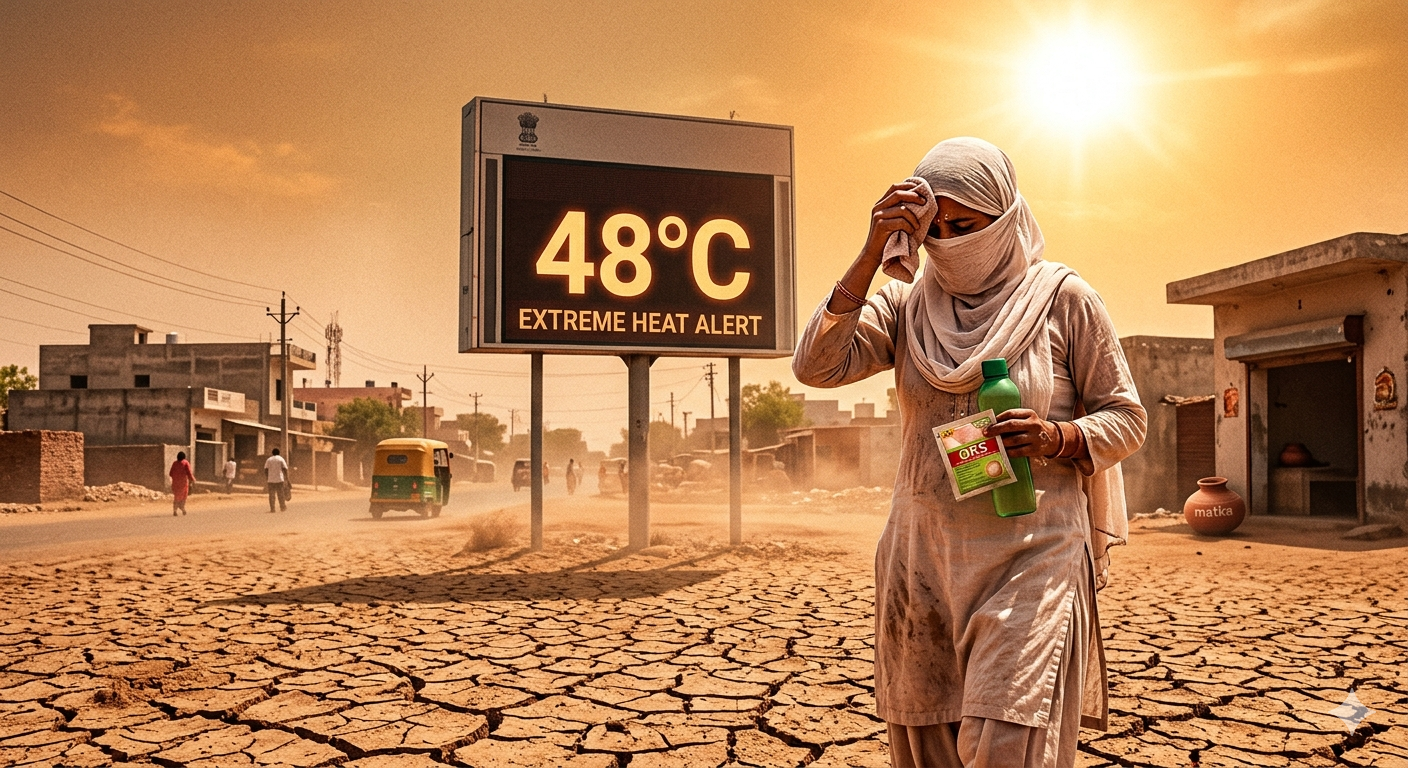
As of April 2026, the India Meteorological Department (IMD) has already moved several states from Yellow to Orange alerts. With temperatures in cities like Prayagraj, Raipur, and Nagpur breaching the 45°C mark earlier than expected, the dreaded 48°C threshold is no longer a distant possibility—it is a current reality. At this temperature, the environment shifts from being merely “uncomfortable” to “physiologically hazardous.”
Survival at 48°C requires more than just staying indoors; it demands a tactical approach to hydration, clothing, and environment management.
The Science of the 48°C Threshold
When the ambient temperature hits 48°C, it often exceeds the human body’s core temperature (typically 37°C). At this point, the body can no longer shed heat through radiation or conduction. It relies entirely on evaporative cooling (sweating). However, if the humidity is also high, the sweat cannot evaporate, leading to a rapid rise in internal temperature. This is the “Wet Bulb” danger zone where heatstroke becomes an immediate threat.
1. Advanced Hydration: Beyond Just Water
At 48°C, plain water is often insufficient because the body loses essential salts (electrolytes) through constant perspiration.
- The Salt Factor: Drinking massive amounts of plain water without salt can lead to hyponatremia (low sodium), causing dizziness. Always include ORS (Oral Rehydration Salts) or traditional alternatives like Aam Panna (green mango drink), Chaas (buttermilk with cumin and salt), or Nimbu Pani with both salt and sugar.
- The Temperature Myth: Avoid ice-cold water. Transitioning from 48°C heat to 4°C water can cause a minor shock to the system and constrict blood vessels, slowing down rehydration. Room-temperature or earthen-pot (Matka) water is ideal.
- Avoid Diuretics: Caffeine and alcohol act as diuretics, forcing the kidneys to flush out water. In a heatwave, these can accelerate dehydration by 20% to 30%.
2. Strategic Clothing and Personal Protection
Your clothing acts as your primary heat shield.
- Fabric Choice: Synthetic fabrics like polyester trap heat against the skin. Only 100% cotton or linen should be worn. These allow the skin to breathe and facilitate sweat evaporation.
- Coverage: It is a mistake to wear less clothing in 48°C heat. Exposed skin absorbs radiant heat from the sun and is prone to severe burns. Wear loose, full-sleeved shirts and trousers.
- The “Towel Method”: If you must be outdoors, keep a small, damp cotton towel around your neck. This cools the carotid arteries, which carry blood to the brain, helping maintain cognitive function in extreme heat.
3. The 12 PM to 4 PM Lockout
This is the “Golden Window” of danger. Data from the 2026 heatwave suggests that nearly 80% of heat-related hospitalizations occur during this four-hour period.
- Indoor Management: Keep windows and curtains closed on the sunny side of the house during the day to block “luminous heat.” Open them only after sunset when the air temperature begins to drop below the indoor wall temperature.
- Ventilation: If you do not have air conditioning, do not sit directly in front of a fan if the room temperature is above 40°C. The fan will simply blow hot air onto you, acting like a convection oven. Instead, place a bowl of ice or a wet sheet in front of the fan to create a cooling effect.
4. Automotive Survival: Protecting Your Vehicle
In 48°C heat, the interior of a car parked in the sun can reach a staggering 70°C to 75°C within an hour.
- Tyre Pressure: Heat causes air to expand. Ensure your tyres are not over-inflated, as the friction of driving on hot asphalt combined with internal expansion can lead to high-speed blowouts.
- Coolant Levels: This is the most critical fluid in your car right now. Ensure your coolant is fresh and the mix is correct; old coolant loses its boiling point threshold, leading to engine seizures.
- Vapor Lock: In older petrol vehicles, extreme heat can cause fuel to vaporize in the lines, preventing the engine from starting. If this happens, do not keep cranking the engine. Let it cool in the shade for 30 minutes.
5. Identifying the Medical Red Flags
You must be able to distinguish between Heat Exhaustion and the life-threatening Heatstroke.
| Symptom | Heat Exhaustion | Heatstroke (Emergency) |
| Skin | Moist, cool, and clammy | Hot, red, and dry |
| Pulse | Fast and weak | Rapid and strong |
| Mental State | Normal or slightly dizzy | Confusion, agitation, or fainting |
| Temperature | Normal or slightly elevated | Above 104°F (40°C) |
Action for Heatstroke: If someone stops sweating and becomes confused, they are in immediate danger. Move them to the shade, douse them with cool (not ice) water, and call for medical help immediately.
Conclusion
The 2026 summer is proving that extreme heat is a systemic challenge, not just a seasonal inconvenience. By adopting these tactical survival methods—focusing on electrolyte balance, thermal shielding, and vehicle maintenance—you can navigate even a 48°C peak safely. Stay informed through official IMD updates and prioritize the safety of the elderly and children, who are the most vulnerable to these escalating temperatures.
