
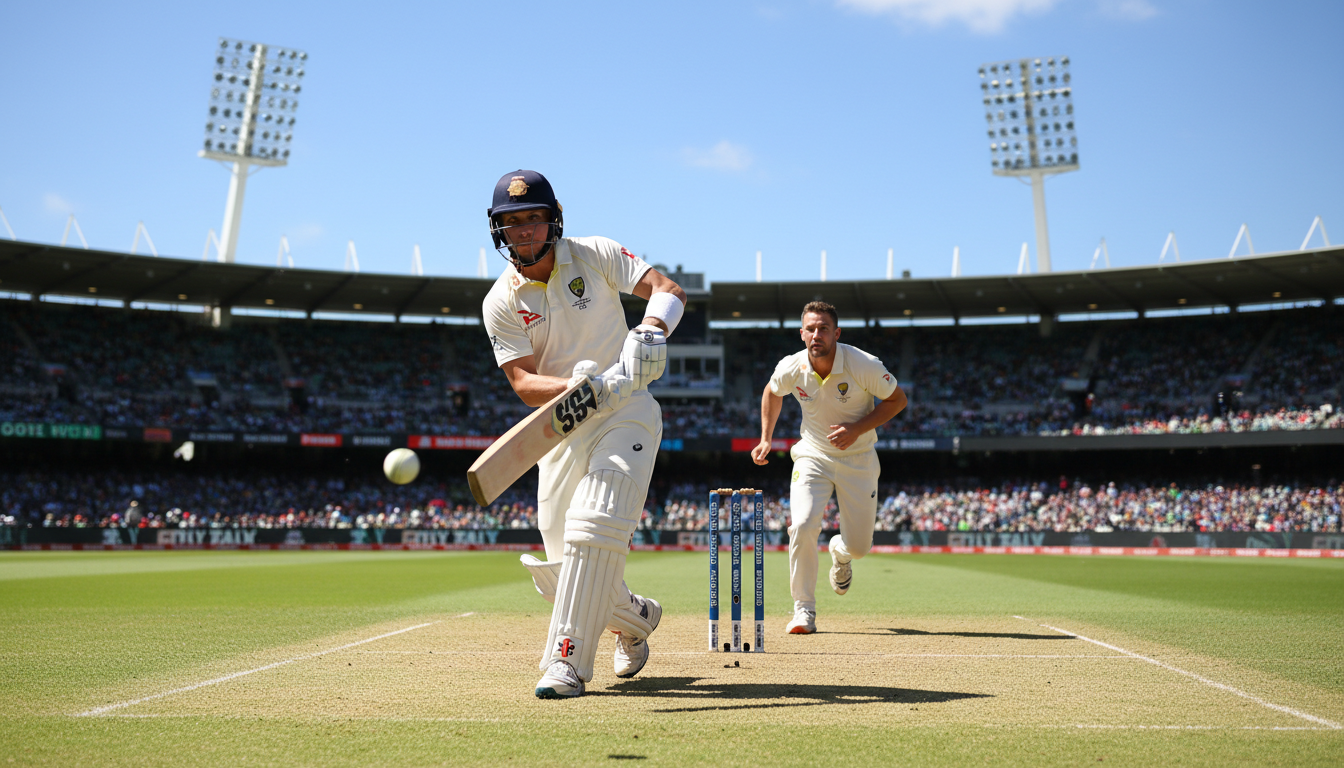
England faces a must-win second ODI against Australia after a humbling seven-wicket defeat in the opening match of the three-game series. The hosts were dismissed for just 131 in Brisbane, leaving them trailing 1-0 with everything to prove.
The scale of England’s collapse was stark. Young Australian debutant Mahli Beardman took six wickets, dismantling the English batting order with a display that suggested Australia has found a dangerous new weapon in their pace arsenal. England’s batsmen looked uncomfortable throughout, unable to adapt to the pitch conditions or Beardman’s angle of attack.
Now comes the hard part: recovery without proper preparation. According to Sky Sports, England captain Harry Brook expressed hope for a quick turnaround despite not having a training session before the second ODI due to travel logistics. This is far from ideal for a team desperate to rebuild confidence.
The Batting Adaptability Problem
England’s first-match performance raised serious questions about their ability to adjust quickly. Being bowled out for 131 suggests systemic issues, not just individual failures. The batting order struggled against both pace and the conditions. Without a proper nets session to work through technical issues, the changes England might make will be largely theoretical rather than practiced.
Brook will need to shuffle his lineup strategically. Which batsmen do you drop? Who comes in? How much do you change when you don’t have time to rehearse the new combinations? These are the unglamorous but crucial decisions facing the captain.
The comparison to similar crises in subcontinental cricket is instructive. Teams facing unexpected defeats often make panic changes that backfire. India, Pakistan, and Sri Lanka have all learned this lesson the hard way. England must resist the urge to overhaul everything.
Mahli Beardman’s Breakthrough
Beardman’s six-wicket haul on debut is the kind of performance that can set a young player up for a long career. It also signals that Australia’s pace bowling depth is stronger than many observers believed heading into this series. For England, the challenge is twofold: work out how to face him, and do it without adequate preparation time.
The second ODI preview suggests Australia will back their debutant again. This makes sense. Why would they change a winning formula?
England’s batsmen need to identify specific technical adjustments. Is it footwork? Is it leaving the ball better? Is it trusting defence more? These conversations happen in nets, over video, with coaches. They’re harder to implement when you’ve just arrived at the ground and have three hours before the toss.
Australia’s Confidence Surge
Australia enters the second match with genuine momentum. A seven-wicket win is emphatic. The emergence of Beardman takes pressure off their other fast bowlers. If one of their established seamers suffers an injury, they now have proven backup capable of delivering match-winning performances.
The hosts also have the luxury of sticking with a winning XI. There’s no need for tactical tinkering. No need to second-guess themselves. This psychological advantage shouldn’t be underestimated.
The Training Time Question
Brook’s comments about lacking a training session reflect a real logistical problem in modern cricket scheduling. Teams move between cities, sometimes countries. They’re on planes, in hotels, dealing with fatigue and time zone changes. By the time they arrive, there’s barely enough time to check into accommodation, let alone have a proper practice.
This disadvantage falls harder on the team that’s lost. Winners often have clearer minds and need less drills. Losers need to experiment, to rebuild, to reconnect with basics. England gets neither the mental clarity nor the preparation time.
Yet this isn’t entirely new to international cricket. Teams have recovered from worse situations. What matters is clarity of thought and execution under pressure. If England’s leadership knows exactly what adjustments to make, they can communicate those changes verbally and trust their players to execute them.
The Series Arithmetic
This is officially a must-win for England. Losing both first and second matches would make the third ODI almost irrelevant—Australia would have already secured the series. Win the second, and you’re back level. That’s the minimum requirement.
But it’s also worth noting that momentum in ODI series can shift quickly. A convincing England victory would restore confidence heading into the final match. Conversely, losing both would create genuine pressure on the Australian camp to close it out.
FAQ
Q: Why didn’t England have a training session before the second ODI?
A: Travel logistics between matches meant England arrived at the venue with insufficient time for a full nets session. Captain Brook acknowledged this constraint but expressed hope for an improved performance regardless.
Q: Who is Mahli Beardman and why is he significant?
A: Beardman is a young Australian debutant who took six wickets in England’s first-match collapse. His breakthrough performance suggests Australia has found an exciting new pace-bowling prospect and makes him likely to play again in the second ODI.
Q: What did England score in the first ODI?
A: England was bowled out for 131, indicating a complete batting collapse. This was the foundation of Australia’s seven-wicket victory.
Q: Is the second ODI genuinely a must-win for England?
A: Yes. Losing both matches would leave Australia 2-0 up in a three-match series, essentially deciding the outcome with one game remaining. England needs to win to stay competitive in the series.
Q: What changes might England make for the second match?
A: Without a training session, major batting lineup changes are risky. England is more likely to make targeted adjustments rather than wholesale alterations, focusing on technique tweaks and mindset shifts rather than personnel changes.
